EU Green Deal at a Crossroads: Ambitious Climate Targets Survive, But Rules Are Being Rewritten
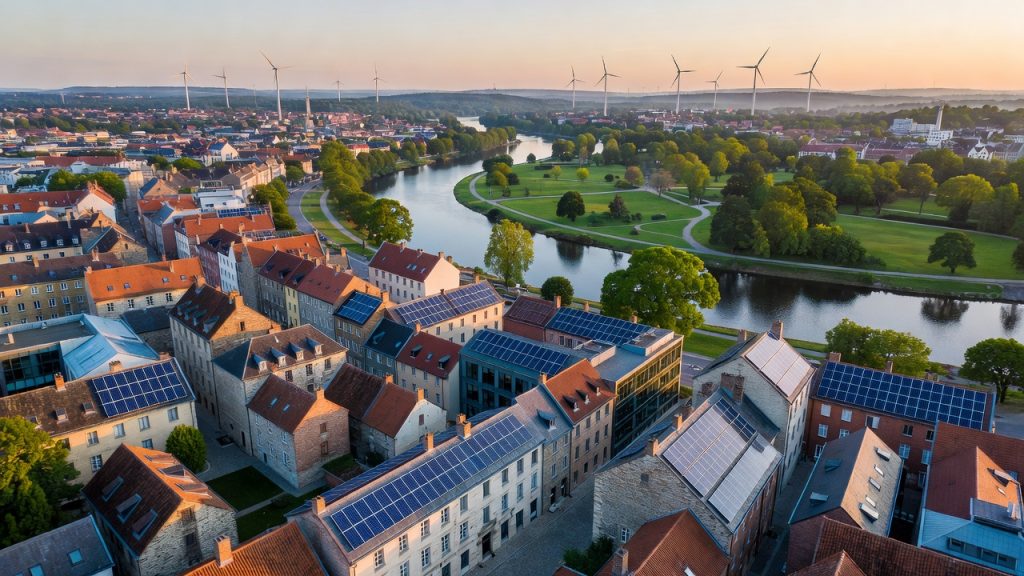
The European Union’s EU Green Deal is entering a new and turbulent phase. Core climate policy commitments remain legally binding, but a growing political push to simplify — and in some cases weaken — the rules around them is reshaping what Europe’s green transition will actually look like in practice. For businesses, citizens, and policymakers, the stakes could not be higher.
The Targets Hold — But the Rulebook Is Being Rewritten
The most significant recent milestone is the entry into force of the amended EU Climate Law in April 2026, which now enshrines a 90% net greenhouse-gas reduction by 2040 compared to 1990 levels, alongside the existing legally binding goal of climate neutrality by 2050. These are not aspirations — they are legal obligations binding on all EU member states and institutions.
However, the path to those targets is becoming more flexible. The amended law allows limited use of high-quality international carbon credits toward the 2040 goal, a concession that reflects both the ambition of the target and the political difficulty of achieving it purely through domestic action. Meanwhile, the broader implementation of the Green Deal tells a story of scale and complexity: by early 2025, the European Commission had proposed 168 initiatives, adopted 98, and was still negotiating 37 others — a legislative stack that spans energy, land use, industry, finance, and agriculture.
Simplification or Rollback? The Debate Over Sustainability Reporting and Supply Chains
The sharpest political battles are now being fought not over climate targets themselves, but over the sustainability reporting and supply-chain rules designed to enforce accountability along the way. There is growing evidence of regulatory rollback pressure on several key fronts:
- Corporate Sustainability Reporting Directive (CSRD): Proposals to narrow its scope would reduce the number of companies required to disclose detailed environmental and social data, cutting compliance costs but also shrinking transparency for investors and the public.
- Supply-chain due diligence: Rules requiring companies to identify and address environmental and human rights risks in their value chains face delays and dilution, weakening enforcement coverage across global supply networks.
- Agricultural environmental standards: Pressure from the farming sector has already led to concessions on biodiversity and pesticide rules, raising concerns among environmental groups about the integrity of the Green Deal’s nature commitments.
Proponents of simplification argue that excessive regulatory burden is undermining European competitiveness — a concern amplified by the global economic context, including pressure from US industrial policy. Critics counter that weakening environmental regulation now risks locking in higher long-term costs, both economic and ecological.
Carbon Markets and Pricing: The Engine That Remains Running
While reporting rules face headwinds, carbon markets remain a central and expanding pillar of EU climate strategy. From 2027, the EU’s Emissions Trading System (ETS) will extend to cover buildings and road transport fuels — bringing carbon pricing directly into the lives of households and small businesses for the first time. Revenue from the ETS is designed to fund cleaner technologies and support vulnerable communities through the Social Climate Fund.
Complementing this, the Carbon Border Adjustment Mechanism (CBAM) — effectively a carbon tariff on imports from countries with weaker climate rules — is moving through its transitional phase. CBAM is Europe’s most direct attempt to link its domestic climate policy to global trade, and its full implementation will have significant implications for trading partners from Turkey to China to the United States.
What This Means for Citizens, Companies, and the Climate
The emerging picture is one of target tightening paired with implementation flexibility — a combination that satisfies neither pure ambitionists nor pure deregulators. Companies in sectors covered by simplified reporting rules may face lower administrative costs in the short term, but reduced disclosure also means less pressure to actually decarbonize. Citizens may see continued investment in clean energy and climate resilience, but slower progress on pollution controls and supply-chain accountability.
For Europe’s credibility as a global climate leader — especially as it pushes partners to adopt comparable standards through CBAM and international negotiations — the coherence between its stated targets and its regulatory follow-through will be closely watched.
Key takeaway: The EU Green Deal is not being abandoned — but it is being renegotiated in real time. The climate targets are the floor; the question is how much of the architecture built to reach them will remain standing. Citizens, investors, and trading partners alike should pay close attention to what gets simplified, and what gets lost in translation.