EU 2040 Climate Target Is Now Law: What It Means for Business, Markets, and Citizens
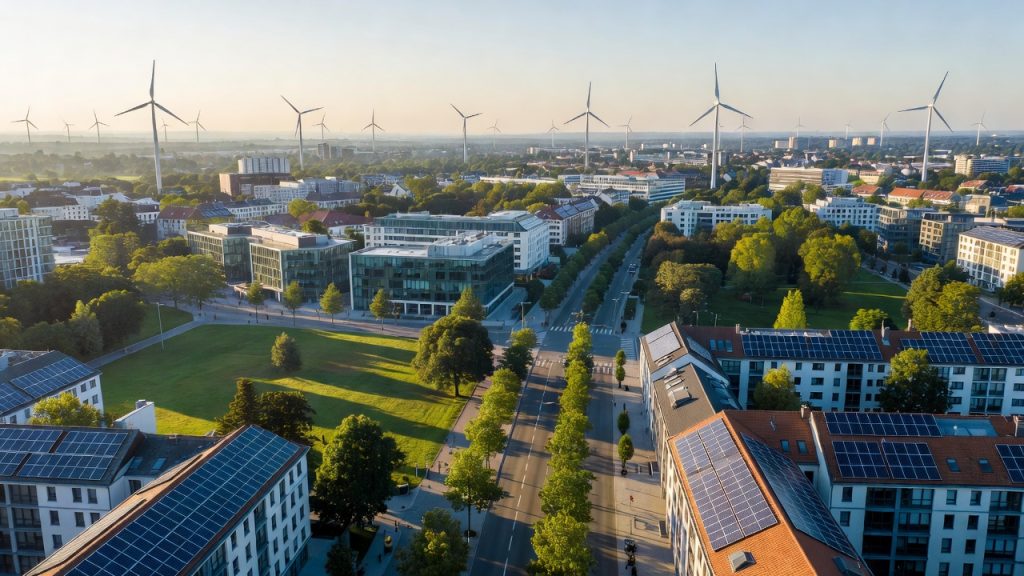
A milestone in European climate policy quietly took effect in April 2026: the EU Climate Law was amended to include a legally binding target of a 90% reduction in net greenhouse gas emissions by 2040, compared to 1990 levels. This sits alongside the existing 2050 climate-neutrality goal, and together they form the most ambitious long-term climate architecture any major economy has ever put into law. For anyone navigating the EU Green Deal — whether you run a factory, manage an investment portfolio, or simply pay an energy bill — the implications are significant and immediate.
A Stronger Legal Signal for Industry and Investors
Until now, the EU’s legally binding milestone was the 55% net reduction target for 2030, established under the European Climate Law adopted in 2021. The 2040 target fills a critical gap in the policy timeline, giving industries, utilities, and financial markets a clearer long-term anchor for planning. Sectors with long investment cycles — steel, cement, chemicals, aviation, shipping — can no longer treat the post-2030 landscape as uncertain territory.
The amended law also introduces a notable flexibility mechanism: it allows the limited use of high-quality international carbon credits toward the 2040 target. This is a carefully calibrated concession. It opens a pathway for businesses and member states to offset residual emissions through verified international projects, but the emphasis on “high quality” is deliberate — a signal that the EU intends to avoid the reputational and environmental pitfalls that have plagued voluntary carbon markets globally. For investors in carbon markets and climate-aligned assets, this adds a new dimension to compliance planning.
Carbon Pricing Expansion and the Cost of the Transition
The 2040 target does not exist in isolation. It is reinforced by a series of sector-level rules already adopted under the EU Green Deal framework. Most consequentially, the EU Emissions Trading System (ETS) is expanding in 2027 to cover buildings and road transport fuels — two sectors that together account for a substantial share of European emissions but have historically sat outside carbon pricing. This means that heating oil, natural gas for homes, and petrol will carry a carbon cost that is likely to be passed on to consumers.
The expansion of carbon pricing is designed to accelerate the shift toward heat pumps, electric vehicles, and cleaner fuels. But it also raises genuine concerns about energy affordability, particularly for lower-income households. The EU has established a Social Climate Fund to cushion the impact, though debate continues about whether its resources are adequate. For businesses, the message from environmental regulation is consistent: the cost of carbon will rise, and transition investment is cheaper than delay.
Complementing the ETS, the Carbon Border Adjustment Mechanism (CBAM) remains a central pillar of the EU’s climate policy toolkit. By placing a carbon price on imports of steel, cement, aluminium, fertilisers, and electricity, CBAM is designed to prevent carbon leakage — the risk that European industry simply relocates emissions abroad. As the 2040 target raises ambition, pressure to extend CBAM to additional sectors is likely to grow.
Sustainability Reporting: Accountability at the Corporate Level
Alongside carbon markets, corporate sustainability reporting remains one of the Green Deal’s most far-reaching instruments. Requirements modelled on the Corporate Sustainability Reporting Directive (CSRD) continue to reshape how companies disclose climate risks, ESG performance, and transition plans to investors, regulators, and customers. With the 2040 target now in law, these disclosures take on greater urgency: companies will increasingly need to demonstrate credible pathways to deep decarbonisation, not just incremental progress.
There is an ongoing tension, however, between calls for regulatory simplification — particularly from SMEs and some member states — and the push for stricter climate ambition. The European Commission has signalled awareness of compliance burdens, but the direction of travel on sustainability reporting remains firmly toward greater transparency, not less.
What This Means Going Forward
The legal entrenchment of the EU’s 2040 climate target marks a point of no return for European climate policy. Key implications include:
- Investment planning must now account for a 90% net emissions reduction within 14 years — a timeline that demands action this decade, not the next.
- Carbon market participants will need to monitor how international credit eligibility rules are defined, as this will shape compliance costs and market dynamics.
- Consumers should expect the ETS expansion to affect energy costs from 2027, making energy efficiency upgrades and cleaner alternatives increasingly attractive financially.
- Companies subject to sustainability reporting requirements face growing pressure to align disclosures with the new 2040 milestone.
The key takeaway: The EU Green Deal has moved from vision to enforceable law. The 2040 climate target is not a political aspiration — it is a legal obligation that will drive regulatory, financial, and market decisions across Europe for the next decade and beyond. For citizens, businesses, and policymakers alike, the time to plan around it is now.