EU Green Deal at a Crossroads: What the 2040 Climate Target Means for Business and Citizens
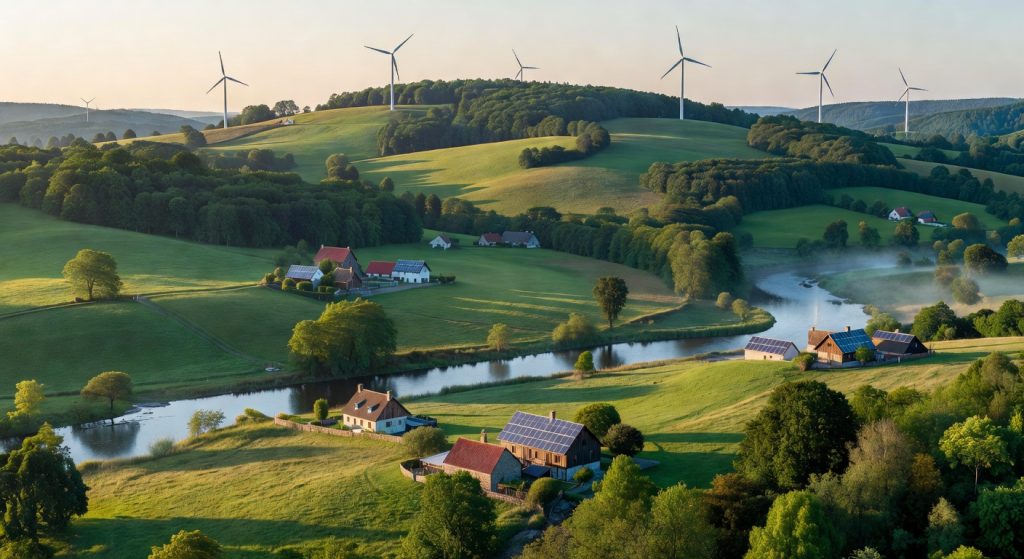
The European Union’s climate agenda is not standing still. While much of the world debates the pace of decarbonisation, Brussels continues to tighten its long-term framework — and the numbers are becoming harder to ignore. A proposed 90% greenhouse-gas reduction target by 2040, sitting between the current 2030 goal of at least 55% and the legally binding 2050 climate-neutrality milestone, signals that the EU Green Deal is entering a more demanding phase. For citizens, businesses, and policymakers alike, understanding what this trajectory means in practice has never been more urgent.
The Architecture of EU Climate Ambition
The European Green Deal, launched by the European Commission in 2019, remains the central pillar of EU environmental regulation. It is not a single law but a comprehensive policy framework spanning energy, transport, agriculture, industry, and finance. At its core are three binding commitments:
- A 55% net reduction in greenhouse-gas emissions by 2030 compared to 1990 levels, enshrined in the European Climate Law.
- A proposed 90% reduction target for 2040, recommended by the European Scientific Advisory Board on Climate Change and formally referenced by the Commission as the scientifically grounded pathway.
- Climate neutrality by 2050 — the legally binding end goal that anchors all intermediate targets.
These are not aspirational statements. They translate directly into sector-specific legislation, investment mandates, and compliance obligations that ripple across every corner of the European economy. The Green Deal’s implementation pillars — including the Carbon Border Adjustment Mechanism (CBAM), updated energy-efficiency directives, land-use regulation, and the Just Transition Fund — are already reshaping how companies operate and how member states allocate public resources.
Carbon Markets, CBAM, and the Price of Pollution
One of the most tangible expressions of EU climate policy is the Emissions Trading System (EU ETS), the world’s largest carbon market. Carbon pricing sends a direct economic signal: polluting has a cost, and that cost is rising. The introduction of CBAM — the Carbon Border Adjustment Mechanism — extends this logic to imports, ensuring that goods entering the EU from countries with weaker carbon pricing face a comparable carbon cost. This is both an environmental regulation tool and a competitiveness safeguard, designed to prevent so-called carbon leakage, where production simply shifts to less-regulated markets.
As the 2040 target tightens the overall emissions budget, pressure on the ETS will intensify. Fewer allowances in circulation means higher carbon prices, which in turn accelerates investment decisions in clean technology, green infrastructure, and energy transition. For industries still reliant on fossil fuels, the message from Brussels is unambiguous: the window for gradual adaptation is narrowing.
Sustainability Reporting and the Transparency Imperative
Beyond carbon markets, the Green Deal has triggered a parallel revolution in sustainability reporting. The Corporate Sustainability Reporting Directive (CSRD), which entered into force in 2023, requires thousands of European and non-European companies operating in the EU to disclose detailed environmental, social, and governance (ESG) data. This is not merely a box-ticking exercise. Standardised, auditable sustainability data is the foundation on which green finance, supply-chain accountability, and informed citizen choice all depend.
The Just Transition Fund, meanwhile, addresses the social dimension of this transformation — directing billions of euros toward coal-dependent regions and vulnerable communities to ensure that the shift to a low-carbon economy does not deepen existing inequalities. Climate policy, in the EU model, is explicitly linked to social and economic cohesion.
Implications: Who Needs to Act, and When
The trajectory from 55% by 2030 to 90% by 2040 to neutrality by 2050 creates a clear — if demanding — roadmap. The implications are broad:
- Businesses must integrate climate risk and sustainability reporting into core strategy, not treat them as peripheral compliance tasks.
- Investors face growing pressure to align portfolios with EU taxonomy-compliant activities and to account for stranded-asset risk in carbon-intensive sectors.
- Citizens will experience the Green Deal through energy bills, product standards, urban planning, and the quality of public spaces — making political engagement with climate policy directly relevant to daily life.
- Policymakers outside the EU, particularly in trading-partner countries, must reckon with CBAM and the extraterritorial reach of EU environmental regulation.
The EU Green Deal is sometimes portrayed as a burden on competitiveness. The Commission’s counter-argument — increasingly backed by economic modelling — is that early, ambitious climate action is cheaper than delayed adaptation, and that Europe’s regulatory leadership creates first-mover advantages in clean technology and green finance globally.
Key takeaway: The proposed 2040 target of 90% emissions reduction is not a distant abstraction. It is the next concrete milestone in a legally structured climate policy framework that is already reshaping carbon markets, investment flows, corporate reporting, and industrial strategy across Europe and beyond. Staying informed — and engaged — is no longer optional for anyone with a stake in Europe’s future.