Green Technology in 2025: How Integrated Clean-Energy Systems Are Reshaping Europe’s Industrial Future
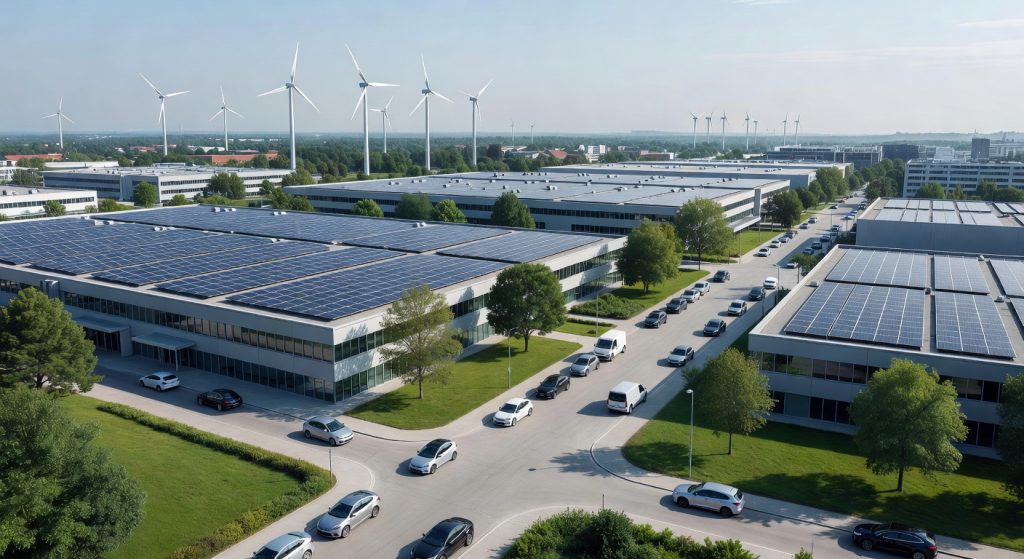
Something fundamental is shifting in the way Europe approaches green technology. Clean innovation is no longer a box companies tick in their sustainability reports — it is becoming the operational backbone of industries, cities, and supply chains. From hydrogen-powered logistics fleets rolling through German industrial corridors to smart microgrids balancing renewable energy across Spanish municipalities, cleantech is moving from the margins to the mainstream at remarkable speed.
Understanding where this momentum is heading — and what it means for citizens, businesses, and policymakers — requires looking at three converging forces: integrated energy systems, industrial decarbonization, and the circular economy revolution.
Integrated Clean-Energy Systems: Generation, Storage, and Intelligence Combined
One of the most significant developments in the current wave of green innovation is the convergence of energy generation, storage, and digital control into unified systems. Solar panels with built-in battery storage, once a niche product, are increasingly being deployed at both residential and commercial scale across Europe. Paired with AI-driven energy management software, these systems can predict demand, optimize consumption, and even trade surplus electricity back to the grid automatically.
Smart cities across the EU are piloting microgrids — localized energy networks that can operate independently from the main grid during outages — as a resilience strategy against climate-related disruptions. Amsterdam, Copenhagen, and Barcelona are among the urban centers investing in digital energy infrastructure that integrates renewables with real-time data analytics.
According to the International Energy Agency (IEA), global investment in clean energy is expected to reach $2 trillion in 2024, with Europe accounting for a substantial share driven by the REPowerEU plan and national green transition funds. Long-duration energy storage — technologies capable of storing electricity for days rather than hours — is emerging as a critical enabler of grid reliability as wind and solar capacity scales up.
Industrial Decarbonization: Hydrogen, Carbon Capture, and Low-Carbon Materials
The energy transition is no longer limited to the power sector. Heavy industry — steel, cement, chemicals, and logistics — is under growing pressure to decarbonize, and a new generation of cleantech solutions is rising to meet that challenge.
Green hydrogen is attracting particular attention as a fuel for sectors where direct electrification is difficult. The European Hydrogen Backbone initiative envisions a 53,000-kilometre pipeline network by 2040, repurposing existing gas infrastructure to transport hydrogen across the continent. Several major logistics operators are already trialling hydrogen-powered trucks for long-haul freight, where battery-electric vehicles face range and weight limitations.
Carbon capture, utilisation, and storage (CCUS) technology is also gaining traction, particularly in Norway and the Netherlands, where offshore geological formations offer significant CO₂ storage capacity. Meanwhile, low-carbon materials — including green steel produced with hydrogen instead of coking coal — are beginning to enter construction and automotive supply chains, signalling a deeper structural shift in European manufacturing.
Circular Economy and Biodegradable Innovation: Rethinking What We Make and Discard
The third pillar of today’s green technology landscape is circularity. The EU’s Circular Economy Action Plan is pushing manufacturers to design products for longevity, repairability, and recyclability — and innovation is responding. Biodegradable electronics, once a laboratory curiosity, are advancing toward commercial viability, with research institutions in Finland and Italy developing circuit boards made from natural polymers that decompose safely at end of life.
Electric mobility is also being reshaped by circular principles. Battery second-life programmes — where EV batteries too degraded for automotive use are repurposed as stationary energy storage — are being scaled by manufacturers including Renault and Volkswagen. This approach extends battery value, reduces mining demand for critical minerals, and supports the broader energy storage ecosystem simultaneously.
What This Means for Europe — and Why It Matters Now
The integration of these three trends — smart energy systems, industrial decarbonization, and circular innovation — is creating a new competitive landscape. Companies that embed green technology into their core operations are gaining advantages in efficiency, regulatory compliance, and market positioning. Those that treat sustainability as an afterthought risk being left behind as EU regulations tighten and consumer expectations rise.
For policymakers, the signal is clear: public investment in cleantech infrastructure, skills, and research must keep pace with private sector momentum. For citizens, the transition is becoming tangible — in energy bills, in urban air quality, in the products available on shelves.
- Key takeaway: Green technology in 2025 is not a single sector — it is an interconnected ecosystem of energy, industry, mobility, and materials innovation.
- Europe’s regulatory framework and industrial base position it well to lead, but execution speed and cross-border coordination will determine whether that potential is realised.
- The most impactful cleantech solutions are those that combine generation, storage, intelligence, and circularity — not isolated technologies, but integrated systems.
The green transition is no longer a future scenario. It is an ongoing, accelerating transformation — and the decisions made by businesses, governments, and individuals in the next few years will shape its trajectory for decades to come.