Global Water Sources Are Depleting Faster Than They Can Recover — What It Means for Europe and the World
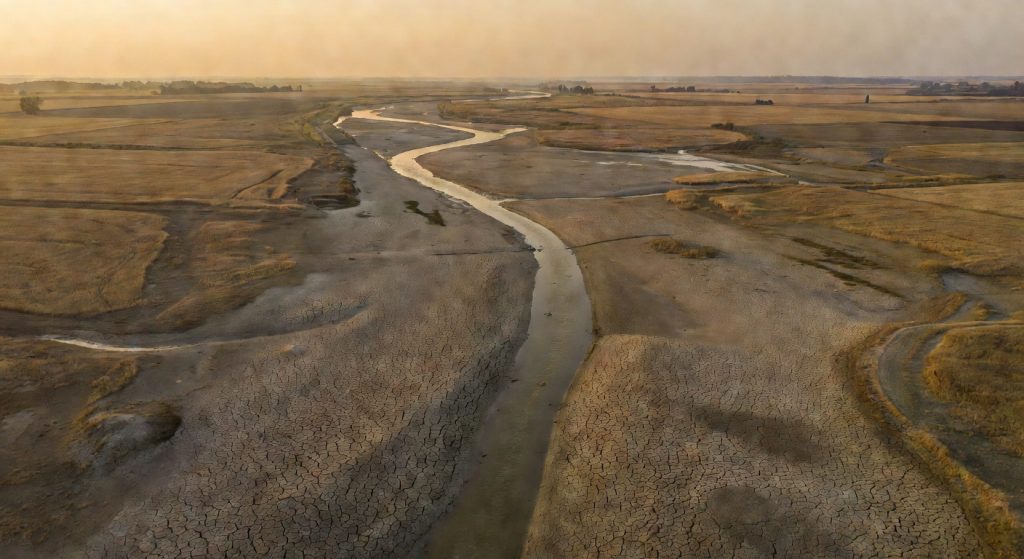
A stark warning has emerged from the latest United Nations-backed research: freshwater sources around the world are being depleted at a pace that outstrips their natural ability to recover. Combined with the confirmed record that 2024 was the hottest year in recorded history, according to NOAA, the picture forming for scientists, policymakers, and ordinary citizens is one of compounding, accelerating risk. Climate change is no longer a distant threat — it is reshaping the resources that underpin daily life, from the water in our taps to the food on our tables.
A Planet Under Water Stress: What the New Data Shows
The UN-linked report on water depletion arrives at a critical moment. Globally, aquifers, rivers, and reservoirs that took centuries to fill are being drawn down within decades. Agriculture accounts for roughly 70% of global freshwater withdrawals, meaning food systems sit at the very centre of this crisis. Industry and municipal supply chains are equally exposed.
For Europe, the warning is far from abstract. The continent has already experienced its most severe droughts in 500 years, according to European Drought Observatory data. The Po Valley in northern Italy, the Rhine basin in Germany, and the Iberian Peninsula have all recorded dramatic drops in river levels in recent summers, disrupting hydroelectric power generation, inland shipping, and crop irrigation simultaneously. Water stress is no longer a problem confined to the Global South — it is a present reality for European farmers, utilities, and city planners.
Researchers also flag that sea level rise may have been systematically underestimated in previous models, meaning coastal freshwater reserves face earlier salinisation than current infrastructure plans account for. This has direct consequences for environmental policy and adaptation investment across low-lying regions from the Netherlands to the Adriatic coast.
Climate Signals Are Stacking Up — And Policy Is Struggling to Keep Pace
The water crisis does not exist in isolation. It is one node in an interconnected web of escalating physical climate risks that include:
- Arctic warming proceeding at nearly four times the global average rate, disrupting jet streams and making European weather patterns more erratic
- Severe snow drought in mountain regions, reducing the natural water storage that feeds rivers through spring and summer
- Biodiversity loss accelerating as ecosystems are squeezed between habitat destruction, pollution, and shifting temperature ranges
- Increased wildfire and flood frequency, both of which degrade soil quality and reduce the land’s capacity to absorb and filter water
Against this backdrop, the IPCC continues to stress that rapid, deep emissions cuts remain the single most effective lever available to slow the cascade. Yet the political environment is turbulent. Reported moves in the United States to halt federal regulation of greenhouse gases and to dismantle climate research institutions introduce significant uncertainty into the global cooperation frameworks that European environmental policy depends on. The EU’s own Green Deal faces internal political pressure, even as the science demands more ambition, not less.
What This Means for Citizens, Business, and Decision-Makers
The convergence of water stress, record heat, and policy instability has concrete implications across sectors. For agriculture and food security, investment in drought-resistant crops, precision irrigation, and soil conservation is shifting from best practice to survival strategy. For industry and energy, companies reliant on water for cooling — including nuclear and thermal power plants — face operational risk that must be priced into long-term planning. The renewable energy transition, particularly the expansion of solar and wind capacity, becomes even more strategically urgent as water-dependent generation grows less reliable.
For cities and infrastructure planners, the message is to stop treating water management as a utility maintenance issue and start treating it as a climate adaptation priority. Sustainable urban drainage, wetland conservation, and nature-based solutions are not expensive luxuries — they are cost-effective insurance against disruption that is already arriving.
European citizens, too, have a role. Reducing household water consumption, supporting conservation-minded agricultural policy, and demanding accountability from elected representatives on environmental policy commitments all matter at scale.
Key takeaway: The depletion of global water sources is not a future scenario — it is a present emergency, and the latest UN-backed findings confirm that the window for effective action is narrowing. Europe has both the regulatory architecture and the technological capacity to lead a serious response. The question is whether political will can match the urgency that the science now demands.