EU Green Deal in 2024: Carbon Markets, Reporting Rules, and the Push for Industrial Competitiveness
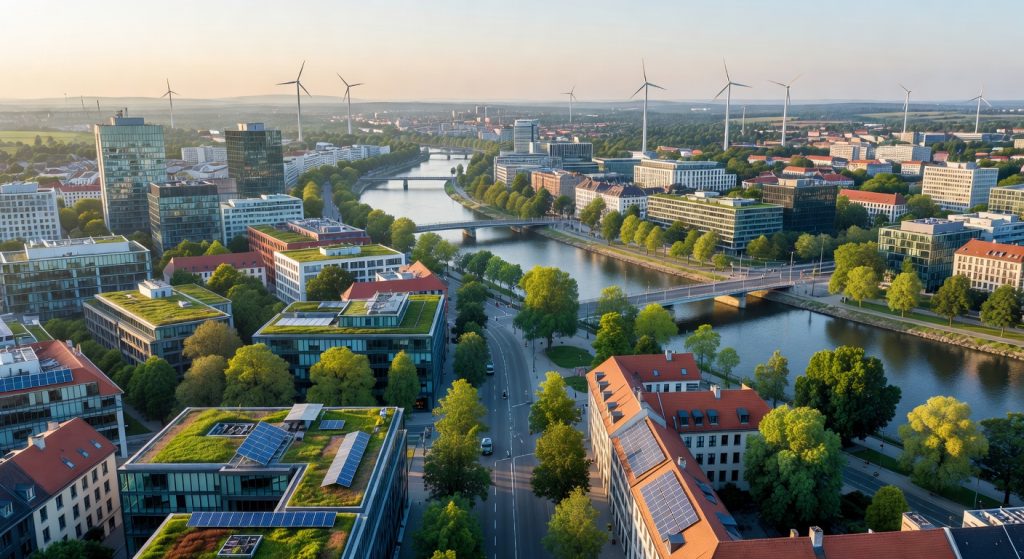
The European Green Deal is no longer a distant blueprint — it is an active, legally binding transformation of how Europe produces energy, runs its industries, and accounts for its environmental impact. With the EU Climate Law locking in climate neutrality by 2050 and a 55% reduction in greenhouse gas emissions by 2030, the policy machinery is now firmly in motion. And in February 2024, the European Commission raised the stakes further by recommending a 90% emissions-reduction target for 2040, signalling that the pace of change will only accelerate.
For citizens, businesses, and policymakers alike, understanding where the Green Deal stands today — and what its key instruments actually require — is no longer optional. It is essential.
Carbon Pricing and the Border Adjustment Mechanism: Raising the Cost of Pollution
At the heart of the EU’s climate policy architecture lies carbon pricing. The EU Emissions Trading System (EU ETS) remains the world’s largest carbon market, forcing heavy industry and energy producers to pay for every tonne of CO₂ they emit. As free allowances are progressively phased out, the financial pressure on high-emitting sectors is intensifying.
Complementing the ETS is the Carbon Border Adjustment Mechanism (CBAM), one of the most significant trade-related environmental regulations in EU history. CBAM is designed to prevent carbon leakage — the risk that European companies relocate production to countries with weaker climate rules, or that cheaper, carbon-intensive imports undercut greener European goods. By placing a carbon price on imports of steel, cement, aluminium, fertilisers, hydrogen, and electricity, the EU is effectively extending its environmental regulation beyond its own borders.
CBAM entered its transitional phase in October 2023, with full financial obligations kicking in from 2026. For global trading partners — from China to the United States — this is a wake-up call: access to the European single market will increasingly depend on how cleanly goods are produced.
Sustainability Reporting: 50,000 Companies Face a New Transparency Era
The Green Deal’s reach extends deep into corporate boardrooms through the Corporate Sustainability Reporting Directive (CSRD). According to analysis by PwC, approximately 50,000 companies across Europe will be required to publish audited, standardised ESG (environmental, social, and governance) information under the new framework.
This is a radical departure from the voluntary, often inconsistent sustainability reporting of the past. Under CSRD, companies must disclose not only their own emissions and environmental risks, but also how their business model aligns with the EU’s climate targets — a concept known as double materiality. The directive applies to large EU companies first, with smaller listed firms following in subsequent years.
The implications for supply chains are profound. Multinationals sourcing from European suppliers will face pressure to ensure their partners meet reporting standards, effectively globalising the EU’s sustainability expectations far beyond European borders.
Industrial Competitiveness: Can Europe Decarbonise and Grow at the Same Time?
One of the central tensions in EU climate policy is how to reconcile aggressive decarbonisation with economic competitiveness — particularly as the United States pours hundreds of billions into clean technology through the Inflation Reduction Act.
The EU’s response has been the Green Deal Industrial Plan, supported by the Net-Zero Industry Act and the Critical Raw Materials Act. Together, these instruments aim to:
- Scale up manufacturing of clean technologies such as solar panels, wind turbines, and batteries within Europe
- Secure supply chains for critical minerals essential to the green transition
- Reduce strategic dependencies on single suppliers, particularly for rare earths and lithium
The Just Transition Fund adds a social dimension, directing investment toward regions and workers most exposed to the shift away from fossil fuels — from coal-mining communities in Poland to industrial zones in Germany.
What This Means for Businesses and Citizens
The cumulative weight of these policies — carbon markets, CBAM, CSRD, and industrial strategy — signals a fundamental restructuring of the European economy. Companies that treat compliance as a tick-box exercise risk falling behind; those that embed sustainability into their core strategy stand to benefit from new market opportunities and investor confidence.
For citizens, the Green Deal represents both a promise and a challenge: cleaner air, more resilient energy systems, and green jobs, but also higher short-term costs and the need for genuine social support during the transition.
Key takeaway: The EU Green Deal is not a future ambition — it is today’s regulatory reality. With the 2040 target now on the table and instruments like CBAM and CSRD already in force, Europe is building the world’s most comprehensive framework for climate policy and environmental regulation. The question for every stakeholder is no longer whether to adapt, but how fast.