The EU Green Deal in 2025: What the Regulatory Roadmap Means for Businesses and Citizens
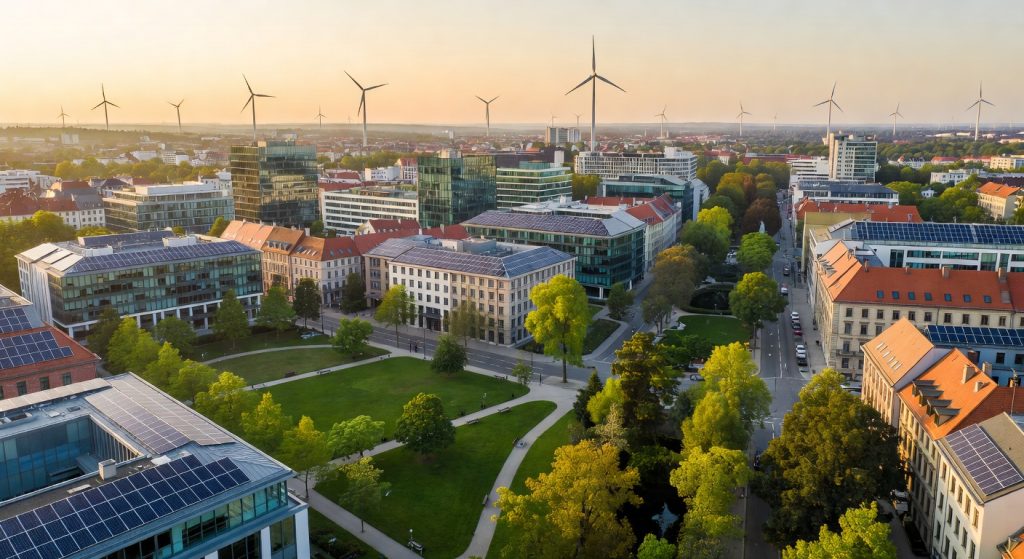
The European Green Deal is no longer a vision on paper — it is a dense, accelerating body of law that is actively reshaping how European companies operate, how goods cross borders, and how citizens heat their homes and power their cars. As implementation deepens across multiple regulatory fronts, understanding the architecture of this framework has become essential for anyone engaged with climate policy, business strategy, or public life in Europe.
A Framework Built on Interlocking Pillars
At its core, the EU Green Deal is the European Commission’s master plan to make Europe the world’s first climate-neutral continent by 2050, with an intermediate target of cutting net greenhouse gas emissions by at least 55% by 2030 compared to 1990 levels — the so-called Fit for 55 package. This is not a single law but a constellation of regulations and directives that together cover virtually every sector of the economy.
Key pillars include:
- The European Climate Law, which enshrines the 2050 neutrality target and the 2030 milestone into binding EU legislation.
- The Carbon Border Adjustment Mechanism (CBAM), which places a carbon price on imports of steel, cement, aluminium, fertilisers, electricity, and hydrogen — effectively extending EU carbon markets beyond European borders.
- The Energy Efficiency Directive (EED) and updated LULUCF rules, which govern energy consumption targets and land-use emissions respectively.
- The Just Transition Fund, designed to ensure that the shift away from fossil fuels does not leave behind workers and communities in carbon-intensive regions.
Together, these instruments form a regulatory ecosystem that is simultaneously a climate tool, an industrial policy, and a social compact.
Sustainability Reporting and Corporate Compliance: The Pressure Is Real
For businesses, the most immediate and material pressure points are concentrated in three areas: sustainability reporting, supply-chain due diligence, and carbon-border exposure. The Corporate Sustainability Reporting Directive (CSRD) requires large companies — and eventually many mid-sized ones — to disclose detailed environmental, social, and governance data under standardised European Sustainability Reporting Standards (ESRS). This is a significant step beyond the previous Non-Financial Reporting Directive and places Europe at the forefront of mandatory ESG disclosure globally.
Alongside CSRD, the EU Deforestation Regulation demands that companies prove key commodities — including soy, cattle, palm oil, wood, and cocoa — have not contributed to deforestation before they can be sold on the European market. The Critical Raw Materials Act adds another layer, pushing companies to audit and diversify supply chains for minerals essential to clean-tech manufacturing, from lithium to rare earths.
According to analysis by PwC, these measures collectively force a fundamental rethink of corporate sourcing, investment planning, and investor communication. Compliance is no longer a back-office function — it is a boardroom priority.
Clean Technology, Investment, and the Global Race
The environmental regulation side of the Green Deal is inseparable from its industrial ambition. The Commission has consistently framed the transition as an economic opportunity: cleaner air, more energy-efficient buildings, a booming renewables sector, and European leadership in green technology. The Net-Zero Industry Act and the Green Deal Industrial Plan are designed to keep clean-tech manufacturing — from solar panels to heat pumps — anchored in Europe, particularly as competition from the United States’ Inflation Reduction Act and Chinese industrial subsidies intensifies.
This global context matters. The CBAM, for instance, is not only a climate instrument — it is also a competitiveness mechanism, ensuring that European producers subject to the EU Emissions Trading System (ETS) are not undercut by imports from countries with weaker carbon pricing regimes. As CBAM moves from its transitional phase into full operation, its trade and diplomatic implications will grow significantly.
Implications for Citizens and Decision-Makers
For citizens, the Green Deal translates into tangible changes: stricter vehicle emissions standards, renovation incentives for homes, and evolving energy bills shaped by the clean-energy transition. For policymakers at national and regional level, it means transposing directives, managing just-transition funding, and navigating the tension between ambition and social acceptability.
The central challenge ahead is not legislative — most of the major laws are already in place. It is implementation: ensuring that regulations are enforced consistently across 27 member states, that smaller businesses are not overwhelmed by compliance costs, and that the transition remains politically durable.
Key takeaway: The EU Green Deal has moved from agenda to architecture. Its regulatory pillars — spanning carbon markets, sustainability reporting, trade policy, and clean-tech investment — are now the operating environment for European business and governance. Engaging seriously with this framework is not optional; it is the baseline for operating in 21st-century Europe.