EU Green Deal in 2025: Ambitious Targets, Slow Delivery, and What It Means for Business and Citizens
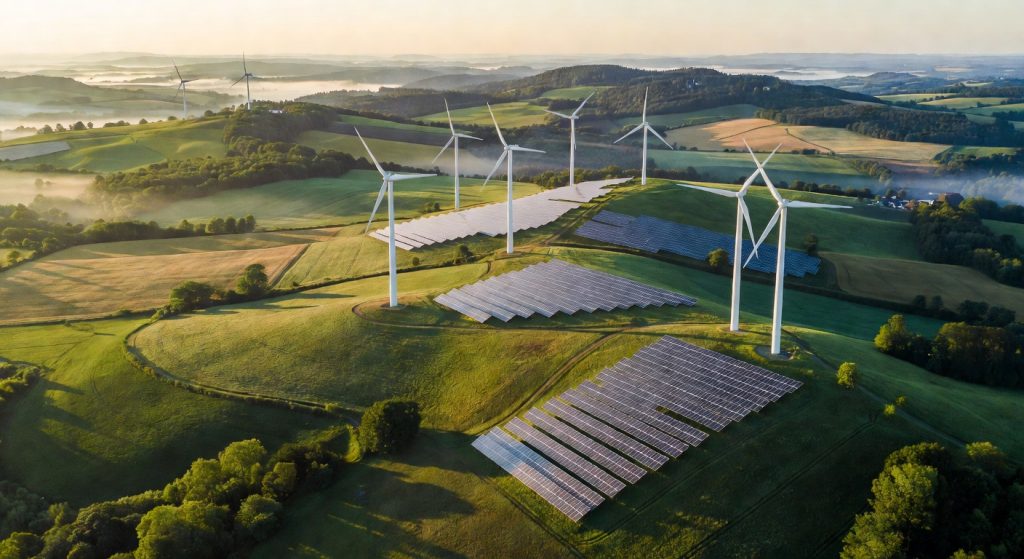
The EU Green Deal remains the most ambitious environmental regulation framework in the world — but ambition and delivery are not the same thing. A January 2025 assessment by the European Commission’s Joint Research Centre (JRC) found that only 32 out of 154 targets are currently on track, while 64 require significant acceleration. With the 2030 deadline for a 55% reduction in greenhouse gas emissions (versus 1990 levels) now less than five years away, the gap between policy design and real-world implementation is becoming impossible to ignore.
A Legislative Machine Still Running at Full Speed
Since its launch in 2019, the EU Green Deal has generated an extraordinary volume of legislation. By January 2025, the European Commission had proposed 168 separate initiatives under the Green Deal framework. Of these, 98 have been formally adopted, while 37 remain under negotiation — a sign that the policy pipeline is far from exhausted.
The centrepiece is the Fit for 55 package, a bundle of interconnected laws designed to align EU climate policy with the legally binding 2050 climate-neutrality goal. This includes reforms to the EU Emissions Trading System (ETS), new fuel standards for transport, energy efficiency directives, and the landmark Carbon Border Adjustment Mechanism (CBAM), which entered its transitional phase in 2023 and will be fully operational by 2026.
CBAM is particularly significant in a global context: it places a carbon price on imports of steel, cement, aluminium, fertilisers, electricity, and hydrogen, effectively extending EU carbon markets beyond European borders. For trading partners in Asia, North Africa, and the Americas, this is no longer a distant regulatory concern — it is a present commercial reality reshaping supply chains and export strategies.
Sustainability Reporting: The New Corporate Compliance Frontier
Beyond carbon pricing, the Green Deal is fundamentally changing how companies account for their environmental and social footprint. Two regulations in particular are driving this shift:
- CSRD (Corporate Sustainability Reporting Directive): Requires large companies — and eventually many SMEs — to disclose detailed, audited data on climate risks, environmental impacts, and sustainability strategy. Thousands of European firms are now inside scope, with first reports due in 2025 for the largest entities.
- CSDDD (Corporate Sustainability Due Diligence Directive): Goes further, imposing legal obligations on companies to identify, prevent, and address human rights and environmental harms across their entire value chain — including suppliers outside the EU.
Together, these instruments represent a structural shift in environmental regulation: sustainability is no longer a voluntary reporting exercise or a reputational choice. It is becoming a legal obligation with financial and operational consequences. For businesses, this creates both compliance costs and competitive opportunities — those who build robust sustainability systems early will be better positioned as requirements tighten.
The Implementation Gap: Where the Green Deal Is Falling Short
The JRC’s mixed verdict on Green Deal delivery reflects a broader tension at the heart of European climate policy: the distance between legislating change and achieving it. Sectors including transport, agriculture, and building renovation are among those where progress is lagging most visibly. Renewable energy deployment, while accelerating, still faces permitting bottlenecks and grid infrastructure constraints across member states.
Political headwinds have also emerged. The 2024 European Parliament elections shifted the balance somewhat rightward, prompting debates about the pace and cost of the green transition — particularly for industry and farming communities. Some legislative revisions, including adjustments to the Nature Restoration Law and delays in certain vehicle emissions rules, reflect this pressure.
Implications for Citizens, Businesses, and Policymakers
For citizens, the Green Deal translates into higher energy efficiency standards in homes, cleaner air targets, and eventually lower energy bills — but also short-term costs during the transition. For businesses, the message is clear: sustainability reporting, carbon pricing, and supply-chain due diligence are permanent features of the European market, not temporary disruptions. For policymakers, the JRC data is a call to close the implementation gap before 2030 targets become unreachable.
Key Takeaway
The EU Green Deal is the world’s most comprehensive climate policy framework — and it is producing real, legally binding change across carbon markets, trade, and corporate governance. But with fewer than a quarter of its targets currently on track, the next five years will determine whether Europe’s green ambition becomes a genuine transformation or an incomplete promise. The legislation exists. Now comes the harder work of delivery.