Gene-Edited Crops: A Climate Lifeline for Global Food Systems or a Regulatory Minefield?
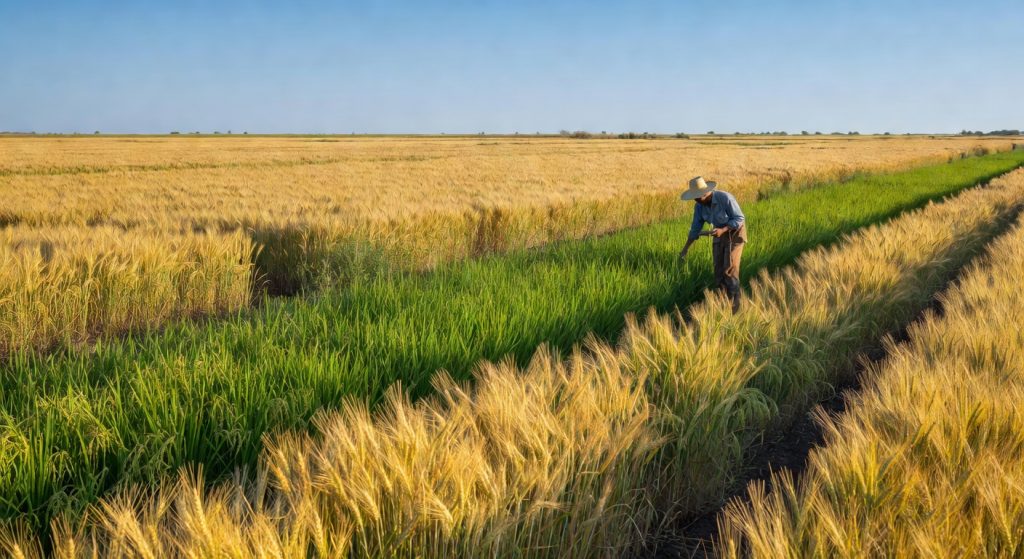
As climate change accelerates, the pressure on global food systems has never been more intense. Droughts, heatwaves, and unpredictable growing seasons are threatening harvests from the Po Valley to sub-Saharan Africa. Into this crisis steps a new generation of gene-edited crops — not the controversial GMOs of the 1990s, but precision-engineered varieties designed to feed a warming world. Recent research and commercialisation updates suggest we may be approaching a turning point in sustainable agriculture.
Breakthrough Science: What the Numbers Actually Tell Us
The headline figures are striking. Heat-tolerant rice varieties developed through gene editing have reported yield gains of 53% and 43% under normal temperatures — and an extraordinary 273% and 103% above 40°C compared to conventional varieties. For farmers in South and Southeast Asia, where heatwaves are becoming routine, this is not an abstract statistic. It is the difference between a viable harvest and a failed one.
Elsewhere, researchers in Taiwan have engineered a thale cress plant capable of capturing approximately 50% more CO₂ than its unmodified counterpart — a development with potential implications for both carbon sequestration and crop productivity. In Kenya, a blight-resistant GM potato could reach farmers as early as next year, targeting one of the most destructive diseases affecting a staple crop for millions of smallholder families. Meanwhile, gene-edited wheat varieties with significantly higher dietary fibre content point toward a future where food system adaptation and public health goals align.
These are not isolated laboratory curiosities. They represent a convergent wave of innovation across climate resilience, nutrition enhancement, and supply chain sustainability — all areas where conventional plant breeding has struggled to keep pace with the speed of environmental change.
The Regulatory Landscape: Progress, Patchwork, and the European Question
Science moves faster than policy, and the regulatory picture remains uneven. Chile made history by becoming the first country in the Americas to approve gene-edited wheat for field cultivation, after its agricultural authority SAG confirmed that CRISPR-edited wheat lines do not qualify as GMOs under national law. Argentina is reportedly close to approving 11 new GM crops in 2025, including insect-resistant corn and soybean, while Bioceres has signed a commercial deal to bring drought-tolerant HB4 wheat to the US market.
Europe, characteristically, is navigating its own path. The European Commission’s proposed New Genomic Techniques (NGT) regulation — still working through the legislative process — aims to create a lighter-touch approval pathway for certain gene-edited plants, distinguishing them from traditional GMOs. Proponents argue this is essential for keeping European agriculture competitive and for embedding climate resilience into the continent’s food supply chains. Critics, including several agroecology and organic farming organisations, warn that fast-tracking deregulation risks undermining biodiversity protections and consumer choice.
The tension is real, but so is the urgency. Europe imports significant volumes of soy and other commodities whose supply chain sustainability is already under strain from climate disruption. Developing domestically adapted, resilient varieties — whether through gene editing or other means — is increasingly a strategic as well as an environmental priority.
Implications for Farmers, Consumers, and the Food Transition
For the food transition to succeed, it must work at every level of the supply chain. Gene-edited crops offer several potential contributions:
- Reduced input dependency: Drought and disease resistance can lower the need for irrigation and pesticides, supporting more sustainable agriculture practices.
- Nutritional improvement: Higher-fibre wheat and other enhanced varieties could complement plant-based dietary shifts already underway across Europe.
- Smallholder resilience: In regions like East Africa, blight-resistant or heat-tolerant varieties could protect livelihoods where climate stress is already acute.
- Lower land pressure: Higher yields per hectare reduce the incentive to convert natural ecosystems, a key concern in any serious agroecology framework.
None of this means gene editing is a silver bullet. Critics rightly note that technological fixes do not address the structural drivers of food insecurity, and that biodiversity — the foundation of long-term agricultural resilience — must be actively protected, not eroded by monoculture expansion in new guises.
The key takeaway is this: gene-edited crops are moving rapidly from research to reality, and the decisions made now — in Brussels, in national capitals, and in farming communities — will shape whether this technology becomes a genuine tool for food system transformation or another missed opportunity. Europe has the scientific capacity, the regulatory sophistication, and the sustainability ambition to lead. The question is whether it will act with enough urgency to matter.