Gene-Edited Crops Are Delivering Real Results — What It Means for Europe’s Food Future
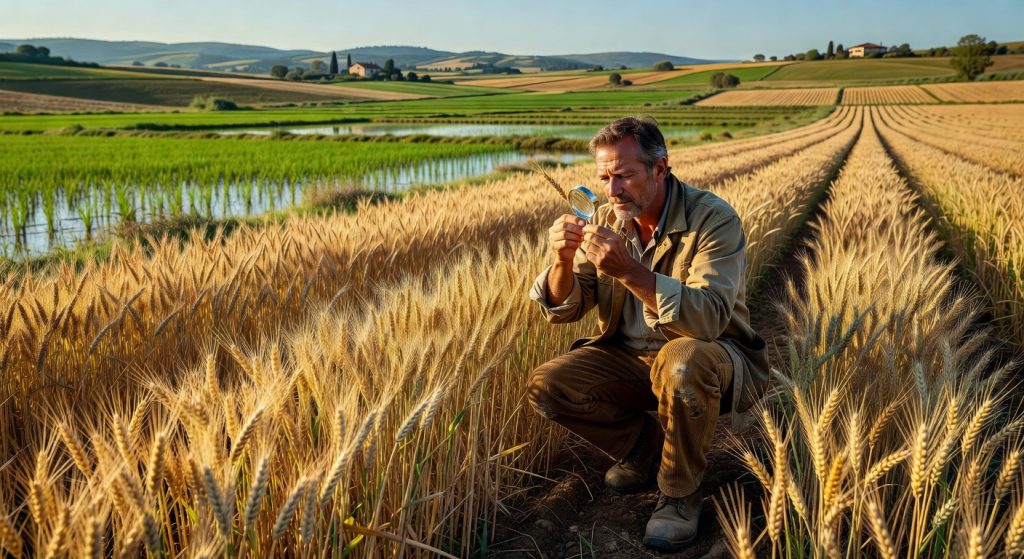
A quiet revolution is unfolding in agricultural research labs and trial fields around the world. Gene-edited and genetically modified crops are no longer just a promise on paper — they are delivering measurable gains in yield, climate resilience, and nutritional quality. As Europe navigates its own complex debate around crop biotechnology, the latest wave of results deserves serious attention from citizens, food businesses, and policymakers alike.
Breakthrough Results: Heat, CO₂, and Nutrition
The numbers coming out of recent trials are striking. UK-linked research on gene-edited heat-tolerant rice reported yield gains of 53% and 43% under normal temperatures — and, more remarkably, gains of 273% and 103% above 40°C compared to conventional varieties. With a large-scale UK field trial now planned, this work could represent a turning point for staple crop production in a warming world where extreme heat events are becoming the norm, not the exception.
Meanwhile, Taiwanese researchers have engineered thale cress — a plant widely used as a scientific model — to capture approximately 50% more CO₂ while producing more than twice as many seeds. Though thale cress is not itself a food staple, the underlying mechanisms could be transferred to crops like rice or wheat, opening a potential pathway toward plants that simultaneously mitigate climate change and improve food system productivity.
On the nutrition front, Chilean start-up Neocrop Technologies has developed a CRISPR-edited wheat variety containing five to ten times more dietary fibre than conventional white flour, while reportedly preserving the taste and texture consumers expect. For the plant-based food sector and for public health goals across Europe, this kind of innovation could support healthier reformulation without asking consumers to change their habits.
Regulatory Momentum Is Building — But Unevenly
The science is accelerating, and so is the regulatory and commercial landscape — though not uniformly. Argentina is reportedly moving toward approving a record 11 new GM crops in 2025, and Bioceres has signed a commercialisation deal for its drought-tolerant HB4 wheat in the United States. These moves signal that, in parts of the Global South and in North America, the integration of climate-adapted crops into mainstream supply chains is well underway.
Europe’s position remains more cautious. The EU’s ongoing revision of its New Genomic Techniques (NGT) regulation has been a slow and politically contested process, with member states divided over how to treat CRISPR-edited crops versus traditional GMOs. Proponents of sustainable agriculture argue that blanket restrictions risk leaving European farmers without tools their global competitors are already using — particularly as climate stress on harvests intensifies. Critics, including many agroecology advocates, raise legitimate concerns about intellectual property concentration, biodiversity impacts, and the risk of deepening industrial monocultures.
The tension is real, but so is the urgency. A food system built for supply chain sustainability cannot afford to ignore innovations that demonstrably reduce climate vulnerability — provided they are governed with transparency and genuine public interest at the centre.
What This Means for Europe’s Food Systems
For European citizens, the implications are tangible: more resilient staple crops could help stabilise food prices during climate-driven harvest failures, which have already pushed inflation across the continent in recent years. For food businesses investing in plant-based product lines, high-fibre wheat or CO₂-efficient grain crops could become valuable ingredients in a reformulated, lower-impact portfolio.
For policymakers, the challenge is governance. The key questions are not simply whether to allow gene-edited crops, but who controls them, how they are assessed for ecological risk, and whether smallholder farmers — not just agribusiness — can access them. A genuinely sustainable agriculture framework must hold both innovation and precaution together.
- Heat-tolerant rice could protect yields in Southern Europe and key import regions as temperatures rise.
- High-fibre CRISPR wheat aligns with EU public health targets and plant-based food growth.
- CO₂-capturing crop traits may eventually contribute to climate mitigation alongside emissions reduction.
Key takeaway: Gene-edited crops are moving from laboratory curiosity to field-tested reality faster than European regulation is moving to meet them. The science is not the only question — but ignoring it is no longer a neutral choice for anyone serious about the future of food.