From Rotterdam to Rotterdam: How Hydrogen, Wind, and Biomethane Are Scaling Up Clean Energy in 2025
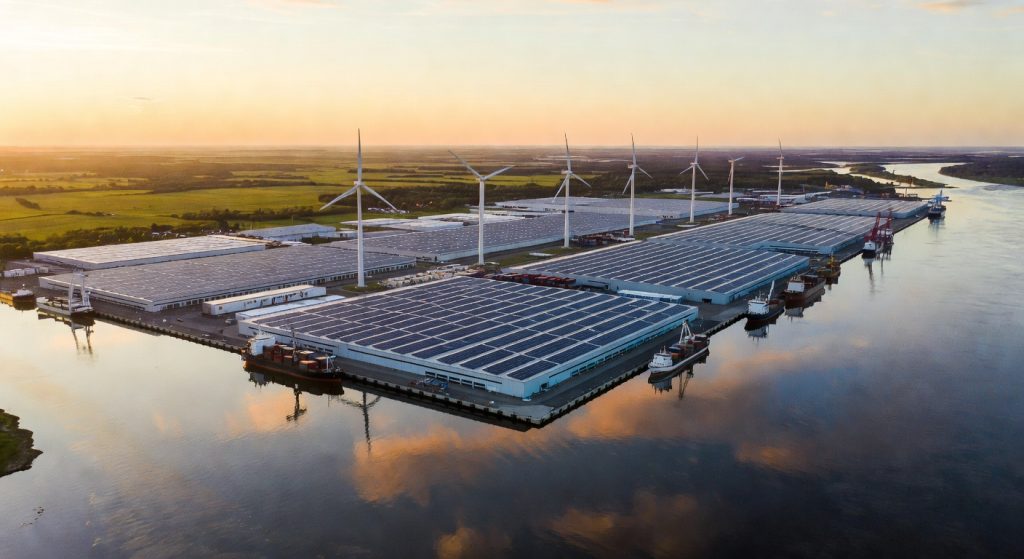
The clean energy transition is no longer a question of ambition — it is increasingly a question of execution. In the past 48 hours alone, a cluster of major investment decisions and policy approvals has underscored just how quickly renewable energy, hydrogen, and low-carbon gas are moving from planning documents to construction sites. From the Netherlands to Queensland, the signals are consistent: governments are backing large-scale projects, and industry is following.
Biomethane and Hydrogen: Europe’s Industrial Decarbonization in Motion
Two developments stand out for their implications across European energy and resource management. First, the Netherlands Enterprise Agency approved a €150 million SDE++ subsidy grant for the EemsGas biomethane project — one of the largest single allocations under the Netherlands’ flagship renewable energy support scheme. Biomethane, produced from organic waste and agricultural residues, sits at the intersection of circular economy principles and low-carbon gas supply. For businesses in the waste-to-energy and biogas sectors, this is a near-term investment signal that the EU’s push for low-carbon gas alternatives to Russian pipeline imports remains firmly on track.
Second, and perhaps even more consequential for industrial decarbonization, Air Liquide has taken a final investment decision on a 200 MW electrolyser project in Rotterdam, with TotalEnergies confirmed as the offtaker. Rotterdam is not a symbolic choice: it is Europe’s largest port and a critical hub for refining, chemicals, and heavy industry — precisely the sectors where hydrogen holds the greatest decarbonization potential. A 200 MW electrolyser at this scale represents a meaningful step beyond pilot projects, signalling that green hydrogen is entering the phase of genuine industrial deployment. The involvement of a major energy company as offtaker also reduces the demand-side risk that has historically slowed hydrogen investment decisions.
Wind Power and Battery Storage: Policy Mechanisms Still Drive Bankability
Beyond Europe, RWE secured a Capacity Investment Scheme contract for its 1.1 GW Theodore onshore wind project in Queensland, Australia. The project’s scale — over a gigawatt of wind capacity from a single development — reflects the growing confidence of European utilities in international renewable markets. Crucially, it also illustrates a pattern that holds across geographies: government-backed revenue mechanisms remain the backbone of project bankability. Without long-term price certainty, even the most technically sound wind and solar projects struggle to reach financial close.
Closer to home, the EU’s Net-Zero Industry Act awarded strategic project status to a fully integrated battery energy storage system (BESS) project in Bulgaria. This designation, which unlocks faster permitting and potential access to EU funding streams, reflects Brussels’ growing recognition that grid flexibility is not a secondary concern — it is a prerequisite for integrating higher shares of variable solar and wind generation. Battery storage also plays a quiet but essential role in energy efficiency at the system level, reducing curtailment and smoothing demand peaks that would otherwise require fossil-fuel backup capacity.
What These Developments Mean for Citizens, Businesses, and Policymakers
Taken together, these four developments paint a coherent picture of where the clean energy economy is heading:
- Policy support remains indispensable. Whether it is the Dutch SDE++ scheme, the EU Net-Zero Industry Act, or Australia’s Capacity Investment Scheme, public mechanisms are still the primary lever enabling private capital to flow into clean energy at scale.
- Industrial decarbonization is accelerating. The Rotterdam electrolyser and the EemsGas biomethane project are not peripheral experiments — they target hard-to-abate sectors where energy efficiency gains alone are insufficient.
- Storage and grid flexibility are becoming investment priorities. The Bulgarian BESS project signals that the EU is beginning to treat storage infrastructure with the same urgency as generation capacity.
- European utilities are going global. RWE’s Australian wind contract reflects a broader trend of European clean energy expertise and capital expanding into markets where renewable energy deployment is accelerating rapidly.
For citizens, these investments translate into cleaner air, more stable energy systems, and — over time — lower exposure to fossil fuel price volatility. For decision-makers, the message is clear: the window for establishing leadership in hydrogen, storage, and low-carbon gas is open, but it will not remain so indefinitely.
Key takeaway: The clean energy transition is entering an execution phase. Biomethane, electrolysers, large-scale wind, and battery storage are all securing real capital and real contracts — and the policy frameworks making this possible deserve as much attention as the technologies themselves.