Green Tech Acceleration in 2025: Ammonia, Long-Duration Storage, and Circular Cities Lead the Charge
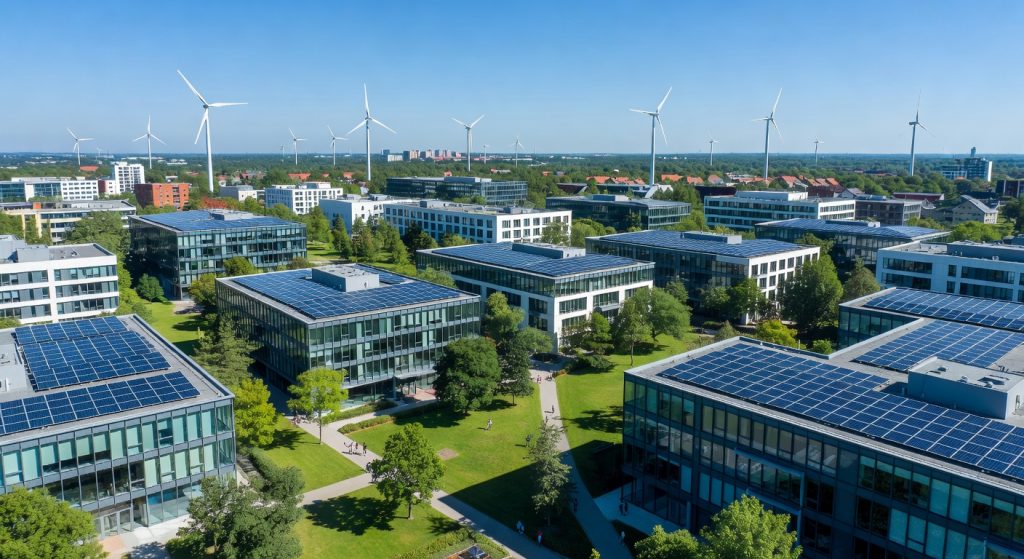
The energy transition is no longer a distant ambition sketched out in policy documents — it is becoming a bankable industrial reality. From green ammonia plants in South Africa to smart buildings reshaping European city blocks, the latest wave of cleantech investment signals that 2025 may be the year several critical technologies cross the threshold from pilot project to mainstream deployment. For citizens, businesses, and decision-makers, understanding where momentum is building — and why — has never been more important.
Green Hydrogen and Ammonia: Hard-to-Abate Sectors Finally Move
One of the most telling signals of the current moment comes from an unlikely location: South Africa. Reuters recently reported that a major green ammonia project there has selected Danish clean-energy firm Topsoe to supply electrolyser technology — a supply deal that marks a significant step from laboratory ambition to real-world infrastructure. Green ammonia, produced by combining green hydrogen with nitrogen, is increasingly seen as a critical clean fuel for shipping, fertilizer production, and heavy industry, sectors that are notoriously difficult to electrify directly.
For Europe, the implications are direct. The EU’s REPowerEU plan and the Hydrogen Strategy both hinge on importing green hydrogen and its derivatives from sun-rich regions in Africa, the Middle East, and Latin America. Projects like the South African one are precisely the upstream supply chain that European industry needs to decarbonize. As electrolyser costs continue to fall and project developers gain confidence, green innovation in this space is shifting from a niche bet to a strategic industrial pillar — one with serious consequences for European energy security and competitiveness under the Green Deal framework.
Long-Duration Storage and Smart Grids: Building Resilience Into the Energy System
Solar and wind power are now the cheapest sources of new electricity generation across most of Europe. But their intermittent nature creates a growing challenge: how do you keep the lights on when the sun sets and the wind drops? The answer increasingly lies in long-duration energy storage (LDES) — technologies capable of storing energy for hours, days, or even weeks. According to recent green-tech industry coverage, global LDES installations are on track to more than double versus 2024 capacity, driven by rising grid stress and policy incentives.
Alongside physical storage, AI-enabled energy platforms are emerging as a powerful complement. These systems use machine learning to predict demand, optimize dispatch, and integrate distributed energy resources — from rooftop solar to electric vehicle batteries — into a coherent, flexible grid. For smart cities across Europe, from Amsterdam to Milan, this combination of storage and intelligent software is becoming the backbone of a resilient, low-carbon urban energy system. The EU’s forthcoming Electricity Market Reform and the rollout of smart metering infrastructure will accelerate adoption further.
Low-Carbon Construction and the Circular Economy: Cities as Climate Solutions
Buildings account for roughly 40% of energy consumption and 36% of CO₂ emissions in the European Union, making the construction and real estate sector a central battleground for the energy transition. A new generation of green technology solutions is beginning to change the calculus for developers and city planners alike. CO₂-injected concrete — which permanently sequesters carbon dioxide within the material itself — and carbonated aggregates are cutting the embodied emissions of new structures. Advanced building automation systems, meanwhile, are slashing operational energy use in both commercial and residential buildings.
Beyond construction, the circular economy is gaining traction as a systemic lever. Battery recycling, plastic-to-fuel conversion, and textile upcycling are not just environmental goods — they are becoming viable business models that reduce raw material dependence and strengthen supply-chain resilience. For European industry, which faces both the Carbon Border Adjustment Mechanism and tightening resource regulations, circular solutions offer a competitive edge as much as a sustainability credential.
What This Means for Europe
Taken together, these developments paint a picture of an energy transition that is broadening and deepening simultaneously. Green hydrogen is finding real buyers. Storage is scaling to match the ambition of renewable energy targets. Cities are discovering that cleantech and urban liveability can reinforce each other. The challenge for European policymakers, investors, and businesses is to move at the speed the science and economics now permit — cutting red tape, mobilizing private capital, and ensuring that the benefits of green innovation reach communities across the continent, not just its wealthiest corners.
Key takeaway: The convergence of green ammonia infrastructure, long-duration storage, smart building technology, and circular-economy solutions marks a genuine inflection point in the global cleantech landscape. Europe is well-positioned to lead — but only if it matches its policy ambitions with the investment and implementation speed the moment demands.