EU Green Deal: From Bold Ambition to Hard Implementation
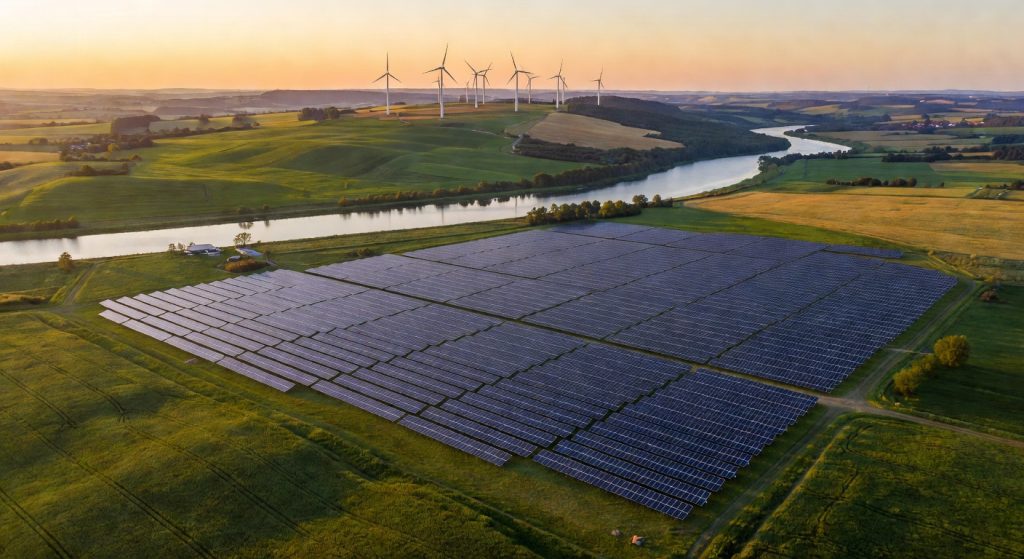
The European Union’s EU Green Deal was never just a vision statement. Launched in 2019, it set out to make Europe the world’s first climate-neutral continent by 2050. Five years on, the architecture is largely in place — but the real test has begun. The focus has shifted decisively from designing policy to delivering it, and the stakes for businesses, governments, and citizens across Europe could not be higher.
The 2030 Milestone: A Legally Binding Pathway
At the heart of the EU’s climate policy framework is the European Climate Law, which legally commits all 27 member states to net-zero emissions by 2050 and an intermediate target of at least 55% emissions reduction by 2030 compared to 1990 levels. According to the European Commission, current projections suggest the Fit for 55 package — a sweeping bundle of legislation covering energy, transport, buildings, and land use — could deliver approximately a 57% reduction, slightly exceeding the legal floor.
But projections are not delivery. The critical mechanism now is the submission and implementation of National Energy and Climate Plans (NECPs) by each member state. These plans translate EU-wide targets into national action, and their quality varies significantly across the bloc. The European Commission has already flagged gaps in several countries’ ambitions, making enforcement a central political issue for the years ahead.
Carbon Markets, CBAM, and the Competitiveness Question
Perhaps no area of environmental regulation generates more debate than carbon pricing. The EU Emissions Trading System (EU ETS) — the world’s largest carbon market — has been expanded under Fit for 55 to cover maritime shipping and, from 2027, buildings and road transport. A parallel ETS II for these new sectors is designed to send a carbon price signal directly to households and smaller businesses, a politically sensitive move that has prompted calls for robust social compensation mechanisms.
Alongside the ETS, the Carbon Border Adjustment Mechanism (CBAM) is emerging as a landmark tool in global climate diplomacy. Now in its transitional phase, CBAM will require importers of carbon-intensive goods — steel, cement, aluminium, fertilisers, and electricity — to pay a carbon price equivalent to what EU producers face. The goal is twofold: prevent carbon leakage, and create a powerful incentive for trading partners to raise their own climate standards. Critics argue it could strain trade relations; supporters see it as the most credible lever the EU has to globalise its climate ambition.
Industrial Policy and Sustainability Reporting: The Corporate Dimension
The Green Deal is also reshaping the rules of doing business in Europe. The Green Deal Industrial Plan, backed by the Net-Zero Industry Act and the Critical Raw Materials Act, aims to ensure that Europe manufactures a significant share of the clean technologies it needs — from solar panels and wind turbines to batteries and electrolysers. The target is for at least 40% of clean-tech deployment needs to be met by EU-made products by 2030.
On the corporate side, sustainability reporting is undergoing a transformation. The Corporate Sustainability Reporting Directive (CSRD) now requires tens of thousands of companies operating in the EU to disclose detailed environmental and social data under standardised European Sustainability Reporting Standards (ESRS). Combined with the Corporate Sustainability Due Diligence Directive (CS3D), these frameworks are fundamentally changing investor expectations and supply chain management across sectors.
What This Means for Citizens, Businesses, and Policymakers
The shift from ambition to implementation carries real-world implications at every level:
- Citizens will feel the transition through energy bills, building renovation requirements, and the gradual phase-out of combustion engine vehicles by 2035.
- Businesses face new compliance obligations around carbon costs, supply chain transparency, and sustainability reporting — but also significant opportunities in clean-tech markets.
- Policymakers at national and local level must close the gap between EU legislation and on-the-ground delivery, particularly on permitting for renewables and just transition support for fossil-fuel-dependent regions.
Key takeaway: The EU Green Deal’s legal framework is in place, but its success will be determined in the years ahead by enforcement, national implementation, and the ability to align environmental ambition with economic resilience. Europe is writing the rulebook for 21st-century climate governance — and the rest of the world is watching closely.