EU Green Deal: From Ambition to Action — What the Shift to Implementation Means for Business and Citizens
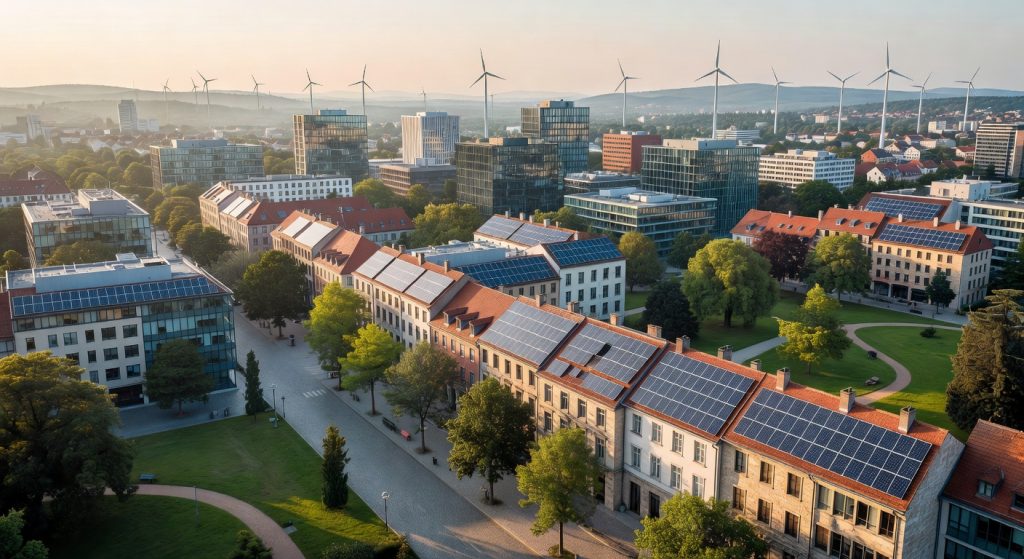
The EU Green Deal is no longer just a vision on paper. After years of landmark legislation — from the European Climate Law to the Fit for 55 package — the focus in 2024 and beyond has decisively shifted from drafting rules to making them work. For businesses, supply chains, and citizens across Europe, this transition from ambition to implementation is where the real impact begins to be felt.
The Policy Backbone: Binding Targets and a Broadening Carbon Market
At the core of Europe’s climate strategy sits a legally binding commitment: climate neutrality by 2050, with an intermediate target of reducing greenhouse gas emissions by at least 55% by 2030 compared to 1990 levels. These are not aspirational goals — they are enforceable obligations under the European Climate Law, giving the entire Green Deal framework a legal spine that no future government can simply discard.
Central to achieving these targets is the EU Emissions Trading System (EU ETS), the world’s largest carbon market. Recent reforms have significantly broadened its scope, bringing new sectors — including maritime transport and, from 2027, buildings and road transport — under carbon pricing coverage. This expansion means that more industries now face a direct financial cost for their emissions, creating powerful incentives to decarbonize. The carbon price signal, while subject to market fluctuations, remains one of the most effective tools in Europe’s environmental regulation toolkit.
CBAM and Industrial Policy: Closing the Loopholes, Building the Future
One of the most globally significant instruments now advancing toward full operation is the Carbon Border Adjustment Mechanism (CBAM). Currently in a transitional reporting phase, CBAM is designed to prevent “carbon leakage” — the risk that European companies simply relocate production to countries with weaker climate rules, or that cheaper, carbon-intensive imports undercut cleaner European goods. By placing a carbon price on imports of steel, cement, aluminium, fertilisers, electricity, and hydrogen, CBAM reshapes the competitive landscape and sends a clear signal to trading partners: Europe’s climate standards are not negotiable at the border.
At the same time, industrial policy and climate policy are now inseparable. The Green Deal Industrial Plan, the Net-Zero Industry Act, and the Critical Raw Materials Act together form a strategic framework aimed at scaling up clean-technology manufacturing inside Europe — from solar panels to battery gigafactories — while securing the supply chains for the minerals and materials the transition demands. This is Europe’s answer to the US Inflation Reduction Act: a bet that industrial competitiveness and decarbonization can reinforce each other rather than conflict.
Compliance Readiness: The Growing Weight of Sustainability Reporting
For companies operating in or trading with Europe, the compliance landscape is becoming significantly more demanding. Sustainability reporting obligations are expanding under the Corporate Sustainability Reporting Directive (CSRD), which requires thousands of companies — including non-EU firms with significant European operations — to disclose detailed environmental, social, and governance data. While some implementation timelines have been adjusted, giving businesses more time to adapt, the direction of travel is unambiguous.
Supply chain due diligence requirements are also tightening, with the Corporate Sustainability Due Diligence Directive (CSDDD) adding further obligations around human rights and environmental impacts across value chains. For procurement teams, legal departments, and sustainability officers, climate policy is no longer a peripheral concern — it sits at the heart of business strategy.
What This Means for Citizens and Decision-Makers
For European citizens, the Green Deal’s implementation is becoming tangible: more renewable energy on the grid, stricter energy efficiency standards for homes and appliances, and a gradual but accelerating reduction in dependence on fossil fuels. The just transition dimension — ensuring that the costs and benefits of this shift are fairly distributed — remains a critical political challenge, particularly for workers in carbon-intensive industries and for lower-income households facing energy costs.
- Businesses must prioritise compliance readiness, clean supply chains, and transparent sustainability reporting.
- Investors face growing pressure to align portfolios with EU taxonomy standards and climate risk disclosure requirements.
- Policymakers must balance the pace of implementation with economic competitiveness and social equity.
Key takeaway: The EU Green Deal has passed its most dramatic legislative moment. What comes next — rigorous implementation, expanding carbon markets, and tighter compliance across industries — will determine whether Europe’s climate commitments translate into real-world emissions reductions. For anyone operating in the European economy, the time to prepare is now, not when the deadlines arrive.