Algae Fertiliser Boosts Yields by 21%: Is This the Future of Sustainable Agriculture?
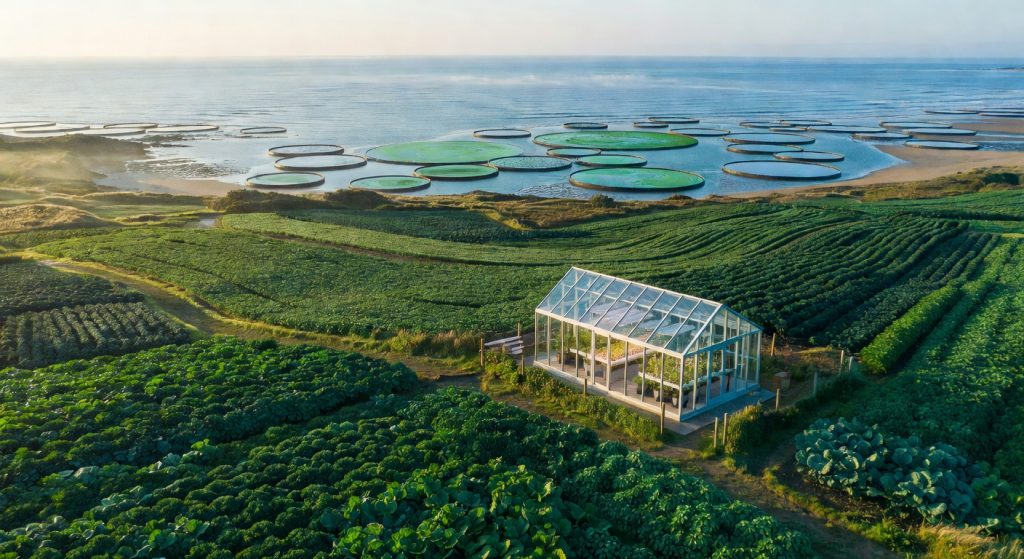
A quiet revolution may be taking root in the world’s fields. Field trials of an algae-based fertiliser have produced a 21% increase in crop yield, according to BBC News — a result that is turning heads across the agricultural sector and reigniting debate about how we feed the world without destroying it. At a time when food systems are under pressure from climate stress, rising input costs, and tightening environmental regulation, this kind of low-impact innovation could not be more timely.
Why Algae? The Science Behind the Breakthrough
Conventional synthetic fertilisers are among the most carbon-intensive inputs in modern agriculture. Their production relies heavily on fossil fuels — particularly through the Haber-Bosch process for nitrogen — and their overuse contributes to soil degradation, water pollution, and greenhouse gas emissions. The European Union’s Farm to Fork Strategy has already set a target to reduce fertiliser use by at least 20% by 2030, creating both regulatory pressure and market opportunity for alternatives.
Algae-based fertilisers work differently. Rich in natural growth hormones, micronutrients, and organic matter, they stimulate plant development while improving soil biology. Unlike synthetic inputs, they are produced with minimal carbon footprint and can be cultivated using wastewater or seawater, making them a genuinely circular solution. A 21% yield increase in real field conditions — not just controlled lab settings — is a significant validation of their commercial potential.
For European farmers already navigating the twin pressures of profitability and sustainability compliance, a nature-based input that demonstrably improves productivity is a compelling proposition. It also aligns with the growing agroecology movement, which advocates for farming systems that work with natural processes rather than against them.
A Shifting Landscape: Private Innovation Fills a Public Funding Gap
The algae fertiliser breakthrough arrives against a turbulent backdrop for food system sustainability. In the United States, the Trump administration has cut funding for nearly two dozen farm and food resilience projects, according to Civil Eats — including initiatives tied to solar-powered greenhouses, wild rice cultivation, and agroecology support for underserved farming communities. The rollback signals a retreat from public investment in climate-adaptive food systems that could have global ripple effects.
Into this gap, private capital is stepping forward — with mixed implications. Agriculture Dive reports that FBN and the Walton family have launched a farmland-loan pilot specifically designed to incentivise regenerative agriculture, offering financial terms that reward producers who adopt more sustainable practices. Meanwhile, companies like CH4 Global are commercialising methane-reducing feed additives, and Syngenta is deploying AI-driven tools for biostimulant development — both targeting emissions reduction and farm efficiency.
These developments reflect a broader trend: as public policy wavers, private-sector innovation and finance are becoming primary drivers of supply chain sustainability. This is not without risk. Market-led transitions can exclude smallholders, favour large agribusinesses, and lack the accountability of regulated public programmes. Europe’s strength lies in its ability to combine regulatory ambition with targeted public investment — a model worth defending and expanding.
Implications for European Food Systems and Policy
For European decision-makers, the algae fertiliser story is more than a scientific curiosity — it is a policy signal. The EU is already investing in bio-based and circular economy solutions through programmes like Horizon Europe and the European Green Deal. Scaling nature-based agricultural inputs such as algae fertilisers fits squarely within these frameworks and could help member states meet Farm to Fork targets without sacrificing food security.
Key areas to watch include:
- Regulatory pathways: Algae-based products must navigate EU fertiliser regulations (Regulation EU 2019/1009), and streamlining approval for proven bio-inputs would accelerate adoption.
- Farmer access: Subsidies or agri-environment scheme credits for low-carbon inputs could make algae fertilisers accessible beyond large commercial operations.
- Research investment: Continued public funding for agroecology and plant-based input research ensures Europe does not cede leadership to private actors alone.
The global context matters too. If algae fertilisers can be produced at scale and at competitive cost, they represent a genuine tool for reducing agriculture’s environmental footprint worldwide — particularly relevant for regions where synthetic fertiliser dependency drives both economic vulnerability and ecological damage.
The key takeaway: A 21% yield increase from an algae-based fertiliser is not just a promising trial result — it is a glimpse of what sustainable agriculture can look like when nature-based solutions are taken seriously. Europe has both the regulatory framework and the scientific capacity to lead this transition. The question is whether public ambition will keep pace with private innovation, and whether the benefits will reach all farmers, not just the largest ones.