Europe’s Clean Energy Push Accelerates: Offshore Wind, Green Hydrogen, and Solar Lead the Way
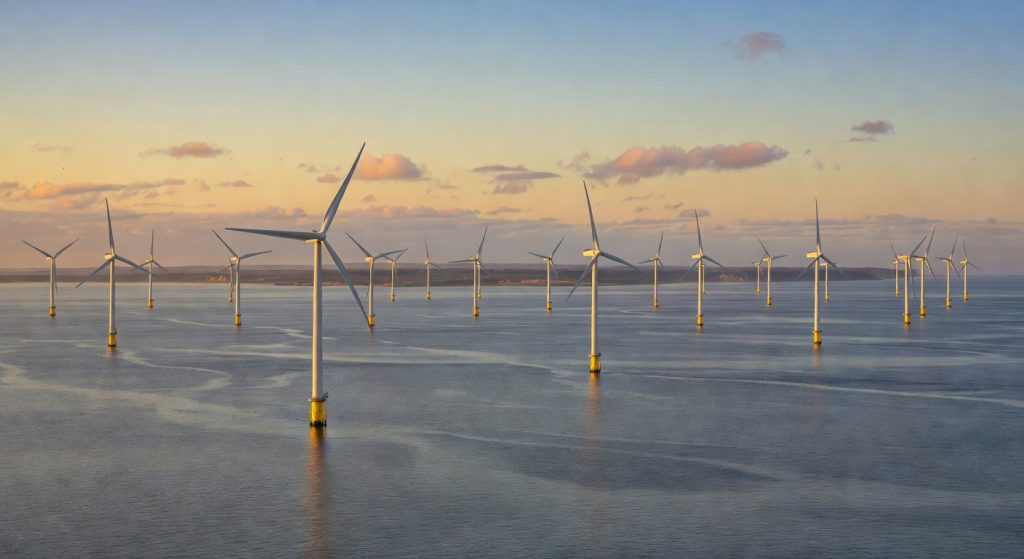
Europe’s clean energy transition is no longer a distant ambition — it is happening in real time, turbine by turbine, electrolyser by electrolyser. A wave of major project milestones announced in recent weeks paints a picture of a continent doubling down on renewable energy, green hydrogen, and smarter resource management as the twin pressures of climate urgency and energy security intensify.
Offshore Wind: From Ambition to Steel in the Water
France is preparing to commission the Dieppe–Le Tréport Offshore Wind Farm, currently in intensive construction and expected to reach full operation in the second half of 2026. The project represents a significant step forward for a country that has historically lagged behind its European neighbours in deploying offshore wind capacity. With the French government accelerating permitting and investment frameworks, Dieppe–Le Tréport signals that the country is serious about catching up.
Meanwhile, in the Baltic Sea, Poland’s Baltica 2 project — a 1.5 GW joint venture between Danish developer Ørsted and Polish energy group PGE — has begun offshore installation. At 1.5 gigawatts, Baltica 2 will become one of the largest offshore wind farms in the Baltic corridor and a cornerstone of Poland’s effort to reduce its historic dependence on coal. The project also sends a strong signal to investors: the Baltic Sea is open for business, and the regulatory environment is maturing.
Together, these developments reinforce offshore wind expansion as a core pillar of European energy security — a lesson driven home by the energy price shocks that followed Russia’s invasion of Ukraine in 2022. Diversifying generation through domestic renewables is no longer just an environmental choice; it is a strategic imperative.
Solar Innovation and the Hydrogen Leap
On the solar front, US-based Enphase Energy has opened pre-orders for its IQ9S-3P Commercial Microinverter — the company’s most powerful microinverter to date. While the launch targets the American market, the technology trajectory matters globally: higher-efficiency commercial solar systems reduce the cost per kilowatt-hour and make distributed generation more viable for businesses, municipalities, and communities. As European commercial solar installations scale up, innovations like this will inevitably shape procurement decisions across the continent.
Perhaps the most strategically significant announcement, however, concerns green hydrogen. French industrial gases giant Air Liquide has taken a final investment decision on a 200-MW electrolyser project at the Port of Rotterdam, with energy major TotalEnergies signed on as a key offtaker. Rotterdam — Europe’s largest port and a critical hub for industrial resource management — is positioning itself as the continent’s green hydrogen gateway. A 200-MW electrolyser at this scale will produce significant volumes of low-carbon hydrogen for industrial processes that are notoriously difficult to electrify directly, including chemicals, refining, and heavy manufacturing.
This investment also highlights the growing importance of water as a feedstock in the clean energy economy: electrolysis splits water molecules to produce hydrogen, meaning large-scale green hydrogen production requires careful water resource planning alongside renewable electricity supply.
Industry Resilience: Nordex Points to a Maturing Market
Not everything in the energy transition runs smoothly, which makes the financial results from Nordex SE particularly noteworthy. The German wind turbine manufacturer reported a net profit of EUR 31 million in the second quarter of 2025 and reaffirmed its full-year outlook — a sign of improving conditions in the European wind sector after years of margin pressure driven by supply-chain disruptions, rising raw material costs, and policy uncertainty. A profitable, resilient turbine manufacturing base is essential if Europe is to meet its wind deployment targets without becoming dependent on non-European suppliers.
What This Means for Citizens, Businesses, and Policymakers
The cumulative picture emerging from these developments is one of accelerating momentum, but also of interconnected complexity. Key implications include:
- Energy bills: Scaling domestic renewable capacity reduces exposure to volatile fossil fuel markets, with long-term benefits for household and industrial energy costs.
- Industrial competitiveness: Green hydrogen infrastructure at hubs like Rotterdam gives European industry a credible pathway to decarbonise hard-to-abate sectors without offshoring production.
- Investment signals: Project milestones in Poland and France demonstrate that offshore wind is bankable across diverse European markets, encouraging further capital deployment.
- Resource planning: As solar, wind, and hydrogen scale up together, integrated planning around land, water, and grid capacity becomes increasingly critical.
The key takeaway: Europe’s clean energy transition is entering an execution phase. The policies, investments, and technologies are converging — and the decisions made in the next two to three years will determine whether the continent meets its 2030 climate and energy targets. For citizens, businesses, and decision-makers alike, staying informed and engaged has never been more important.