Europe’s Energy Transition Accelerates: Wind, Hydrogen, and Storage Lead the Way in 2026
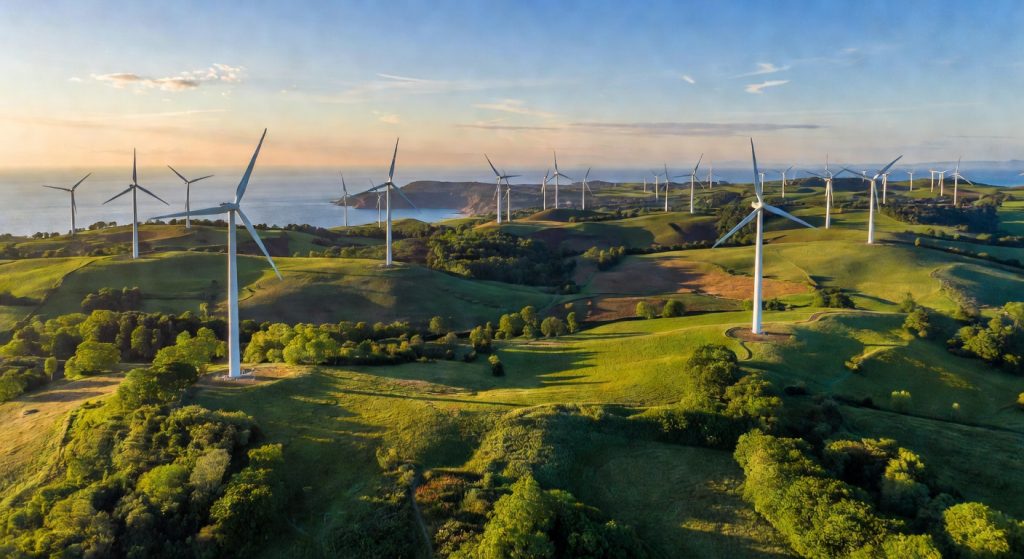
Europe’s clean energy transition is no longer a distant ambition — it is happening at scale, right now. A wave of major investment decisions across wind energy, green hydrogen, and long-duration energy storage signals that the continent’s industrial and policy machinery is shifting into higher gear. From the Italian hills to the Port of Rotterdam, the infrastructure of tomorrow is being built today.
Wind and Renewables: Corporate Giants Double Down on Europe
Spanish energy major Iberdrola has announced a significant expansion of its Italian operations, bringing its total wind energy generation capacity in the country to 450 MW. The move underscores Italy’s growing role as a hub for renewable energy development in Southern Europe — a region historically dependent on fossil fuel imports. For Iberdrola, Italy represents a strategic market where regulatory frameworks and wind resources align with long-term growth targets.
This expansion is part of a broader pattern. Across the continent, major utilities are scaling solar and wind capacity through multi-year development pipelines, even as some markets face policy uncertainty. The message from corporate boardrooms is clear: the economics of renewables are compelling enough to justify continued investment regardless of short-term political headwinds. Italy’s grid, which still relies significantly on gas imports, stands to benefit directly from this influx of domestic clean generation capacity.
Green Hydrogen and Energy Storage: Filling the Gaps the Grid Can’t Ignore
Generating renewable electricity is only half the challenge. Storing it — and converting it into versatile energy carriers — is where the next frontier lies. Two announcements this week illustrate the urgency and ambition of this effort.
Air Liquide has taken a final investment decision on a 200 MW electrolyser project at the Port of Rotterdam, with TotalEnergies signed on as a major offtaker. This is one of the largest green hydrogen infrastructure commitments in Europe to date. Rotterdam, already Europe’s largest port and a critical node in the continent’s energy supply chains, is positioning itself as a green hydrogen gateway — a role that could reshape how Europe manages resource management and industrial decarbonisation for decades.
Meanwhile, Canadian firm Hydrostor is advancing its Quinte Energy Storage Centre in Greater Napanee, Ontario — an advanced compressed air energy storage (A-CAES) facility designed to address long-duration storage needs. While geographically outside Europe, this project reflects a global race to solve one of clean energy’s most stubborn problems: what happens when the wind doesn’t blow and the sun doesn’t shine for days at a time. European grid operators are watching such projects closely, as the EU’s own storage capacity remains a critical bottleneck.
On the battery side, the European Union has granted strategic project status under the Net-Zero Industry Act to Bulgaria-based International Power Supply (IPS) for battery energy storage system (BESS) manufacturing. This designation unlocks faster permitting and potential public support, reflecting Brussels’ determination to build a sovereign clean technology manufacturing base rather than remain dependent on Asian supply chains.
Efficiency and the Often-Overlooked Resource: Water
Energy transition narratives often focus on generation and storage, but energy efficiency and water resource management are equally critical. CenterPoint Energy‘s improvements at the Blue Lake Water Resource Recovery Facility offer a telling example: by reducing energy consumption and emissions at a water treatment plant, the project simultaneously cuts operational costs and carbon output. Water infrastructure is one of the most energy-intensive sectors in municipal operations, and innovations here represent low-hanging fruit for cities seeking to meet climate targets without massive capital outlays.
What This Means for Europe’s Energy Future
Taken together, these developments paint a coherent picture:
- Renewable energy capacity is expanding rapidly, with wind and solar anchoring national grids across the EU.
- Green hydrogen is moving from pilot projects to industrial-scale infrastructure, with Rotterdam emerging as a continental hub.
- Long-duration energy storage is attracting serious capital, both in Europe and globally, as grid stability becomes a defining challenge.
- EU industrial policy — through instruments like the Net-Zero Industry Act — is actively shaping where clean technology manufacturing takes root.
The key takeaway is that Europe’s energy transition is no longer driven by policy ambition alone. It is increasingly driven by investment logic, industrial strategy, and the hard-nosed recognition that clean energy infrastructure is essential infrastructure. The pace of change in 2026 suggests the continent is, at last, building at the speed the climate demands.