AMOC Weakening, Data Center Thirst, and the EV Push: Green Tech at a Crossroads in 2026
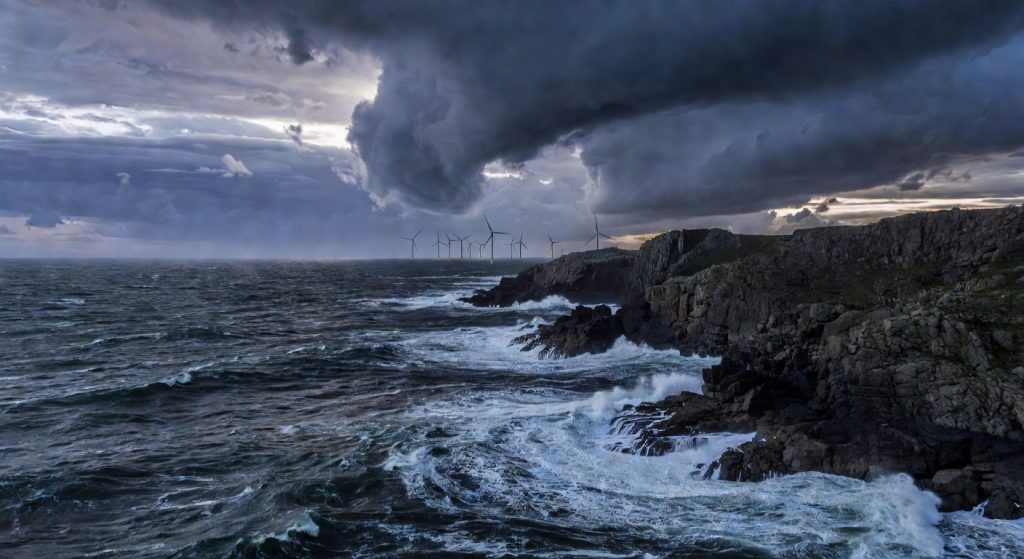
The spring of 2026 is delivering a stark reminder that the green technology revolution is racing against a clock that keeps accelerating. A landmark study published in Science Advances this April confirms that the Atlantic Meridional Overturning Circulation — the vast ocean current system that acts as Europe’s climate thermostat — is weakening far sooner than climate models previously predicted. At the same time, the cleantech sector is generating its own resource tensions, with data centers threatening to consume up to 9% of Texas’s water supply by 2040, even as solar factories and electric vehicles scale at record pace. The message is clear: green innovation is essential, but it must be pursued with clear eyes about its own footprint.
AMOC in Freefall: What Europe Stands to Lose
The Atlantic Meridional Overturning Circulation is not an abstract scientific concept — it is the engine behind the relatively mild winters that allow Amsterdam, London, and Oslo to function as the prosperous cities they are, despite sitting at the same latitude as parts of Canada far colder. The April 2026 Science Advances study signals that this engine is sputtering ahead of schedule, with potentially catastrophic consequences for Europe, Africa, and the Americas.
A significantly weakened AMOC would trigger a cascade of disruptions:
- Extreme weather volatility across Western and Northern Europe, including harsher winters and disrupted agricultural seasons
- Accelerated sea level rise along the US East Coast and parts of Northern Europe, threatening coastal infrastructure and smart city planning
- Altered rainfall patterns in West Africa and South America, with severe implications for food security and water availability
For European policymakers and urban planners already investing in climate-resilient infrastructure, this finding is not a distant warning — it is an operational reality that must be factored into every energy transition strategy, coastal development plan, and agricultural policy being drafted today.
Green Tech’s Hidden Cost: Water, Data Centers, and the Transparency Gap
The energy transition depends heavily on digital infrastructure — from AI-powered grid management to the software ecosystems running electric mobility platforms. But a University of Texas white paper is now sounding an alarm that deserves European attention: data centers in Texas alone could account for 3 to 9% of the state’s total water consumption by 2040, primarily through cooling systems.
This is not a Texas-only problem. Europe is home to some of the world’s largest data center clusters — in Dublin, Frankfurt, Amsterdam, and Stockholm — and water stress is already a growing concern across Southern and Central Europe. As green innovation accelerates demand for computing power, the sector must urgently adopt water-efficient cooling technologies and commit to radical transparency about resource use.
On a more encouraging note, SEG Solar’s announcement of a 4GW solar module factory in Houston demonstrates that cleantech manufacturing capacity is scaling in ways that strengthen energy transition resilience. Similarly, the California Air Resources Board’s confirmation of the Tesla Semi’s battery specifications — 822 kWh for the long-range variant using next-generation 4680 cells — offers a concrete benchmark for fleet electrification policy across both the US and Europe. Meanwhile, Vauxhall’s upcoming all-electric SUV, developed in partnership with Leapmotor technology, signals that European electric mobility is broadening its industrial base, with more affordable options entering the market within two years.
Implications for Europe: Policy, Planning, and Priorities
Taken together, these developments paint a picture of a green technology landscape that is simultaneously more urgent and more complex than it appeared even twelve months ago. For European citizens, businesses, and decision-makers, several priorities emerge:
- Climate adaptation must be integrated into cleantech investment. AMOC deterioration means that infrastructure built today — ports, coastal smart cities, agricultural systems — must account for scenarios previously considered unlikely within planning horizons.
- Digital infrastructure needs a sustainability audit. The EU’s data center sector should face binding water efficiency standards and mandatory disclosure, just as it faces energy efficiency requirements under the European Green Deal.
- Electric mobility momentum must be maintained. From the Tesla Semi’s battery specs influencing fleet procurement decisions to Vauxhall’s EV expansion, the direction of travel is clear — but policy continuity and charging infrastructure investment remain essential to keeping European consumers and logistics operators on board.
The key takeaway for 2026 is this: green innovation is delivering real progress on energy transition and electric mobility, but the climate system is responding to decades of accumulated emissions faster than our best models anticipated. Europe has both the industrial capacity and the regulatory framework to lead — but leadership now requires confronting uncomfortable trade-offs, from the water cost of digital infrastructure to the accelerating timeline of ocean current collapse. The window for incremental action is narrowing. The tools for transformative action are, encouragingly, already being built.