Greenland Ice Melt Has Surged Sixfold Since 1990 — And the World Is Not Ready
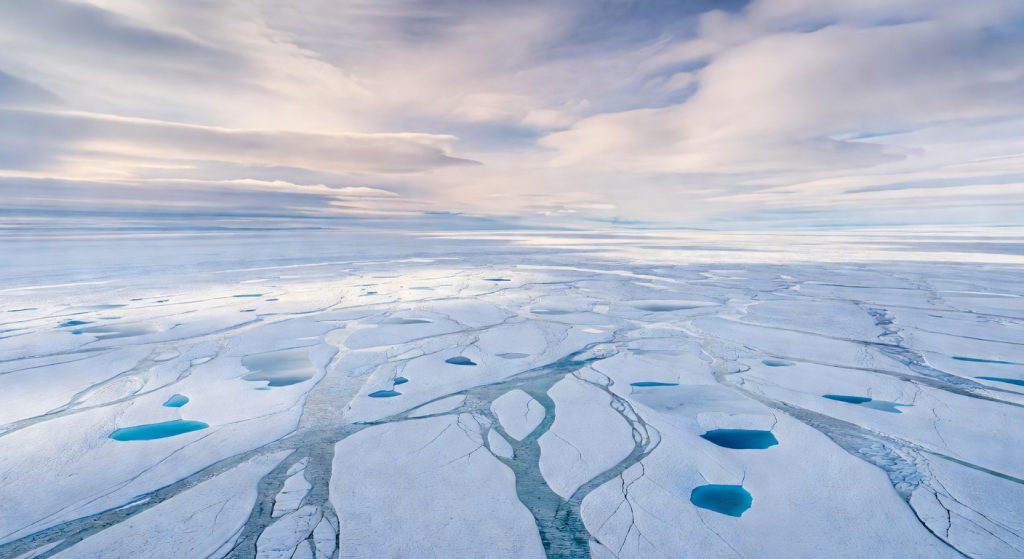
The numbers coming out of Greenland are difficult to absorb. Since 1990, meltwater production from the island’s vast ice sheet has increased sixfold, with the most extreme melt events clustering in recent years. According to research highlighted by ScienceDaily in May 2026, these record-breaking episodes are not isolated anomalies — they are becoming more frequent, more widespread, and more intense. For Europe, which faces rising seas from the North Atlantic to the Mediterranean, this is not a distant threat. It is an accelerating reality.
And Greenland is only part of the picture. A cascade of new findings published in the same period paints a sobering portrait of a cryosphere — the frozen parts of our planet — unravelling faster than even cautious scientific models predicted.
Ice, Oceans, and a Margin of Error That Costs Lives
Beneath the surface of the Southern Ocean, something alarming is happening. Using a combination of ship-based measurements and robotic underwater sensors, scientists have detected warm ocean water creeping closer than ever before to Antarctica’s ice shelves — the floating tongues of ice that act as brakes on the glaciers behind them. When these shelves thin or collapse, land-based ice accelerates into the sea, raising global water levels. The mechanism is well understood. What is new is how close the warm water has already reached.
Compounding this, a major reassessment of coastal sea level data has revealed that water heights along vulnerable coastlines may have been underestimated by an average of 30 centimetres — roughly one foot. That figure rewrites flood-risk maps for hundreds of millions of people. In Europe alone, low-lying regions in the Netherlands, northern Germany, Venice, and the Po Delta are already under pressure. A systematic underestimate of this magnitude means that infrastructure investments, urban planning decisions, and environmental policy frameworks built on older data may be dangerously inadequate.
Biodiversity in the Crossfire: The Emperor Penguin’s Warning
Climate change does not only reshape coastlines — it dismantles ecosystems. The recent declaration of the emperor penguin as an endangered species is a stark symbol of what accelerating ice loss means for biodiversity and conservation. Emperor penguins breed on stable sea ice; as that ice disappears earlier each season, chick survival rates collapse. Scientists warn that without dramatic intervention, the species faces a trajectory toward extinction within this century.
The emperor penguin is an indicator species — its decline signals broader ecosystem stress across Antarctic food webs, from krill to seals to seabirds. In European waters, similar dynamics are playing out: shifting ocean temperatures are disrupting fish migration patterns, threatening both marine biodiversity and the fishing communities that depend on it. The biodiversity crisis and the climate crisis are not parallel problems. They are the same problem.
The Policy Gap: Pledges, Projections, and the 1.5°C Wall
Against this scientific backdrop, UN climate negotiations in Brazil have underscored just how wide the gap between ambition and action remains. To limit global warming to 1.5°C above pre-industrial levels — the threshold beyond which climate impacts become significantly harder to manage — annual emissions would need to fall by 55% by 2035. Current national policies, even accounting for recent pledges, put the world on track for 2.8°C of warming.
For European policymakers, this gap carries specific urgency. The EU has positioned itself as a global leader on environmental policy, with the European Green Deal and binding climate targets. But leadership requires more than domestic ambition — it requires pushing for enforceable global frameworks, accelerating the transition to renewable energy at scale, and funding adaptation in the most exposed regions, both within Europe and in partner countries.
What This Means — and What Must Follow
The convergence of these findings — surging ice melt, hidden ocean heat, underestimated sea level rise, and species loss — points to a single conclusion: previous climate assessments were too conservative, and the window for effective action is narrowing faster than official projections suggested.
- Coastal flood risk models must be urgently updated using the latest sea level data
- Biodiversity and conservation strategies must be integrated into climate adaptation plans
- Renewable energy deployment must accelerate well beyond current trajectories
- Pollution reduction and emissions cuts must be treated as immediate public safety priorities, not long-term goals
The science is no longer speculative. Greenland’s ice is telling us, in the clearest possible terms, that the timeline has shortened. The question now is whether environmental policy — in Europe and globally — can move at the speed the data demands.