From Barley Fields to Rice Paddies: How Regenerative Agriculture Is Reshaping Global Food Systems
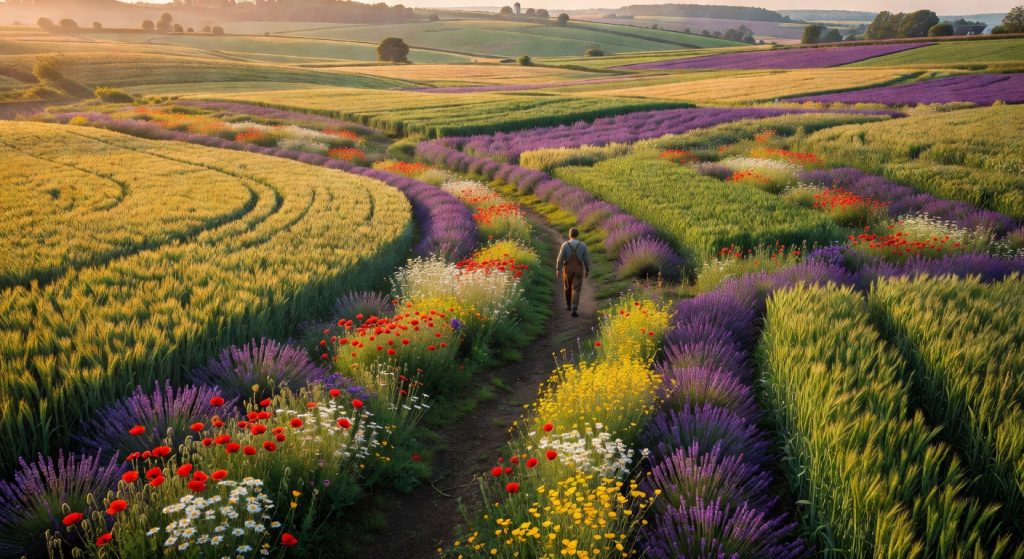
A quiet but profound shift is underway in global sustainable agriculture. From the barley fields of Ireland to heat-scorched rice paddies in Asia, farmers, corporations, and policymakers are converging on a shared conclusion: the way we grow food must change — urgently and fundamentally. A wave of new pilots, financial instruments, and crop innovations signals that this transformation is no longer theoretical. It is happening now, and its implications for European food systems and beyond are significant.
Regenerative Agriculture Finds Its Financiers
One of the most persistent barriers to scaling agroecology and regenerative practices has been money. Transitioning away from input-heavy conventional farming is costly, risky, and slow to show returns. Two recent developments suggest that barrier may finally be cracking.
In Ireland, Guinness has launched what could become one of the country’s largest regenerative agriculture pilots, targeting its barley supply chain sustainability. The programme aims to improve soil health across barley-growing farms that feed directly into beer production — a rare example of a major food and beverage brand embedding ecological responsibility into its upstream supply chain rather than relying solely on carbon offsets downstream. For Irish farmers, the initiative offers practical support for soil improvement at a time when agricultural emissions remain a contentious political issue in the EU.
Across the Atlantic, FBN (Farmers Business Network) and the Walton family have introduced a first-of-its-kind farmland loan scheme in the United States, specifically designed to incentivise regenerative practices. At a moment when the US farm economy is under severe strain, the financial product offers producers a concrete reason — lower borrowing costs tied to sustainable land management — to adopt methods that build long-term soil resilience. The model is worth watching closely from a European perspective: as the EU’s Farm to Fork Strategy continues to push for reduced chemical inputs and greater biodiversity, innovative green finance tools like this could complement regulatory pressure with market-based incentives.
Climate-Resilient Crops: Science Races Against the Heat
While financing frameworks evolve, the climate crisis is not waiting. Rising temperatures are already threatening staple crop yields globally, and two innovations highlight how science is responding.
UK-based Alora has developed a gene-edited, heat-tolerant rice variety that recorded yield increases of up to 273% in high-temperature trials compared to conventional varieties. The company is now preparing the UK’s first large-scale field trial, involving 17,000 plants. Rice feeds more than half the world’s population, and yield losses from heat stress are projected to worsen dramatically under current climate trajectories. While the EU maintains strict regulations on gene-edited crops — a debate that is actively evolving under the new genomic techniques (NGT) regulation — results like these will intensify pressure on European regulators to find a science-based path forward.
Meanwhile, CH4 Global has begun large-scale production of methane-reduction feed additives derived from seaweed, targeting livestock emissions — one of agriculture’s most stubborn climate problems. Livestock farming accounts for roughly 14.5% of global greenhouse gas emissions according to the FAO, with enteric fermentation (methane from cattle digestion) representing the largest share. Scalable feed additives that reduce methane output without harming animal health or productivity could prove transformative for Europe’s cattle-heavy agricultural regions, particularly in Ireland, France, and the Netherlands.
Policy Momentum: From Indonesia to Brussels
The policy dimension of this shift is equally notable. Indonesia’s deputy minister recently placed sustainable agriculture and community-based horticultural farming at the centre of the country’s food security strategy, speaking at an event hosted by the National Economic Council in the Lake Toba region. The emphasis on regional, community-rooted food systems echoes principles long championed by European agroecology advocates — and underscores that the transition to sustainable food production is a genuinely global political priority, not a niche Western concern.
For European decision-makers, these global signals carry weight. The EU’s Common Agricultural Policy (CAP) reforms, the Farm to Fork Strategy, and the Nature Restoration Law are all pushing in the same direction. The question is whether the pace of policy implementation can match the urgency signalled by scientific data and market innovation alike.
What This Means for Europe’s Food Future
Taken together, these developments point to a food system in transition — one where supply chain sustainability, climate adaptation, and regenerative land management are becoming baseline expectations rather than premium add-ons. Key takeaways for European stakeholders include:
- Corporate supply chains are becoming vectors for regenerative change — the Guinness model could inspire other European food and beverage brands.
- Green finance instruments tailored to farmers could accelerate CAP-aligned transitions without relying solely on subsidies.
- Crop innovation, including gene editing, demands a clear, science-led regulatory framework in the EU to avoid ceding ground to global competitors.
- Livestock methane reduction technologies are maturing and deserve serious attention in European climate and agricultural policy.
The transformation of global food systems is no longer a distant ambition. It is being built — field by field, loan by loan, and gene by gene. Europe has both the regulatory frameworks and the agricultural heritage to lead. The window to shape that leadership is open, but it will not stay open indefinitely.