Wind, Solar, and Regulation: How the U.S. Clean Energy Surge Is Reshaping Global Energy Policy
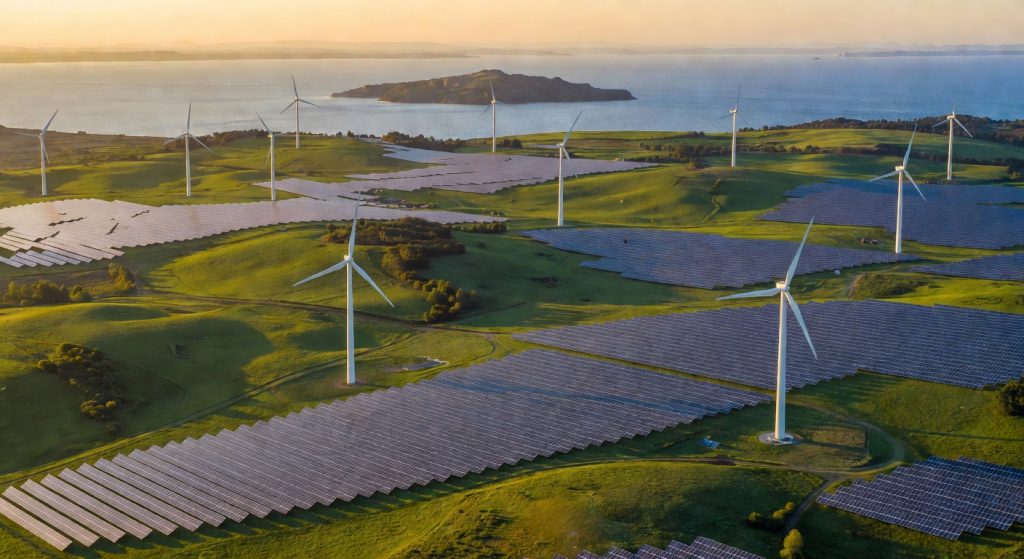
The numbers are hard to ignore. In 2025, wind and solar generation in the United States reached 760,000 GWh — an increase of 88,000 GWh in a single year — now accounting for 17% of total U.S. electricity production. Two decades ago, that figure was less than 1%. What is unfolding across the Atlantic is not just an energy transition; it is a structural transformation of how electricity is produced, managed, and regulated. And the lessons are directly relevant for Europe, where renewable energy, energy efficiency, and resource management sit at the heart of the Green Deal agenda.
A Regulatory Wake-Up Call for Renewable Energy Operators
As solar panels, wind turbines, and battery storage systems have multiplied across the grid, regulators have struggled to keep pace. In the United States, the North American Electric Reliability Corporation (NERC) is now closing that gap. A Category 2 registration deadline set for May 15, 2026 will require all inverter-based resources (IBRs) — including solar, wind, battery storage, and hybrid assets — to formally register with NERC or face significant financial penalties.
This is a meaningful shift. Until now, many distributed renewable energy assets operated outside the direct scope of federal grid reliability standards. The new rules bring them firmly within a compliance framework designed to ensure grid stability as the share of variable renewable generation grows. For operators of solar and wind farms, the message is clear: the era of light-touch oversight is ending.
From a European perspective, this regulatory evolution mirrors debates already underway within the EU’s own electricity market reform. As the continent accelerates its rollout of offshore wind and distributed solar — with targets of 600 GW of wind and 750 GW of solar by 2030 under the REPowerEU plan — grid operators and national regulators face identical questions about how to integrate, monitor, and ensure the reliability of millions of decentralised generation assets. The U.S. experience offers a preview of the regulatory complexity ahead.
Manufacturing Independence: A Strategic Shift With Global Implications
Alongside the regulatory story, a quieter industrial revolution is gathering pace. In 2024, the United States commissioned 45 new clean energy manufacturing facilities — a 45% increase year-over-year — bringing the national total to 200 primary facilities across 38 states. The result: solar module imports fell by 30% in 2024, even as installations reached record levels.
This is the Inflation Reduction Act (IRA) at work, and its effects are being felt globally. By incentivising domestic production of solar panels, wind components, and battery storage systems, the U.S. is deliberately reducing its dependence on imported clean energy hardware — much of it previously sourced from China. Europe is watching closely and responding. The EU’s own Net-Zero Industry Act sets a target of manufacturing at least 40% of the bloc’s clean technology needs domestically by 2030, precisely to avoid the supply chain vulnerabilities exposed during the energy crisis of 2022.
The strategic logic is the same on both sides of the Atlantic: energy security and industrial sovereignty are inseparable from the clean energy transition. Whether it is solar modules, electrolysers for green hydrogen production, or battery cells for grid-scale storage, the race to build resilient domestic supply chains is accelerating.
Island Grids as a Laboratory for the Future
One of the most striking data points in the current transition comes not from the continental U.S., but from Puerto Rico. By the end of 2025, the island’s rooftop solar capacity had reached 1,456 MW — 20% of total installed capacity, making it the second-largest source of electricity after petroleum liquids. This rapid uptake, driven largely by citizens responding to grid unreliability after Hurricane Maria, demonstrates the extraordinary speed at which distributed solar can transform an energy system when conditions align.
For European islands — from the Canaries to Sicily to the Greek archipelago — Puerto Rico’s trajectory is both inspiring and instructive. These territories often combine high solar irradiation, heavy dependence on imported fossil fuels, and fragile grid infrastructure, making them natural candidates for accelerated renewable energy and energy efficiency programmes. Effective resource management, including water and land use planning alongside solar deployment, will be essential to ensure these transitions are genuinely sustainable.
What This Means for Europe
- Regulatory frameworks must evolve rapidly to keep pace with distributed renewable energy growth — the NERC model offers a reference point for EU grid governance reform.
- Industrial policy is now energy policy: domestic manufacturing of solar, wind, and green hydrogen components is a strategic priority, not merely an economic one.
- Island and peripheral regions can lead the transition, provided they receive targeted investment and smart grid infrastructure.
- The 17% milestone in the U.S. should sharpen Europe’s ambition — the continent has the resources, the policy framework, and the industrial base to move faster.
The key takeaway: the clean energy transition has moved beyond aspiration into the hard work of regulation, manufacturing, and grid management. The United States is navigating this complexity in real time. Europe, with its own ambitious targets and a more integrated regulatory architecture, has both the opportunity and the obligation to learn from what is unfolding — and to lead where it can.