EU Green Deal at a Crossroads: Balancing Climate Ambition With Industrial Competitiveness
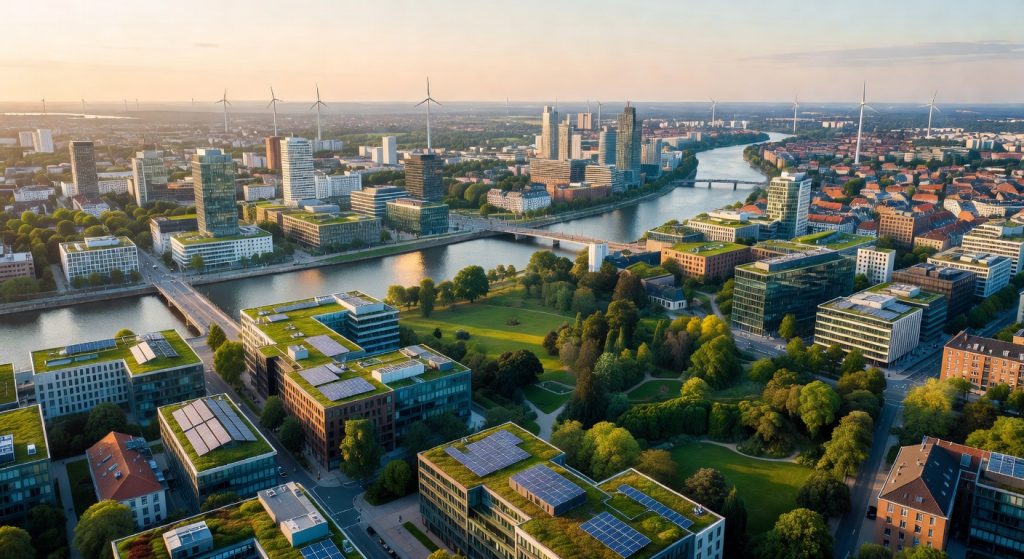
The European Union’s EU Green Deal — the continent’s landmark roadmap to climate neutrality by 2050 — is entering one of its most consequential phases. After years of legislation, negotiation, and implementation battles, European policymakers are now grappling with a fundamental tension: how to maintain bold climate policy commitments while keeping European industry globally competitive. The outcome will shape not only Europe’s environmental future, but its economic identity for decades to come.
Regulatory Simplification: Reform or Retreat?
One of the most debated shifts in recent EU environmental regulation is the push toward regulatory simplification. The European Commission has signalled its intention to reduce the administrative burden on businesses, particularly small and medium enterprises (SMEs), which have struggled to absorb the compliance costs of overlapping frameworks.
Central to this debate is the Corporate Sustainability Reporting Directive (CSRD), which requires thousands of companies to disclose detailed environmental, social, and governance (ESG) data. Originally designed to cover around 50,000 companies across the EU, the scope has faced calls for revision. Critics argue that the reporting requirements are too complex and costly; supporters counter that watering them down would undermine sustainability reporting as a tool for accountability and investor decision-making.
The stakes are high. According to the European Commission’s own estimates, the CSRD was projected to generate comparable, reliable sustainability data across the single market — data that financial institutions, regulators, and civil society depend on to track real progress toward net zero. Any significant rollback risks creating blind spots in Europe’s climate accountability architecture.
Carbon Markets and CBAM: The Price of Pollution Goes Global
Meanwhile, Europe’s carbon markets continue to evolve. The EU Emissions Trading System (ETS) — the world’s largest carbon pricing mechanism — has been a cornerstone of EU climate policy since 2005. Carbon prices have fluctuated significantly over the years, but structural reforms introduced under the ‘Fit for 55’ legislative package have aimed to tighten the supply of allowances and drive prices higher, incentivising decarbonisation across energy-intensive sectors.
Closely linked is the Carbon Border Adjustment Mechanism (CBAM), which targets carbon leakage by placing a carbon price on imports of goods such as steel, cement, aluminium, and fertilisers from countries with weaker climate rules. CBAM entered its transitional phase in October 2023 and is moving toward full operationalisation, making it one of the most geopolitically significant tools in the EU’s environmental regulation toolkit. Trading partners from China to the United States are watching closely — and, in some cases, pushing back.
CBAM represents a broader ambition: to use Europe’s market power to export climate standards globally, rather than simply shifting emissions elsewhere. Whether it succeeds will depend on diplomatic finesse as much as technical implementation.
Critical Raw Materials and the Green Technology Race
No discussion of the EU Green Deal is complete without addressing the supply chains that underpin it. Electric vehicles, wind turbines, solar panels, and battery storage all depend on critical raw materials — lithium, cobalt, rare earth elements — the majority of which are currently sourced from outside Europe, often from geopolitically sensitive regions.
The EU’s Critical Raw Materials Act, adopted in 2024, set ambitious benchmarks: at least 10% of annual consumption to be extracted domestically, 40% processed within the EU, and no more than 65% of any strategic material sourced from a single third country. Meeting these targets will require significant investment, permitting reform, and international partnerships — none of which are straightforward.
What This Means for Citizens, Businesses, and Policymakers
For citizens, the direction of EU climate policy affects everything from energy bills to air quality and job security in transitioning industries. For businesses, the regulatory landscape — however complex — increasingly defines investment decisions, supply chain choices, and long-term strategy. For policymakers, the challenge is to hold the line on climate ambition without losing public and industrial support.
- Sustainability reporting frameworks must be rigorous but workable for companies of all sizes.
- Carbon markets need price stability and predictability to drive long-term investment.
- CBAM must be implemented with diplomatic care to avoid trade conflicts that could undermine broader climate cooperation.
- Critical raw material security is as much a climate issue as an economic one.
Key takeaway: The EU Green Deal is not failing — but it is being tested. The decisions made in the coming months on regulatory scope, carbon pricing, and industrial strategy will determine whether Europe’s climate leadership translates into lasting, systemic change, or becomes a cautionary tale about overreach. Staying informed and engaged is not optional — it is part of the solution.