U.S. Farm Bill Battles Reveal a Global Fault Line in Sustainable Agriculture Policy
A wave of legislative battles unfolding in Washington is sending ripples well beyond American borders. In the span of just a few days in late April and early May 2026, the United States Congress passed a major Farm Bill, proposed sweeping budget cuts to climate and water programs, and introduced new legislation to support urban and innovative farming. Taken together, these moves reveal a deepening fault line in how governments approach sustainable agriculture — one that resonates strongly in Europe and across global food systems.
A Farm Bill That Plays It Safe — at the Planet’s Expense
On April 30, 2026, the U.S. House of Representatives passed the Farm, Food, and National Security Act of 2026 (HR 7567) with a narrow 224–200 vote. Despite its ambitious name, critics from the National Sustainable Agriculture Coalition and allied groups argue the bill largely preserves the status quo: heavy subsidies for commodity crops like peanuts, rice, wheat, and cotton, with weakened pesticide regulations and little meaningful investment in climate-smart practices.
Democratic amendments that would have directed funding toward agroecology, climate-resilient farming, and conservation were rejected along party lines. Meanwhile, House appropriators approved a fiscal year 2027 Agriculture-FDA funding bill that eliminates USDA climate hubs entirely and slashes the Sustainable Agriculture Research and Education (SARE) program — one of the few federal initiatives explicitly supporting diversified, low-input farming models.
From a European vantage point, the contrast is stark. The EU’s Farm to Fork Strategy, embedded within the Green Deal, sets binding targets: reducing pesticide use by 50%, cutting fertiliser application by 20%, and converting at least 25% of farmland to organic production by 2030. While implementation remains uneven and the strategy has faced its own political pushback, the policy architecture at least orients European food systems toward ecological transition. In the U.S., that architecture is being dismantled piece by piece.
A Silver Lining — and a New Urban Farming Frontier
Not all the news from Capitol Hill is discouraging. The 2025 budget reconciliation process delivered a significant win for sustainability advocates: $2 billion annually in additional mandatory funding secured for five key Farm Bill conservation programs. This funding, harder to cut than discretionary appropriations, represents a meaningful floor for soil health, water quality, and habitat initiatives.
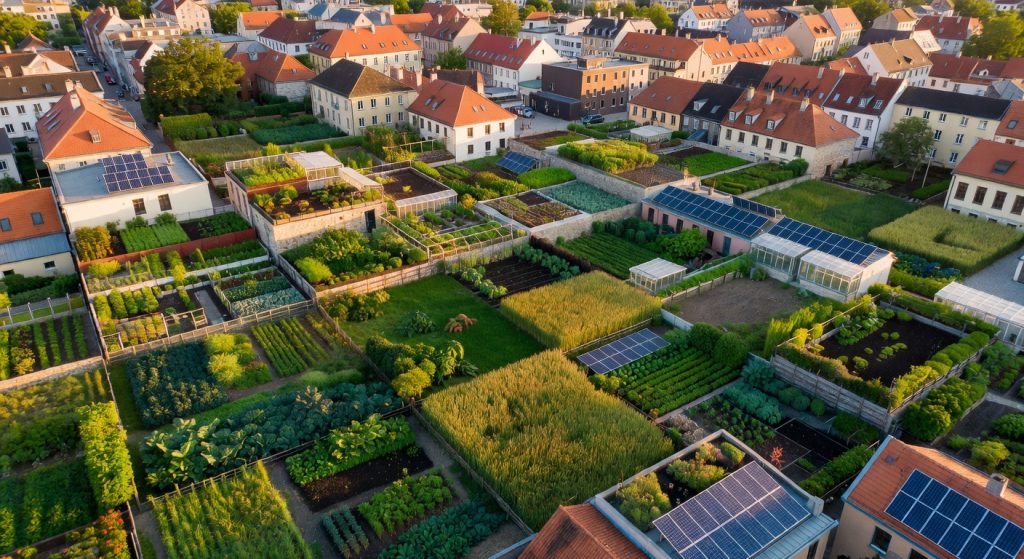
On May 4, 2026, a bipartisan-leaning group of Democratic senators — including John Fetterman (PA), Cory Booker (NJ), and Adam Schiff (CA) — introduced legislation to expand USDA support for urban and innovative farming. The bill signals growing legislative recognition that the future of food production cannot rest solely on vast commodity monocultures. Urban agriculture, vertical farming, and community-based food growing are gaining traction as complementary pillars of resilient, localised food supply chains.
This mirrors trends already visible in Europe. Cities like Amsterdam, Milan, and Paris have integrated urban food strategies into municipal planning, and the EU’s Urban Agriculture Initiative supports pilot projects across member states. The idea that supply chain sustainability begins at the local level — reducing food miles, increasing food sovereignty, and reconnecting citizens with production — is gaining policy legitimacy on both continents.
What This Means for Global Food and Climate Goals
The United States remains the world’s largest agricultural exporter, and its policy choices shape global commodity markets, trade flows, and — critically — the incentive structures that influence farming decisions from Brazil to Southeast Asia. When Washington subsidises industrial monocultures and rolls back environmental safeguards, it exports a model of agriculture that competes directly against more sustainable approaches, including plant-based and regenerative supply chains that European producers and retailers are increasingly investing in.
For European policymakers and businesses, the U.S. trajectory underscores the importance of:
- Maintaining robust domestic support for agroecological transition, even under political pressure
- Using trade policy — including the EU’s deforestation regulation and future supply chain sustainability rules — to set environmental floors for imported agricultural goods
- Investing in urban and alternative farming models as genuine complements to rural food production
The key takeaway: The U.S. farm policy debate is not just an American story. It is a stress test for the global political will to transition food systems toward sustainability. Europe has chosen a different direction — but that direction must be defended, funded, and expanded, not taken for granted. The fault line is real, and what happens on one side of the Atlantic shapes the conditions on the other.