EU Green Deal Under Pressure: How Europe Is Accelerating Clean Energy Policy Amid Geopolitical Turmoil
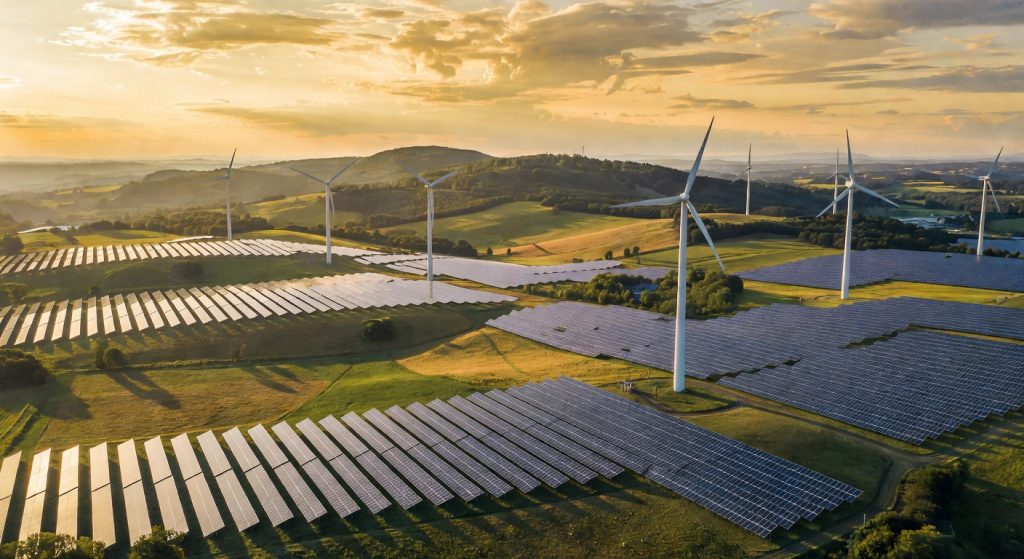
The spring of 2026 is proving to be a defining moment for European climate policy. With geopolitical tensions reshaping global energy markets and the EU’s 2030 emissions targets still out of reach, Brussels is responding with a wave of regulatory action, investment mobilisation, and industrial strategy. The message from EU institutions is clear: the EU Green Deal is not slowing down — it is accelerating, even under pressure.
Energy Security Meets Climate Ambition: The Five-Point Action Plan
On April 22, 2026, EU Energy Commissioner Dan Jorgensen unveiled a five-point action plan in response to the energy security risks triggered by escalating tensions involving Iran. The plan combines emergency coordination measures, consumer and industry protection mechanisms, and — critically — a Clean Energy Investment Summit designed to mobilise private capital for transformative clean energy solutions.
This is not the first time Europe has used a geopolitical crisis as a catalyst for green transition. The 2022 energy shock following Russia’s invasion of Ukraine accelerated the REPowerEU agenda. The pattern is becoming a structural feature of European climate policy: external shocks are increasingly treated not as reasons to pause the green transition, but as arguments to deepen it. Energy independence and decarbonisation, in the EU’s framing, are two sides of the same coin.
The action plan also includes a push to finalise the revision of the Energy Taxation Directive, which would align tax incentives with renewable energy use — a long-overdue reform that has stalled for years in Council negotiations. If adopted swiftly, it could meaningfully shift the economics of energy consumption across member states.
Investment Firepower: €50 Billion for Clean Tech and a New Industrial Framework
Beyond emergency measures, the European Commission has launched a €450 million Horizon Europe research call focused on clean technologies, alongside amendments to InvestEU that could unlock up to €50 billion for clean tech and sustainable mobility. A new Clean Industrial Deal state aid framework is also being introduced to fast-track approvals for renewables and decarbonisation projects — a direct response to criticism that EU bureaucracy was slowing green investment compared to the US Inflation Reduction Act.
These moves signal a significant scaling-up of the EU’s industrial policy toolkit. The reformed carbon markets under the Emissions Trading System (ETS) are also playing a key role: tightened caps, expanded coverage to buildings and transport, and revenues exceeding €200 billion are being channelled into the green transition. Meanwhile, the Carbon Border Adjustment Mechanism (CBAM) has reached full operational status in 2026, applying a carbon price to imports from countries with weaker environmental regulation — a move that levels the playing field for European industry and sets a global precedent.
Sustainability Reporting and the Business Case for Climate Action
The policy push is not happening in a vacuum. At CDP’s 25th anniversary event in Paris on April 3, 2026, Europe’s leading corporations demonstrated that sustainability reporting and climate action are generating measurable financial returns — not just reputational benefits. Structured disclosure frameworks are increasingly helping investors identify climate-resilient companies, directing capital toward the businesses best positioned for a net-zero economy.
This convergence of regulatory pressure and market incentive is central to the EU Green Deal’s logic. The Corporate Sustainability Reporting Directive (CSRD) and the EU Taxonomy are designed precisely to make sustainability performance financially legible — and therefore investable. As more companies internalise these frameworks, the boundary between climate compliance and competitive advantage continues to blur.
Implications: A 2030 Target Still at Risk
Despite this momentum, the numbers tell a sobering story. Member States’ National Energy and Climate Plans (NECPs) currently project only a 51% emissions reduction by 2030 — falling short of the legally binding 55% target under the ‘Fit for 55’ package. The gap is real, and closing it will require member states to submit more ambitious updates without delay.
The implications for citizens, businesses, and policymakers are significant:
- Energy consumers may benefit from tax reforms and price protection measures in the short term, but long-term stability depends on accelerating the renewable buildout.
- Businesses operating in carbon-intensive sectors face tightening ETS caps and CBAM exposure — but also access to unprecedented public investment support.
- Policymakers at national level must urgently revise NECPs to align with EU-level commitments, or risk legal and financial consequences.
Key takeaway: Europe is betting that geopolitical instability and climate urgency are not competing priorities — they are the same crisis, requiring the same solution. The policy architecture is largely in place. What remains is the political will, at every level of governance, to implement it at the speed the science demands.