EU Green Deal at a Crossroads: What the Latest Regulatory Shifts Mean for Businesses and Citizens
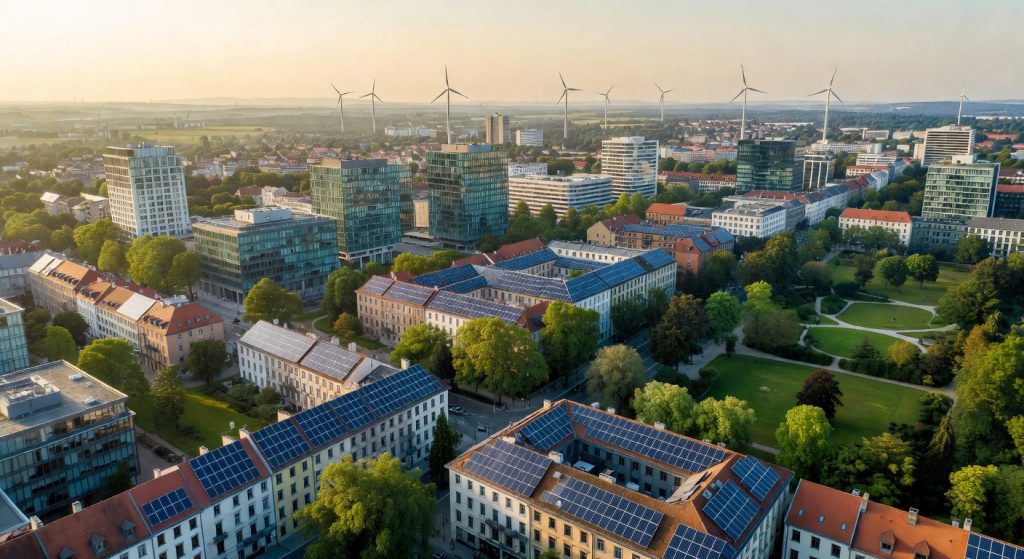
The EU Green Deal was never going to be a smooth ride. Launched in 2019 with the ambition of making Europe the world’s first climate-neutral continent by 2050, the initiative has since spawned a sprawling architecture of legislation — from the Fit for 55 package to the Carbon Border Adjustment Mechanism (CBAM), from the Net-Zero Industry Act to the Corporate Sustainability Reporting Directive (CSRD). As of 2026, the question is no longer whether Europe is committed to the green transition. The question is whether the machinery built to deliver it is keeping pace with political, economic, and industrial reality.
The Regulatory Framework: Ambitious by Design, Complex by Nature
Europe’s environmental regulation landscape has grown significantly more intricate over the past five years. The Fit for 55 package alone introduced or revised more than a dozen legislative instruments, all aimed at cutting EU greenhouse gas emissions by at least 55% by 2030 compared to 1990 levels. Among the most consequential tools is the reformed EU Emissions Trading System (ETS), which now covers sectors including maritime shipping and, from 2027, road transport and buildings through the new ETS II.
Carbon markets in Europe have matured considerably. The EU ETS carbon price, which hovered around €25 per tonne in early 2021, surged past €100 in 2023 before stabilising in a more volatile range through 2024 and into 2025. This price signal is reshaping investment decisions across heavy industry, energy production, and increasingly, the built environment. For businesses operating across borders, the CBAM — now in its transitional phase — adds another layer of complexity, requiring importers of carbon-intensive goods like steel, cement, and aluminium to account for the carbon price paid in their country of origin.
Meanwhile, sustainability reporting obligations are expanding rapidly. The CSRD, which entered into force in January 2023, is progressively drawing in larger companies and, from 2026 onwards, smaller listed entities. Reporting under the European Sustainability Reporting Standards (ESRS) demands granular disclosure on everything from Scope 3 emissions to biodiversity impacts — a significant operational shift for thousands of European firms.
Implementation Gaps and the Political Balancing Act
Despite the legislative momentum, implementation remains uneven. National Energy and Climate Plans (NECPs), which member states are required to submit to the European Commission, have faced repeated delays and criticism for lacking ambition. A 2024 Commission assessment found that the collective NECPs, even if fully implemented, would fall short of the EU’s 2030 renewable energy and energy efficiency targets.
Politically, the green transition has become a more contested space. The 2024 European Parliament elections shifted the balance rightward, prompting calls to simplify or delay certain regulations — most visibly the CSRD and the Nature Restoration Law. The Commission has responded with a broader “competitiveness agenda,” seeking to reconcile climate policy ambition with concerns about European industrial competitiveness in the face of US Inflation Reduction Act subsidies and Chinese clean-tech exports.
The REPowerEU plan, originally designed to reduce dependence on Russian fossil fuels following the 2022 invasion of Ukraine, has accelerated renewable energy deployment — solar capacity additions in the EU hit a record 56 GW in 2023 — but energy security pressures have also led to temporary concessions on coal and gas in several member states.
Implications for Businesses, Citizens, and Policymakers
For businesses, the regulatory environment demands proactive adaptation rather than reactive compliance. Key priorities include:
- Carbon accounting: Understanding exposure to ETS costs and CBAM obligations across supply chains.
- Sustainability reporting: Building internal data infrastructure to meet CSRD and ESRS requirements before deadlines tighten.
- Investment planning: Aligning capital expenditure with the EU Taxonomy to access green finance and avoid stranded asset risk.
For citizens, the green transition carries both promise and tension. Lower energy bills from renewables are a long-term prospect, but near-term costs — including carbon pricing on heating fuels under ETS II — risk disproportionately affecting lower-income households without robust social compensation mechanisms.
For policymakers, the challenge is maintaining regulatory credibility while managing the pace of change. Frequent revisions or delays risk sending mixed signals to investors who have already committed capital to the green transition.
Key takeaway: The EU Green Deal’s legislative architecture is largely in place, but the hard work of implementation — across member states, industries, and communities — is where the transition will be won or lost. Staying informed on regulatory developments is not optional for any stakeholder operating in the European economy.