Big Brands, Clean Power: How Corporate VPPAs Are Reshaping Europe’s Energy Transition
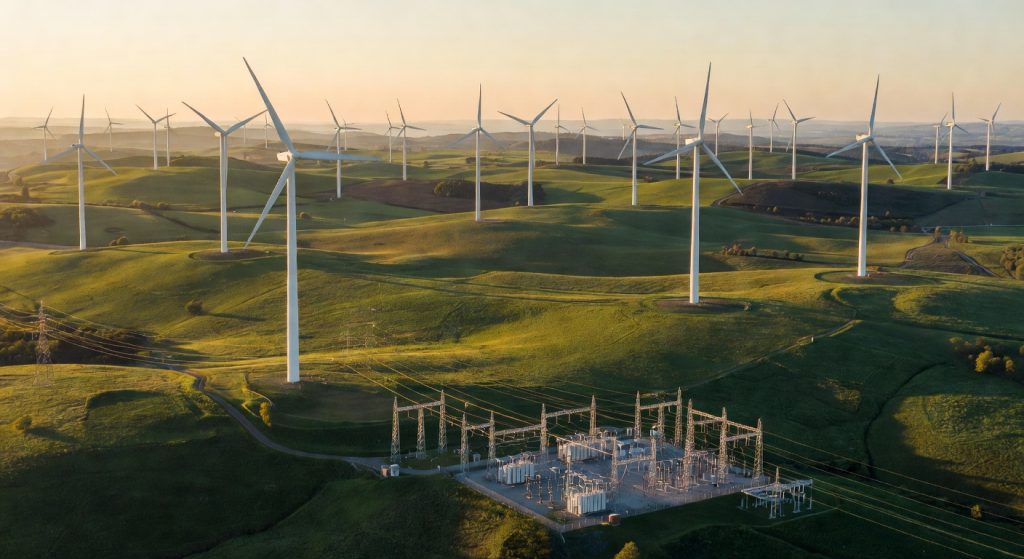
A landmark 10-year Virtual Power Purchase Agreement (VPPA) signed by PepsiCo, Givaudan, Smurfit Westrock, and Norwegian energy giant Statkraft is sending a clear signal: corporate Europe is no longer waiting for policy mandates to decarbonize. This multi-sector alliance — spanning food and beverages, flavour manufacturing, and packaging — is one of the most visible examples yet of how green innovation is moving from boardroom pledges to binding, long-term energy commitments with real supply chain consequences.
What Is a VPPA and Why Does It Matter for the Energy Transition?
A Virtual Power Purchase Agreement is a financial contract between a corporate buyer and a renewable energy producer. Unlike a traditional PPA, no physical electricity changes hands. Instead, the buyer pays a fixed price per megawatt-hour, while the producer sells power on the open market — with the difference settled financially. The buyer receives Guarantees of Origin (GOs), certifying that an equivalent amount of renewable electricity has been fed into the grid.
For companies like PepsiCo and Smurfit Westrock, which operate sprawling European supply chains with significant energy footprints, VPPAs offer a pragmatic path to Scope 2 emission reductions without the complexity of on-site generation. Statkraft, Europe’s largest producer of renewable energy, brings the infrastructure credibility to make these agreements bankable and impactful.
This deal is part of a broader surge in corporate renewable energy procurement across the continent. According to BloombergNEF, European corporate PPA volumes hit record highs in recent years, driven by both sustainability targets and volatile fossil fuel prices following the 2022 energy crisis. Green technology is no longer just an ethical choice — it is increasingly a financial hedge.
Green Innovation Beyond the Deal: Storage, Solar, and Smart Grids
The Statkraft-led VPPA doesn’t exist in isolation. Across Europe, a wave of cleantech developments is reinforcing the infrastructure needed to make renewable commitments credible:
- Battery storage in the Baltics: SINEXCEL has supplied 1,725 kW Power Conversion Systems (PCS) for Latvia’s largest wind farm battery storage project. This kind of grid-scale storage is essential for balancing intermittent wind generation — a critical enabler for any VPPA backed by wind assets.
- Next-generation solar: California-based Tandem PV has received a $4 million grant from the California Energy Commission to accelerate commercialisation of perovskite-silicon tandem solar panels, which promise efficiencies well above conventional silicon modules. While US-funded, this technology has direct implications for European solar deployment targets under the EU’s Solar Energy Strategy.
- Data centres and environmental oversight: India’s Andhra Pradesh state has granted environmental clearances to Google and Adani Group for hyperscale AI data centres near Visakhapatnam. The global appetite for AI compute is creating enormous new electricity demand — making renewable procurement agreements like the Statkraft VPPA even more strategically important for tech-adjacent industries worldwide.
Together, these developments paint a picture of an energy transition that is accelerating on multiple fronts simultaneously — from grid hardware to financial instruments to advanced materials science.
Corporate Climate Action: From Pledges to Accountability
One of the most meaningful shifts in the current cleantech landscape is the move from voluntary aspirations to structured, measurable commitments. The Ascendiun Family of Companies — including Blue Shield of California, Stellarus, and Altais — has committed to a 42% reduction in direct emissions, a target aligned with science-based pathways. While based in the US, this type of corporate climate governance mirrors what the EU’s Corporate Sustainability Reporting Directive (CSRD) is now mandating for thousands of European companies.
For European decision-makers and sustainability professionals, the message is consistent: green innovation is no longer a peripheral concern but a core business function. Whether through VPPAs, battery storage investments, or emission reduction targets, companies are embedding the energy transition into their operational DNA.
Key Takeaway
The PepsiCo–Statkraft VPPA is more than a procurement deal — it is a template for how large corporations can drive value chain decarbonization at scale. Combined with advances in battery storage, solar technology, and tightening corporate disclosure requirements, the conditions for a genuine green technology revolution in Europe are converging. For citizens, professionals, and policymakers alike, the question is no longer whether the energy transition will happen — but how fast, and who will lead it.