Solar Power Met All New Global Electricity Demand in 2025 — and Europe Is Leading the Charge
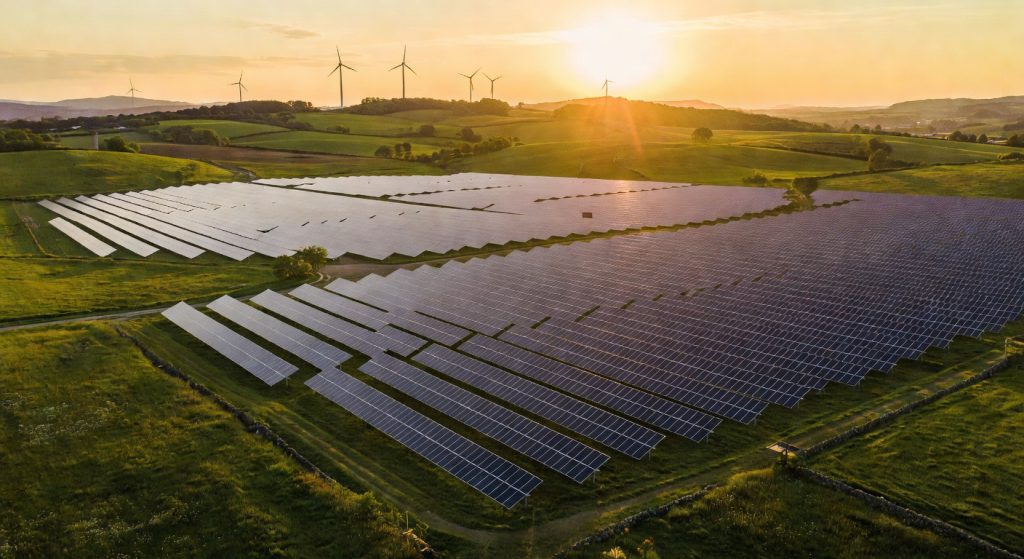
For the first time in history, renewable energy — led by solar — absorbed the entire growth in global electricity demand in 2025, without any net increase in fossil fuel consumption. This milestone, documented by both Ember and the International Energy Agency (IEA), signals a structural shift in how the world powers itself. Solar output has now scaled to a point where it can, in aggregate, meet the electricity needs of entire continents. The implications for resource management, energy security, and climate policy are profound — and Europe finds itself at the centre of this transformation.
A Solar Tipping Point: Global Numbers That Matter
The driving forces behind this milestone are primarily China and India, where solar deployment has accelerated at an unprecedented pace. China alone added more solar capacity in recent years than the entire installed base of many European nations. But the significance extends well beyond Asia. According to Ember’s latest data, EU solar led the European power mix for the first time ever in June 2025, reaching 22% of total generation — surpassing gas and coal combined for that month. This is not a seasonal anomaly; it is a structural signal.
Global solar output now rivals the electricity consumption of major economic blocs. When combined with wind energy, renewables are no longer a supplement to fossil fuels — they are increasingly the backbone of modern grids. Energy efficiency improvements and smarter resource management across transmission and storage are amplifying these gains, ensuring that more of what is generated is actually used.
- EU solar hit 22% of power generation in June 2025, a historic first.
- Solar and wind together outpaced gas and coal in European electricity production during peak summer weeks.
- Global renewable growth offset 100% of new electricity demand, halting fossil fuel expansion in the power sector.
Innovation and Policy: The Grid Must Keep Up
Generating clean electricity is only half the challenge. The other half is storing it, moving it, and making it available when and where it is needed. This is where grid flexibility and storage innovation become critical — and where some of the most interesting developments are happening right now.
In the United States, Meta has partnered with Overview Energy and Noon Energy to develop integrated solar, wind, and long-duration grid storage solutions specifically designed to power AI data centres — one of the fastest-growing sources of electricity demand globally. Meanwhile, Virginia’s FAST Act introduced grid reform legislation that expands community solar access for both businesses and citizens, offering a model for how policy can accelerate flexible renewable deployment at scale.
Closer to home, Puerto Rico now generates 20% of its electricity capacity from rooftop solar — 1,456 MW — making it the second-largest power source on the island after petroleum. This grassroots, distributed model of energy production offers lessons for European island territories and energy-vulnerable regions alike. Hydrogen and advanced battery storage remain key pillars in Europe’s long-term strategy to balance grids as solar and wind penetration deepens, particularly during low-generation winter months.
What This Means for Europe’s Energy Future
Europe’s clean energy trajectory is encouraging, but the path forward is not without friction. Policy coherence remains a challenge: while the EU accelerates its solar buildout under the REPowerEU framework, geopolitical pressures, permitting bottlenecks, and grid infrastructure gaps still slow deployment in several member states. The contrast with the pace of expansion in China and India underscores the urgency of regulatory reform.
At the same time, the energy shocks of recent years — from the gas crisis triggered by Russia’s invasion of Ukraine to volatile commodity markets — have reinforced a critical lesson: fossil fuel dependence is a structural vulnerability. Every megawatt of solar or wind capacity installed is a step toward energy sovereignty. Water-cooled thermal plants and fossil infrastructure also place significant pressure on freshwater resources; transitioning to solar and wind reduces this strain, offering co-benefits for water management and ecosystem resilience.
Key takeaway: The 2025 solar milestone is not a peak — it is a baseline. With costs continuing to fall, storage technology maturing, and policy frameworks gradually aligning, renewable energy is on track to do more than meet new demand. It is beginning to displace existing fossil generation. For European citizens, businesses, and policymakers, the message is clear: the clean energy transition is no longer a future scenario. It is already under way — and the pace is accelerating.