Five Years of the EU Green Deal: What Has Been Achieved — and What Must Come Next
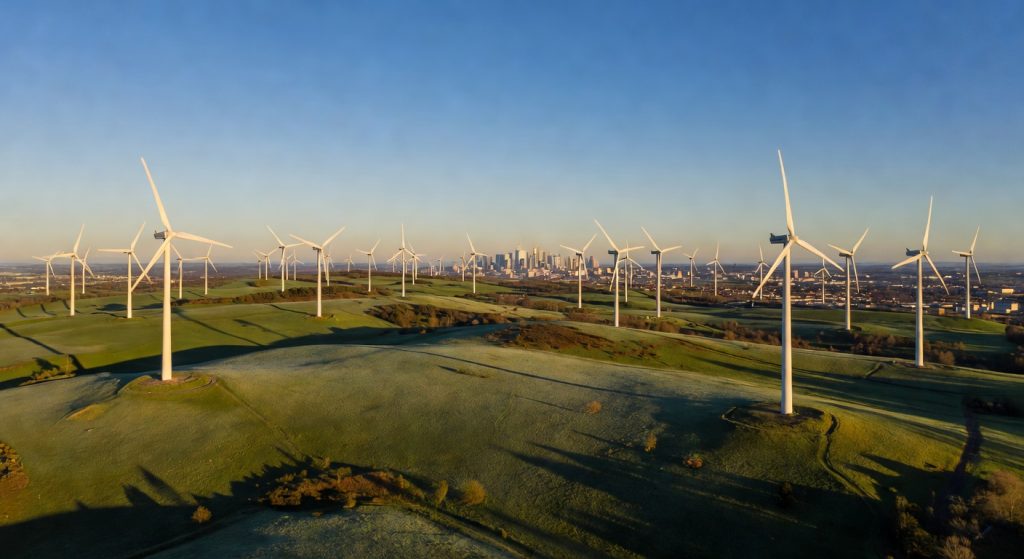
When the European Commission unveiled the EU Green Deal in December 2019, it was billed as Europe’s moonshot: a sweeping blueprint to make the continent climate-neutral by 2050 while building a cleaner, more competitive economy. Half a decade later, the results are real but uneven — and the next chapter will be defined by how Europe resolves the tension between ambition and execution.
A Record of Real Progress — With Significant Caveats
The numbers tell an encouraging story. The EU Emissions Trading System (ETS) has generated over €200 billion for green funds, providing a powerful financial engine for the low-carbon transition. The Carbon Border Adjustment Mechanism (CBAM), one of the most innovative tools in global climate policy, is on track for full operation by 2026 — a mechanism designed to ensure that imports from less climate-ambitious countries face a carbon price equivalent to that paid by European producers. This is not just an EU story; CBAM is already reshaping how trading partners think about their own environmental regulation.
Clean technology investment has surged across the bloc, and new sustainability reporting frameworks — including the Corporate Sustainability Reporting Directive (CSRD) — have set a global benchmark for corporate transparency. Ursula von der Leyen’s reaffirmed commitment to the Green Deal in her post-2024 election political guidelines signals that the political coalition behind these measures remains intact, with enforcement and alignment with the 1.5°C Paris Agreement goals kept firmly on the agenda.
Yet the headline achievement masks a critical shortfall. Current National Energy and Climate Plans (NECPs) submitted by member states project only a 51% reduction in emissions by 2030 — falling short of the 55% target set by the ‘Fit for 55’ package. That four-point gap is not a rounding error; it represents millions of tonnes of CO₂ and years of policy effort.
The Fault Lines: Simplification, Competitiveness, and Carbon Markets
The Green Deal’s ambition has sometimes collided with the realities of implementation. Businesses — particularly small and medium enterprises — have raised legitimate concerns about the cumulative regulatory burden of overlapping directives on sustainability reporting, due diligence, and product standards. The Commission has responded with a push for simplification, aiming to reduce administrative friction without gutting the substance of environmental regulation.
The ongoing revision of the Energy Taxation Directive (ETD) under ‘Fit for 55’ is a key test case. Modernising an energy tax framework that dates back to 2003 — and aligning it with the goal of incentivising renewables across the EU internal market — is technically and politically complex. Getting it right could unlock significant investment; getting it wrong risks distorting carbon markets and undermining the price signals that drive clean energy deployment.
Meanwhile, the expansion of the ETS to cover buildings and transport has proved controversial. These are sectors where carbon costs are felt directly by households, raising equity concerns that policymakers cannot afford to ignore if public support for climate policy is to hold.
Implications: Scaling Finance and Closing the Emissions Gap
The priorities for the next phase of the Green Deal are becoming clear:
- Closing the NECP gap: Member states must revise and strengthen their national climate plans to bridge the distance between 51% and 55% emissions reduction by 2030.
- Scaling green finance: Beyond the ETS, Europe needs deeper carbon markets, blended finance instruments, and a Net-Zero Industry Act that can compete with the scale of the US Inflation Reduction Act and China’s industrial subsidies.
- Stabilising the regulatory environment: Investors in clean energy infrastructure and critical raw materials need long-term policy certainty. Simplification should mean clarity, not rollback.
- Ensuring a just transition: The social dimension of the Green Deal — protecting workers and communities most exposed to the costs of transition — must be embedded in every major policy revision.
The global context matters here. With the United States stepping back from federal climate commitments and geopolitical competition over clean technology intensifying, Europe’s ability to demonstrate that ambitious environmental regulation and industrial competitiveness can coexist has never been more consequential.
Key takeaway: The EU Green Deal has proven that systemic climate policy at continental scale is possible. But five years in, the gap between stated targets and projected outcomes is a warning sign that cannot be papered over. The next chapter demands sharper implementation, bolder finance, and the political will to close the distance between ambition and reality — before the window narrows further.