Green Technology in 2026: How Europe Is Accelerating the Clean Energy Transition
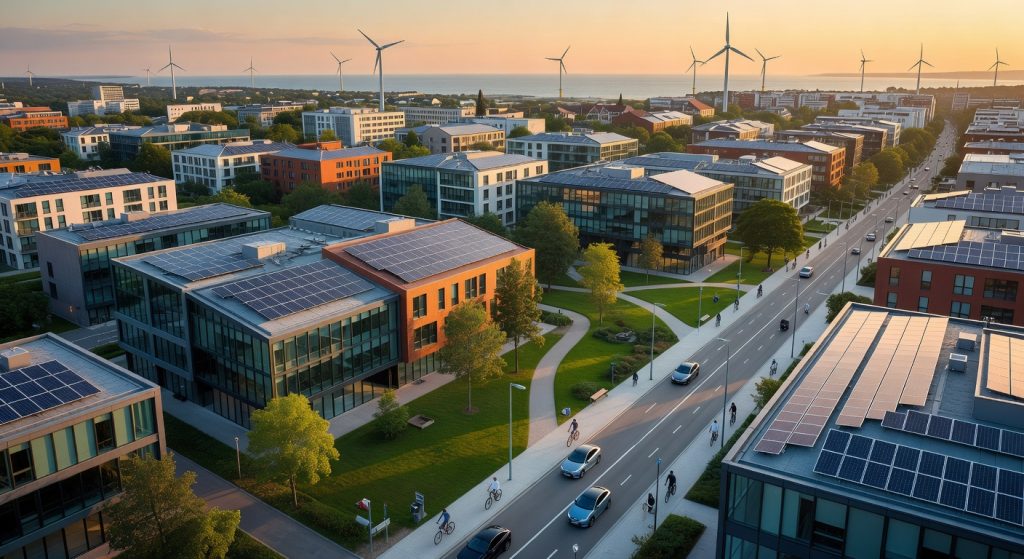
Europe is not waiting. As climate targets tighten and the pressure to decarbonise entire economies intensifies, the continent’s green technology sector is moving faster than ever — attracting record investment, spawning new industrial ecosystems, and positioning itself as the global benchmark for green innovation. From the rooftops of Amsterdam to the wind corridors of the North Sea, the energy transition is no longer a distant ambition. It is infrastructure being built today.
Cleantech Investment Reaches a Turning Point
The numbers tell a compelling story. According to BloombergNEF, global investment in the cleantech sector surpassed $1.8 trillion in 2025 — a figure that would have seemed implausible a decade ago. Europe accounted for roughly €380 billion of that total, driven by a combination of public funding through the EU’s Green Deal Industrial Plan and a surge in private capital chasing the opportunities created by the net-zero transition.
What is particularly significant is where the money is flowing. Battery storage, green hydrogen, offshore wind, and next-generation solar technologies are attracting the largest shares. But beneath those headline sectors lies a thriving layer of enabling technologies — smart grid software, AI-driven energy management platforms, and advanced materials — that are quietly making the entire system work more efficiently.
- Green hydrogen electrolyser capacity in Europe is projected to reach 17 GW by 2030, up from under 1 GW in 2023 (European Hydrogen Observatory).
- Solar panel efficiency records have been broken multiple times in the past 18 months, with perovskite-silicon tandem cells now exceeding 33% efficiency in laboratory conditions.
- The EU’s Net-Zero Industry Act is fast-tracking permits for strategic cleantech manufacturing, aiming to produce at least 40% of the bloc’s clean technology needs domestically by 2030.
Electric Mobility and Smart Cities: The Urban Frontier
Electric mobility remains one of the most visible faces of the green technology revolution, and European cities are increasingly designing entire urban systems around it. Oslo, long a pioneer in EV adoption, now sees electric vehicles accounting for over 90% of new car sales. But the real story in 2026 is not just the vehicles themselves — it is the intelligence being built around them.
Smart cities across Europe are integrating EV charging infrastructure with dynamic electricity pricing, renewable energy generation, and public transport networks. In cities like Barcelona, Vienna, and Helsinki, charging points are no longer passive plugs in a car park. They are active nodes in a responsive urban energy grid, capable of feeding power back into the network during peak demand — a concept known as vehicle-to-grid (V2G) technology.
The European Commission’s Urban Mobility Framework is accelerating this shift, with dedicated funding streams for cities that adopt integrated, data-driven approaches to transport and energy. The result is a new model of urban living where green innovation is not an add-on, but the foundational logic of how a city operates.
The Policy Engine Behind the Technology
Technology does not emerge in a vacuum, and Europe’s cleantech momentum is inseparable from its regulatory architecture. The EU Taxonomy for Sustainable Finance, the Corporate Sustainability Reporting Directive (CSRD), and the Carbon Border Adjustment Mechanism (CBAM) are collectively reshaping how businesses calculate risk, allocate capital, and design products. For companies operating in the green technology space, this creates both obligation and opportunity.
Critically, the policy framework is also pushing innovation beyond Europe’s borders. As the EU sets standards — on battery supply chains, on building energy performance, on sustainable aviation fuels — those standards tend to become global benchmarks. European cleantech firms are therefore not just serving a domestic market; they are building products and solutions for a world that is gradually adopting European-style sustainability requirements.
What This Means for Citizens, Businesses, and Policymakers
The acceleration of the energy transition through green technology carries concrete implications at every level of society. For citizens, it means lower energy bills as renewables undercut fossil fuel prices, cleaner air in cities redesigned around electric mobility, and homes that generate as much energy as they consume. For businesses, it means adapting supply chains, reskilling workforces, and finding competitive advantage in sustainability rather than despite it. For policymakers, it means maintaining the regulatory ambition that has made Europe a global leader while ensuring the transition is socially just and economically inclusive.
Key takeaway: Europe’s green technology sector in 2026 is not simply growing — it is maturing into a systemic force that is reshaping energy, transport, urban planning, and industrial policy simultaneously. The challenge now is to ensure that the speed of innovation matches the urgency of the climate crisis, and that the benefits of the cleantech revolution are shared broadly across society.