Five Years of the EU Green Deal: What Has Been Achieved — and What Must Come Next
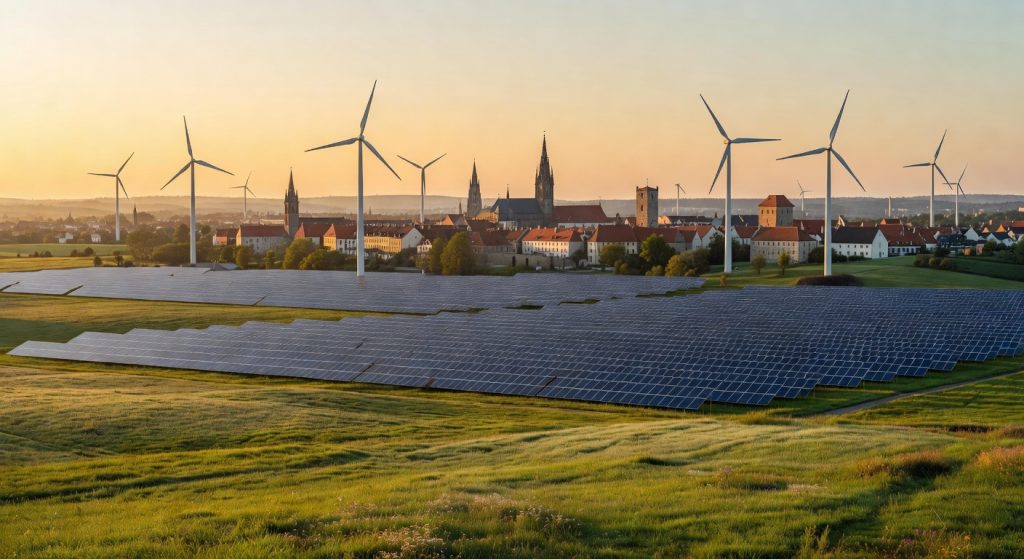
When the European Commission unveiled the EU Green Deal in December 2019, it was billed as Europe’s moonshot: a comprehensive roadmap to make the continent climate-neutral by 2050 while building a competitive, resource-efficient economy. Half a decade later, the balance sheet is mixed — real progress on emissions and clean technology sits alongside stubborn enforcement gaps, economic headwinds, and a political landscape that has grown more cautious about the pace of change.
What Five Years of Climate Policy Have Delivered
The achievements are genuine and should not be understated. EU greenhouse gas emissions have continued their downward trend, clean technology investment has scaled significantly, and sustainability reporting frameworks — most notably the Corporate Sustainability Reporting Directive (CSRD) — have matured into globally influential standards. The Fit for 55 legislative package, designed to cut emissions by at least 55% by 2030 compared to 1990 levels, is now largely in place, and independent projections suggest it could deliver a 57% reduction if fully implemented, according to analysis cited in the A&O Shearman Sustainability Outlook 2026.
Carbon markets have also been strengthened: the reformed EU Emissions Trading System (ETS) has tightened supply, pushed carbon prices higher over the medium term, and extended coverage to new sectors including shipping. The Green Deal Industrial Plan has channelled funds toward clean tech manufacturing through REPowerEU and the Innovation Fund, with proposals on the table for a European Sovereignty Fund to anchor net-zero industries on the continent rather than ceding ground to the United States or China.
Where the Cracks Are Showing
Progress, however, is uneven — and the gaps are consequential. While the Fit for 55 package projects a 57% emissions cut, national climate plans submitted by member states collectively point to only a 51% reduction. That six-percentage-point shortfall is not a rounding error; it represents millions of tonnes of CO₂ and a real risk that the EU misses its own legally binding 2030 target.
Enforcement of climate policy at the national level remains the Green Deal’s most visible fault line. Civil society organisations and climate economists have repeatedly urged EU institutions to prioritise compliance mechanisms following the 2024 European Parliament elections, warning that weak enforcement disproportionately harms fossil-fuel-dependent communities that were promised a just transition. Meanwhile, the revision of the Energy Taxation Directive — a key lever to incentivise renewables and phase out fossil fuel subsidies — remains unfinished, stalled by the complexity of unanimous Council agreement on tax matters.
Some climate scientists and advocacy groups argue the ambition bar itself needs raising. Meeting the Paris Agreement’s 1.5°C pathway would require a 65% emissions reduction by 2030, not 55% — a target the current policy architecture does not yet reach.
Simplification, Investment, and the Road to 2030
The political response to economic pressures — inflation, slow growth, and industrial competitiveness concerns — has centred on regulatory simplification. The Commission has signalled a willingness to streamline sustainability laws, reduce reporting burdens for smaller companies, and provide more predictable timelines for investors in hard-to-abate sectors such as energy-intensive industry and heavy transport. Proponents argue this is pragmatic: clearer, more stable rules will attract the long-term capital that the green transition requires. Critics worry that simplification can become a euphemism for dilution.
The investment dimension is critical. Scaling green infrastructure, securing critical raw materials, and building competitive clean tech supply chains all demand capital at a scale that public funds alone cannot provide. Proposals for a European Sovereignty Fund aim to close that gap, but the political will to finance it — and the speed of its deployment — will determine whether Europe leads or follows in the global clean economy race.
Implications for Businesses, Citizens, and Policymakers
For businesses, the near-term priority is clarity: knowing which sustainability reporting obligations apply, when they apply, and how carbon market rules will evolve. Regulatory stabilisation, if delivered credibly, could unlock investment decisions that have been on hold. For citizens — particularly those in regions dependent on coal or heavy industry — the just transition promise must be backed by concrete funding and retraining programmes, not rhetorical commitments. For policymakers, the challenge is holding the line on ambition while making the policy framework workable. Credibility, once lost, is hard to rebuild.
Key Takeaway
The EU Green Deal at five is neither a failure nor a finished success. It has reshaped environmental regulation across the continent and set a global benchmark for integrated climate and industrial policy. But the next chapter — closing the gap between national plans and EU targets, enforcing existing rules, and mobilising green investment at scale — will be harder than the first. Europe’s credibility as a climate leader depends on getting it right.