Five Years of the EU Green Deal: What Has Been Achieved — and What Still Needs to Change
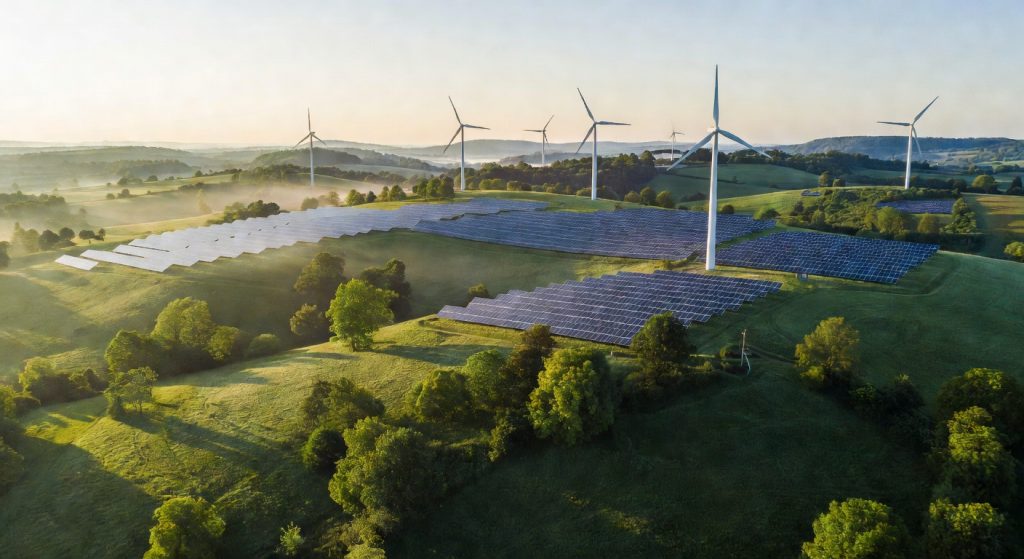
When the European Commission launched the EU Green Deal in December 2019, it was billed as Europe’s defining project for a generation — a sweeping blueprint to make the continent climate-neutral by 2050. Five years later, the balance sheet is mixed: genuine achievements sit alongside stubborn implementation gaps, and a growing debate over regulatory complexity is reshaping how Europe intends to reach its climate goals.
What the EU Green Deal Has Actually Delivered
The numbers are not trivial. Through flagship instruments like NextGenerationEU and REPowerEU, the EU has mobilised significant capital for the green transition. The expansion of the EU Emissions Trading System (ETS) to cover buildings and transport has generated over €200 billion in revenues, funding clean technology and energy efficiency across member states. Meanwhile, the Carbon Border Adjustment Mechanism (CBAM) — the world’s first carbon border levy — is advancing toward full operation in 2026, sending a signal to global trading partners that Europe intends to price carbon seriously.
Emissions have fallen, clean tech investment has scaled, and a framework for sustainability reporting has been built where virtually none existed before. These are real foundations, not just policy documents.
The Fault Lines: Enforcement Gaps and Green Fatigue
Yet a closer look at the data reveals a troubling shortfall. A review of National Energy and Climate Plans (NECPs) — the country-level roadmaps that translate EU ambitions into national action — projects only a 51% reduction in emissions by 2030, falling short of the legally binding 55% target set by the ‘Fit for 55’ package. That four-percentage-point gap is not a rounding error; it represents millions of tonnes of CO₂ and years of delayed action.
At the same time, businesses and policymakers across Europe have voiced growing concern about the sheer complexity of environmental regulation. The term “green fatigue” has entered the policy vocabulary — a sense that the volume and pace of new rules, from the Corporate Sustainability Reporting Directive (CSRD) to supply chain due diligence laws, risks overwhelming companies, particularly smaller ones, before the rules can deliver results.
This tension is not new, but it has intensified following Mario Draghi’s landmark 2024 competitiveness report, which warned that regulatory burden was undermining Europe’s economic performance relative to the United States and China.
Regulatory Simplification: The Omnibus Package and What It Means
The EU’s response is the Omnibus package — an ambitious legislative mechanism that allows simultaneous amendments to multiple laws, streamlining overlapping requirements and reducing administrative strain on businesses. Rather than abandoning climate policy, the Commission frames simplification as a way to make sustainability rules more effective and enforceable in practice.
Key priorities within this reform push include:
- Improving interoperability between sustainability reporting frameworks, so companies are not duplicating disclosures across different standards
- Finalising the revision of the Energy Taxation Directive (ETD), which would better align tax incentives with renewables and remove fossil fuel advantages baked into decades-old rules
- Strengthening enforcement mechanisms so that NECP commitments translate into real national action, not just targets on paper
The Omnibus approach reflects a broader political recalibration: the EU wants to align its carbon markets, reporting obligations, and competitiveness agenda rather than treat them as competing priorities.
Implications for Businesses and Citizens
For companies operating in or trading with Europe, the direction of travel is clear: sustainability reporting and carbon pricing are permanent features of the regulatory landscape, not temporary experiments. The question is not whether these rules will apply, but how they will be structured and enforced.
For citizens, the stakes are equally concrete. Whether the EU closes that four-point gap on its 2030 emissions target will determine the credibility of European climate policy on the world stage — and the pace of the energy transition that affects energy bills, air quality, and long-term economic resilience.
Key Takeaway
The EU Green Deal at five is neither a triumph nor a failure — it is a work in progress under genuine pressure. The Omnibus simplification push and the drive to finalise the ‘Fit for 55’ package signal that Europe is trying to make its environmental regulation both more ambitious and more workable. Whether that balance can be struck, and whether member states will close the enforcement gap before 2030, will define the next chapter of European sustainability policy.