Five Years of the EU Green Deal: What Has Been Achieved — and What Still Needs to Happen
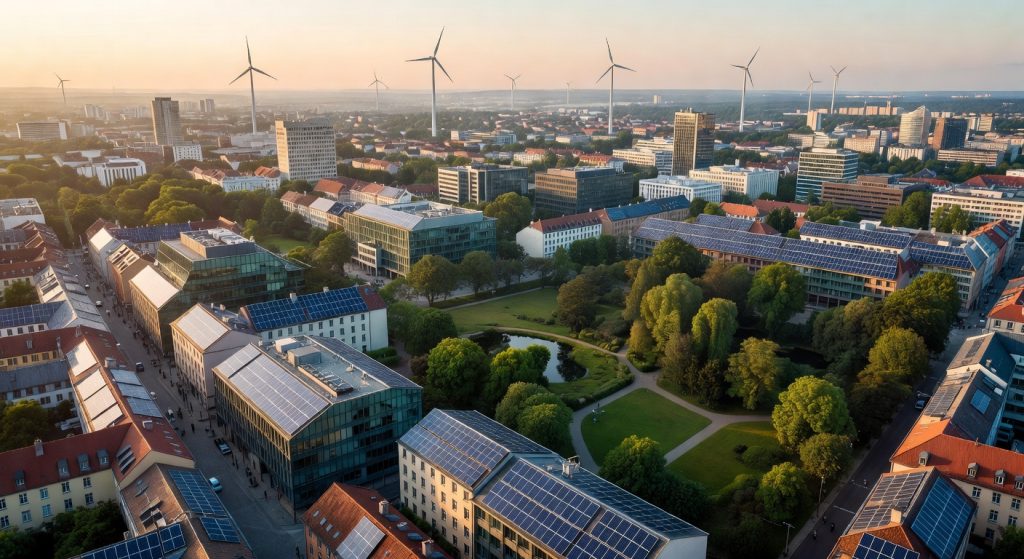
When the European Commission launched the EU Green Deal in December 2019, it was the most ambitious climate policy package the bloc had ever attempted. Five years later, the results are real but uneven. Emissions are down, clean technology investment has scaled, and sustainability reporting frameworks have matured significantly. Yet the original targets remain out of reach unless Europe accelerates — and fast.
What Five Years of the Green Deal Have Actually Delivered
The progress is measurable. The EU has reduced greenhouse gas emissions, mobilised record levels of green finance, and built a regulatory architecture that is now influencing policy well beyond European borders. The Carbon Border Adjustment Mechanism (CBAM) — a landmark tool in EU carbon markets — is on track for full operation by 2026, putting a carbon price on imports from countries with weaker climate rules. Meanwhile, the EU Emissions Trading System (ETS) has been expanded to cover buildings and transport, with projections suggesting it could generate over €200 billion for green transition funds.
The Green Industrial Plan has also taken shape, with the Net-Zero Industry Act and the Critical Raw Materials Act setting concrete targets for domestic production and processing of strategic materials by 2030. These are not just environmental measures — they are industrial and geopolitical ones, designed to reduce Europe’s dependence on third-country supply chains for batteries, solar panels, and hydrogen technologies.
Where the Fault Lines Are — and Why They Matter
Despite these achievements, a five-year review by A&O Shearman’s Sustainability Outlook 2026 makes clear that significant challenges remain. Economic slowdowns, energy price shocks triggered by the war in Ukraine, and political headwinds following the 2024 European elections have all created friction. Most critically, current National Energy and Climate Plans submitted by member states project only a 51% reduction in emissions by 2030 — falling short of the legally binding 55% target under the ‘Fit for 55’ package.
The revision of the Energy Taxation Directive (ETD), a key lever for incentivising renewables and penalising fossil fuel use, remains unfinished. Finalising it is now considered urgent if the EU is to close the gap. At the same time, climate scientists and advocacy groups are pushing for a 90% emissions reduction target by 2040 to keep the 1.5°C Paris Agreement goal within reach — a level of ambition that the current Commission has yet to formally commit to.
There is also the question of enforcement. Environmental regulation at EU level is only as strong as its implementation across 27 member states, and gaps between national plans and actual delivery remain a structural weakness of the Green Deal architecture.
Simplification, Stability, and the Road to 2050
One of the clearest signals from Brussels heading into 2026 is a pivot toward regulatory consolidation. After years of introducing new rules — from the Corporate Sustainability Reporting Directive (CSRD) to the EU Taxonomy — the Commission is now focused on simplifying and stabilising the rulebook. The goal is to give businesses the predictability they need to make long-term investment decisions in hard-to-abate sectors like steel, cement, and chemicals.
This matters for climate policy credibility. Investors and corporations have repeatedly cited regulatory uncertainty as a barrier to scaling green finance. A more stable framework, combined with clear timelines toward 2050 climate neutrality, could unlock the private capital that public funds alone cannot provide.
What This Means for Citizens, Businesses, and Policymakers
The implications of this five-year juncture are concrete:
- For citizens: Energy transition policies under REPowerEU are designed to reduce household dependence on fossil fuels, but the pace and fairness of that transition vary widely across member states.
- For businesses: Regulatory simplification offers relief, but CBAM and expanded ETS obligations mean that carbon costs are becoming a permanent feature of doing business in and with Europe.
- For policymakers: Closing the gap between national plans and EU-level targets requires political will — and a credible 2040 target that aligns with science.
The key takeaway: The EU Green Deal has proven it can build frameworks and shift markets. The next chapter is about enforcement, ambition, and ensuring the transition is fast enough — and fair enough — to bring everyone along.