Solar, Wind, and Storage: The Distributed Energy Revolution Reshaping Power Systems in 2025
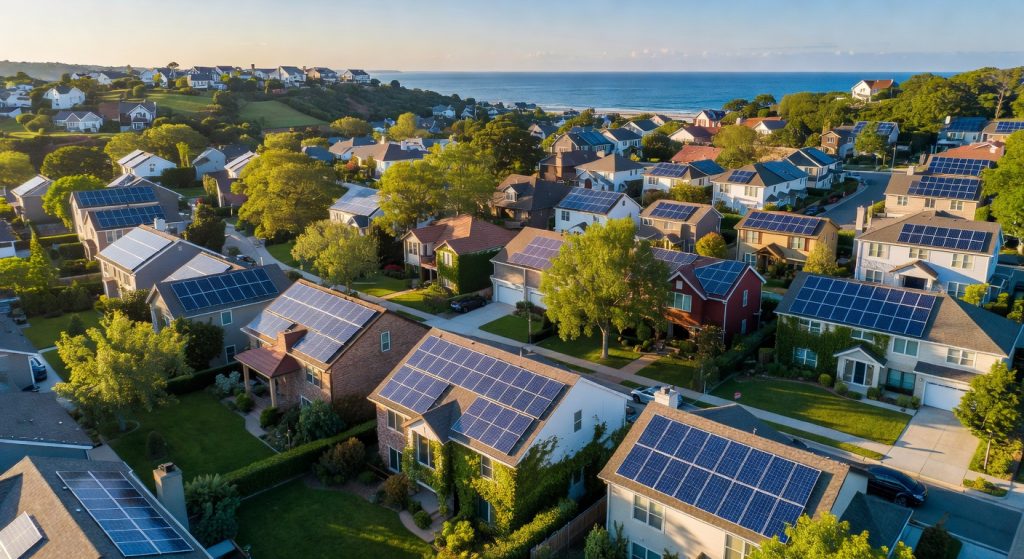
The global energy transition is no longer a distant promise — it is happening street by street, rooftop by rooftop, and gigawatt by gigawatt. From the Caribbean to South Asia, the week’s energy news tells a consistent story: renewable energy, solar power, and smart storage are becoming the backbone of modern electricity systems, even as political and financial obstacles threaten to slow progress for the most vulnerable communities.
Puerto Rico’s Solar Struggle: When Politics Meets Energy Justice
Nearly 200 organisations have written to the Trump administration urging the reinstatement of $350 million in federal funding earmarked for rooftop solar panels and battery systems for approximately 12,000 low-income families in Puerto Rico. The funding, originally allocated under the Inflation Reduction Act, was frozen earlier this year — a decision that directly affects households already battered by some of the highest electricity prices in the United States and a notoriously fragile grid.
The numbers behind Puerto Rico’s solar story are striking. The island now hosts 1,456 MW of rooftop solar capacity, representing roughly 20% of total installed generation and making it the second-largest power source after petroleum. This is a remarkable achievement for a territory that suffered near-total grid collapse after Hurricane Maria in 2017. Distributed solar and battery storage have proven to be not just environmentally sound, but critical infrastructure for resilience in climate-vulnerable regions.
From a European perspective, this case resonates deeply. The EU’s own Solar Rooftop Initiative — part of the REPowerEU plan — pushes for mandatory rooftop solar on new buildings precisely because distributed generation reduces dependence on centralised, fossil-fuel-heavy grids. The lesson from Puerto Rico is clear: cutting funding for distributed solar in low-income communities is not a fiscal saving; it is a transfer of risk onto those least able to bear it.
Scaling Up: Pumped Storage, Utility Solar, and the Grid of Tomorrow
While the Puerto Rico debate highlights the politics of energy access, other developments this week underscore the breathtaking pace of renewable scaling globally. In India, Austrian engineering group ANDRITZ has been contracted to build the country’s largest pumped storage hydropower plant — a 3,000 MW facility in Maharashtra expected to generate 6,241 GWh annually and cut CO₂ emissions by an estimated 4.55 million tonnes per year. Pumped storage remains the world’s most mature large-scale energy storage technology, acting as a giant rechargeable battery that balances supply and demand — a crucial function as variable solar and wind capacity grows.
In the United States, the numbers are equally impressive. Wind and utility-scale solar generation reached 760,000 GWh in the first part of 2025, accounting for 17% of total US electricity production — an increase of 88,000 GWh compared to the same period in 2024. That growth rate, sustained over several years, is beginning to structurally displace coal and gas in the generation mix, with tangible effects on wholesale power prices and carbon intensity.
Meanwhile, a quieter but significant milestone was achieved at the Port of Los Angeles, where Eco Wave Power completed a wave energy pilot project in partnership with Shell, meeting all technical milestones. Wave and tidal energy remain niche compared to solar and wind, but successful pilots like this one expand the toolkit available for marine renewable energy — particularly relevant for coastal European nations seeking to diversify beyond offshore wind.
Implications for Citizens, Businesses, and Policymakers
These developments carry concrete implications across three levels:
- For citizens: Rising power prices — hitting US school districts and households alike — make the case for energy efficiency investments and rooftop solar more compelling than ever. Distributed generation is increasingly a hedge against grid volatility, not just an environmental choice.
- For businesses: The rapid growth of utility-scale solar and wind creates both opportunities and transition pressures. Companies in fossil-fuel-adjacent sectors face accelerating demand shifts, while those in resource management, grid services, and energy storage are entering a period of sustained growth.
- For policymakers: The Puerto Rico case is a cautionary tale about the cost of policy reversals. Consistent, long-term support frameworks — like those embedded in the EU’s Green Deal architecture — are essential to attract private investment and protect vulnerable communities during the energy transition.
Key takeaway: The distributed energy revolution is accelerating, but its benefits remain unevenly distributed. Whether in Puerto Rico, Maharashtra, or the coasts of Europe, the critical challenge for 2025 and beyond is ensuring that the transition to solar, wind, and storage is fast, fair, and financially accessible — for everyone.