Gene Editing, Regenerative Farming, and Corporate Deals: How Food Systems Are Being Rewired
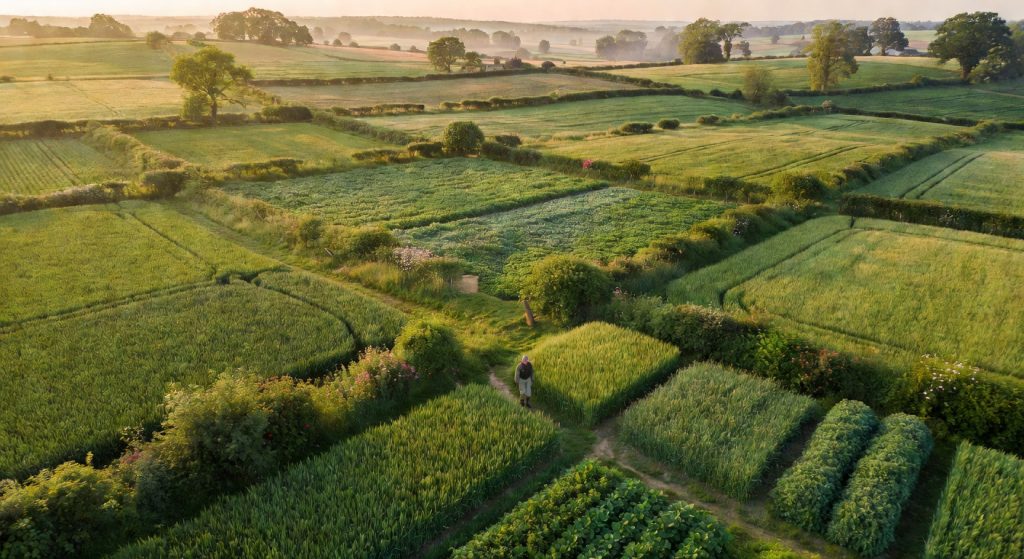
From Brussels negotiating rooms to Kenyan potato fields, the architecture of global food production is undergoing a quiet but profound transformation. A convergence of regulatory shifts, biotech breakthroughs, and corporate sustainability commitments is redefining what sustainable agriculture looks like in practice — and who gets to shape it.
The EU’s Gene-Editing Deal: A New Chapter for Crop Innovation
After months of negotiations, the EU Council and European Parliament have reached a provisional agreement on the regulation of New Genomic Techniques (NGT) — a landmark decision that will determine how gene-edited crops are governed across the bloc for years to come.
The deal introduces a two-tier system: certain NGT crops deemed equivalent to conventionally bred varieties will face lighter regulatory requirements, effectively being treated like non-GMO plants. More complex gene-edited crops will remain subject to stricter oversight. Crucially, traits conferring herbicide tolerance are excluded from the simplified pathway — a concession to environmental concerns about chemical dependency in farming.
However, the agreement also dropped two provisions that had been central to civil society demands: sustainability criteria for NGT crops and mandatory end-product labeling for consumers. Transparency safeguards around patents were retained to prevent monopolization and support smaller breeders. For advocates of agroecology and consumer rights, this is a mixed result. For the biotech sector and many farmers’ organizations, it signals a long-awaited opening for innovation in sustainable crop development.
The regulation arrives in a broader global context: Kenya is on track to release a GM potato resistant to late blight by October 2027, a disease that currently causes up to 80% yield losses in the country’s second-most important staple crop. Meanwhile, the UK’s All-Party Parliamentary Group has called for science-led agricultural policies capable of boosting farm output by 30% by 2050 while halving environmental impact. The direction of travel is clear — but the debate over how to get there remains heated.
Regenerative Agriculture: Big Targets, Real Momentum
Beyond the laboratory, a parallel revolution is unfolding in the fields. Regenerative agriculture — a suite of practices focused on soil health, biodiversity, and carbon sequestration — is moving from niche philosophy to mainstream corporate strategy.
PepsiCo has committed to scaling regenerative practices across 7 million acres by 2030, while agribusiness giant ADM targets 5 million acres by 2025. These are not modest ambitions. Programs like AgSpire are connecting farmers directly to carbon markets, offering new revenue streams that make sustainable land management financially viable — not just ethically appealing.
The model gaining traction is one of risk-sharing supply chain partnerships: food companies absorb some of the financial uncertainty that farmers face when transitioning to new practices, in exchange for more resilient, traceable, and sustainable sourcing. This shift in supply chain sustainability logic — from extraction to co-investment — represents a structural change in how corporations relate to the land and the people who farm it.
Corporate Water and Soil Investments: Resilience as Business Strategy
Companies including Coca-Cola, Cargill, and McCormick are funding agricultural initiatives centered on water conservation and soil restoration. The motivation is partly ethical, but increasingly it is strategic: climate disruption poses direct risks to ingredient availability, price stability, and brand reputation.
Investing in food system resilience at the farm level is becoming a form of climate risk management. For a beverage company dependent on consistent water supplies, or a spice brand reliant on specific crops from specific regions, the health of the soil is no longer an abstraction — it is a balance sheet concern.
What This Means for Europe’s Food Future
Taken together, these developments sketch a food system in transition — one where technology, policy, and finance are being realigned around sustainability imperatives, even if imperfectly. The EU’s NGT regulation will test whether lighter-touch biotech governance can coexist with genuine ecological ambition. Corporate regenerative commitments will be judged by whether they translate into measurable outcomes for farmers and ecosystems alike.
- Consumers will need clearer information — the removal of NGT labeling requirements is a step backward on transparency.
- Farmers stand to benefit from new tools and market incentives, but must not be left bearing disproportionate transition costs.
- Policymakers must ensure that innovation — whether genomic or agronomic — serves the public good, not just corporate bottom lines.
Key takeaway: The rewiring of global food systems is underway, driven by a mix of regulatory reform, biotech ambition, and corporate investment in soil and water. Europe is at the center of this shift — and the choices made now will shape the resilience and fairness of our food supply for decades to come.