Dirt-Powered Fuel Cells and the Future of ESG Innovation: When Soil Becomes a Sustainability Solution
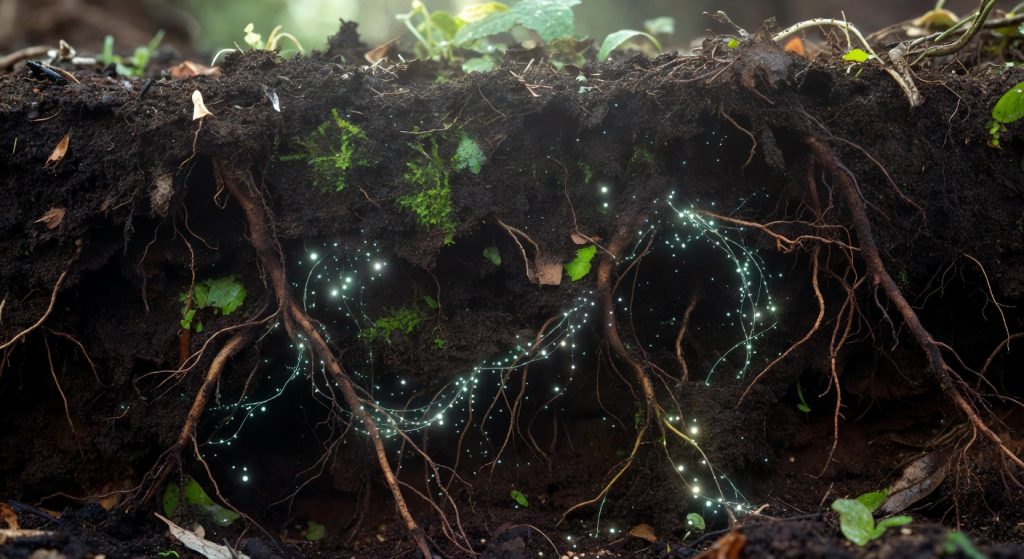
What if the ground beneath your feet could power the sensors monitoring it? That question moved from philosophical to practical when scientists announced the development of a dirt-powered fuel cell — a device that harnesses microbes living in soil to generate electricity, potentially replacing conventional batteries in underground environmental sensors. It sounds like science fiction, but it is the kind of quiet, unglamorous innovation that tends to reshape entire industries over time. For the sustainability and ESG community, it is worth paying close attention.
How Soil Microbial Fuel Cells Work — and Why They Matter for Green Business
The technology behind this breakthrough is known as a microbial fuel cell (MFC). Certain bacteria naturally transfer electrons as part of their metabolic processes — essentially, they produce a tiny electrical current as a byproduct of breaking down organic matter in the soil. Engineers have now designed a compact cell that captures this current reliably enough to power low-energy devices such as underground sensors used in agriculture, environmental monitoring, and infrastructure management.
The implications for green business are significant. Traditional battery-powered sensors require periodic replacement, which means maintenance costs, logistics, and — critically — a stream of hazardous electronic waste. Lithium batteries, the current standard, depend on mining supply chains that carry serious environmental and human rights concerns, issues that increasingly appear on corporate responsibility agendas and ESG risk assessments. A self-sustaining, soil-powered alternative could dramatically reduce both the carbon footprint and the ethical complexity of large-scale environmental monitoring networks.
For European companies operating under the EU’s Corporate Sustainability Reporting Directive (CSRD) and aligning with the European Green Deal targets, technologies like this are not just interesting — they are strategically relevant. Any innovation that reduces dependency on critical raw materials and cuts operational emissions directly supports the kind of measurable sustainability performance that investors and regulators now demand.
Circular Economy Thinking at the Root Level
There is a deeper principle at work here that resonates strongly with circular economy thinking: using what already exists in a system, rather than importing new resources into it. The soil provides the microbes. The microbes provide the energy. The sensor monitors the soil. It is a closed loop — precisely the model that circular economy frameworks, championed by the Ellen MacArthur Foundation and embedded in EU policy through the Circular Economy Action Plan, seek to replicate across industries.
This approach also aligns with the concept of nature-based solutions, which the European Commission has increasingly promoted as a cost-effective way to address environmental challenges. Rather than engineering around nature, microbial fuel cells engineer with it. That distinction matters both philosophically and practically: nature-based solutions tend to be more resilient, more scalable, and more acceptable to local communities than purely synthetic alternatives.
Scaling this technology will require investment, and that is where sustainable finance enters the picture. Green bonds, the EU Taxonomy for sustainable activities, and impact investment funds are all mechanisms that could channel capital toward MFC development and deployment. Early-stage deep-tech with clear environmental benefits is precisely the kind of asset class that ESG-focused investors are actively seeking.
From Laboratory to Policy: The Path Forward
Promising as it is, soil-powered technology faces real barriers before it becomes mainstream. Energy output from current microbial fuel cells remains low — sufficient for sensors, but not yet for more demanding applications. Performance can vary depending on soil composition, moisture levels, and temperature, making reliability in diverse European climates a genuine engineering challenge. Researchers will need sustained funding and cross-disciplinary collaboration to move from proof-of-concept to commercial deployment.
Policymakers have a role to play. The EU’s Horizon Europe research programme and the European Innovation Council are natural vehicles for accelerating this kind of breakthrough. Member states with strong agricultural sectors — France, Germany, Poland, Italy — have particular incentives to invest, given that smart soil monitoring is central to both precision farming and compliance with the EU’s Farm to Fork Strategy.
- For investors: Monitor deep-tech sustainability startups working on bio-electrochemical systems as an emerging ESG asset class.
- For businesses: Assess whether current sensor and monitoring infrastructure could benefit from battery-free alternatives in your supply chain sustainability reporting.
- For policymakers: Consider dedicated funding tracks for nature-integrated energy technologies within existing green innovation frameworks.
Key takeaway: A fuel cell powered by soil microbes may seem like a niche laboratory curiosity, but it embodies the convergence of circular economy principles, nature-based innovation, and ESG-driven demand for cleaner supply chains. The ground, it turns out, has more to offer than we thought — and the sustainability sector should be paying attention from the roots up.