Five Years of the EU Green Deal: What Has Changed — and What Still Needs to Happen
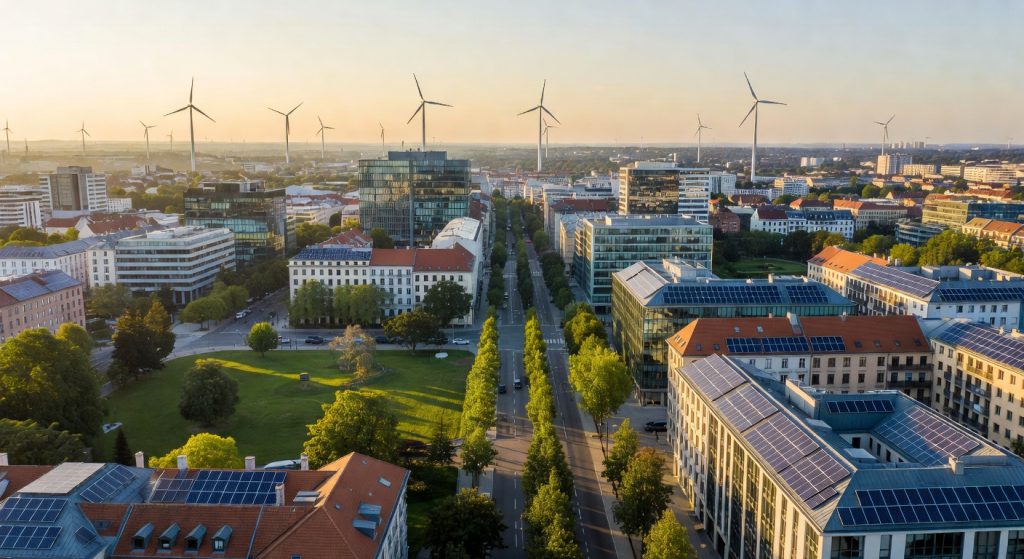
When the European Commission launched the EU Green Deal in December 2019, it set out one of the most ambitious climate policy agendas in history: making Europe the world’s first climate-neutral continent by 2050. Five years later, the balance sheet is mixed — meaningful gains sit alongside persistent fault lines that will define the next chapter of European climate policy.
What the First Five Years Actually Delivered
The progress is real and measurable. EU greenhouse gas emissions have continued to decline, clean technology investment has scaled significantly, and landmark legislative packages have moved from proposal to law at a pace rarely seen in Brussels. The expanded EU Emissions Trading System (ETS) — now covering buildings and road transport in addition to heavy industry — is projected to generate over €200 billion in revenue, providing a powerful financial lever for the green transition.
The Carbon Border Adjustment Mechanism (CBAM), fully operational by 2026, is already reshaping how European importers think about the carbon footprint of goods arriving from outside the bloc. By putting a carbon price on imports of steel, cement, aluminium, fertilisers, and electricity, CBAM creates a global ripple effect — incentivising greener production well beyond Europe’s borders. This is the EU’s most significant contribution to carbon markets at the international level.
Meanwhile, the Green Deal Industrial Plan has moved forward with revised state aid frameworks, updates to the General Block Exemption Regulation, and proposals for a European Sovereignty Fund aimed at scaling manufacturing of batteries, hydrogen, and other net-zero technologies. REPowerEU has further channelled investment into clean energy infrastructure across member states.
Where the Cracks Are Showing
Despite the legislative momentum, several pressure points are emerging. A critical one: national climate plans submitted by EU member states currently project a collective 51% reduction in emissions by 2030 — short of the legally binding 55% target under the ‘Fit for 55’ package. The pending revision of the Energy Taxation Directive — designed to align fuel tax policy with climate goals — remains unfinished, leaving a significant policy gap that affects energy costs for both citizens and industries.
Regulatory complexity is another growing concern. Businesses, particularly small and medium enterprises, are navigating an increasingly dense web of sustainability reporting obligations, permitting requirements, and compliance frameworks. The European Commission has acknowledged this tension, signalling a shift toward regulatory simplification without abandoning ambition — a difficult balance to strike.
To accelerate deployment of clean energy and industrial capacity, the EU is now advancing the Industrial Accelerator Act (IAA), which builds on the Net Zero Industry Act to fast-track permitting for strategic net-zero projects. Alongside this, the concept of ‘Green Lead Markets’ — preferential public procurement and demand-side incentives for low-carbon products like hydrogen-based steel and green chemicals — aims to create the commercial pull that pure environmental regulation alone cannot generate.
Implications for Citizens, Business, and Policymakers
For citizens, the next phase of the Green Deal will increasingly be felt in energy bills, product prices, and the availability of cleaner transport options — particularly as ETS coverage expands to buildings and road fuels. The social dimension of the transition remains a live political issue across member states.
For businesses, the signals are clear:
- Carbon pricing will tighten — plan accordingly.
- Green public procurement will favour low-carbon suppliers.
- Sustainability reporting requirements, despite simplification efforts, are here to stay.
- Access to EU industrial funds will increasingly be tied to decarbonisation commitments.
For policymakers, the priority is closing the gap between legislative ambition and real-world implementation — particularly on the 2030 emissions target, energy taxation, and permitting reform.
Key Takeaway
The EU Green Deal at five is neither a triumph nor a failure — it is a work in progress operating under real political and economic pressure. The architecture is largely in place: carbon markets, industrial policy, sustainability reporting, and border carbon adjustments. What Europe now needs is stable rules, faster implementation, and smarter investment to turn legislative text into measurable climate outcomes. The 2050 neutrality goal remains on the horizon — but the decisions made in the next two to three years will determine whether it stays there or becomes genuinely reachable.