3,100 Surging Glaciers, Forests Turning Into Emitters: The Hidden Climate Threats Reshaping Our World
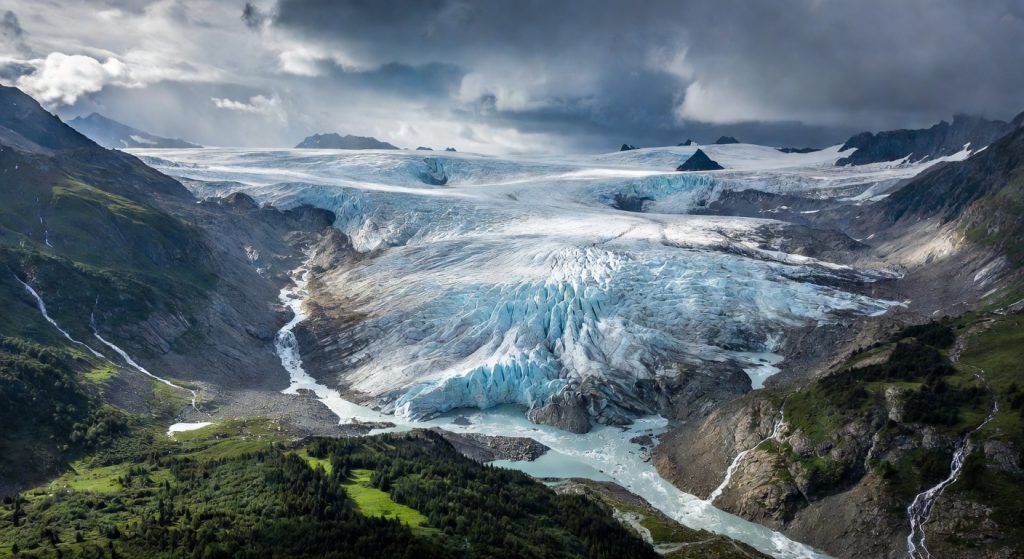
While the headlines focus on rising temperatures and melting ice caps, two new scientific findings are quietly rewriting what we thought we knew about climate change — and both carry urgent implications for communities, policymakers, and ecosystems across Europe and beyond. A landmark study has identified 3,100 so-called ‘surging glaciers’ worldwide capable of sudden, catastrophic acceleration, while separate research confirms that Africa’s forests — once vital carbon sinks — have flipped into net carbon emitters. Together, these developments paint a picture of a climate system under strain in ways that even optimistic models failed to anticipate.
Surging Glaciers: A Sleeping Hazard Waking Up
Most people picture glacier retreat as a slow, predictable process. The reality, according to a new study published via ScienceDaily, is far more dangerous. Researchers have catalogued 3,100 glaciers globally that can abruptly surge — accelerating their movement by factors of ten or more — even as overall glacier mass continues to shrink due to climate change. These surges can trigger devastating floods, avalanches, and glacial lake outburst events with little warning.
For Europe, this is not an abstract concern. The Alps, the Pyrenees, and Scandinavia’s mountain ranges host glaciers that feed rivers, support tourism, and regulate freshwater supplies for millions of people. Glacier instability threatens not only mountain communities but also downstream infrastructure — from hydroelectric plants to urban water systems. As environmental policy struggles to keep pace with accelerating physical changes, the conservation of high-altitude ecosystems becomes both an ecological and a public safety imperative.
Simultaneously, alarming signals are emerging from the Arctic. Stable sea ice along Alaska’s coast is disappearing faster than projected, with the ice season shrinking by weeks or even months. This is already forcing species like gray whales to alter migration routes into unfamiliar — and risky — waters such as San Francisco Bay, a stark reminder that biodiversity disruption is not a future scenario but a present reality.
Africa’s Forests: From Carbon Sink to Climate Liability
For decades, tropical forests were counted on as one of humanity’s greatest allies in fighting climate change — absorbing billions of tonnes of CO₂ each year. That assumption is now crumbling. New research confirms that Africa’s forests have reversed from carbon sinks to net carbon emitters since 2010, driven by heavy tropical deforestation. The biomass lost to logging, land conversion, and degradation now outweighs any regrowth, turning these ecosystems into a source of the very pollution they once absorbed.
This shift has profound consequences for global climate accounting. Europe’s climate targets and corporate sustainability commitments often rely, at least partially, on the assumption that natural carbon sinks will offset a portion of ongoing emissions. If those sinks are disappearing — or worse, reversing — the math changes dramatically. It reinforces the case for stricter deforestation regulations, including the EU’s own Corporate Sustainability Due Diligence Directive and the EU Deforestation Regulation, which aims to prevent products linked to forest destruction from entering the European market.
The Emissions Gap: Pledges Are Not Enough
Framing all of this is the sobering assessment from the UNEP Emissions Gap Report 2025, which projects global warming of 2.3–2.5°C even if all current Paris Agreement pledges are fully implemented. To limit warming to 1.5°C, the report calls for annual emissions cuts of 55% by 2035 — a pace of decarbonisation far beyond anything currently planned. The WMO has also flagged 2024 as the hottest year on record in the Arab region, with extreme weather affecting 3.8 million people, underscoring that climate impacts are already outrunning adaptation capacity in the Global South.
Renewable energy expansion remains the most powerful lever available, but it must be paired with urgent action on deforestation, land use, and ecosystem protection. The transition cannot succeed if natural carbon systems continue to collapse in parallel.
What This Means for Citizens and Decision-Makers
- Glacier risk mapping must be integrated into national civil protection and infrastructure planning across Alpine nations.
- Forest conservation must be treated as climate infrastructure, not a secondary concern — with binding international accountability mechanisms.
- Climate pledges must be urgently revised upward; current commitments are structurally insufficient to meet 1.5°C targets.
- Early warning systems for extreme weather and glacial events need significant investment, particularly in vulnerable regions.
The evidence is converging on a single, uncomfortable truth: the climate system is changing faster and in more complex ways than our policies account for. Surging glaciers, collapsing forest sinks, and an ever-widening emissions gap are not isolated problems — they are interconnected symptoms of a crisis that demands integrated, accelerated action at every level of governance.
The window for course correction remains open, but it is closing faster than the models predicted.