From CO₂ to Cleaning Products: How Europe’s Green Tech Wave Is Reshaping the Energy Transition
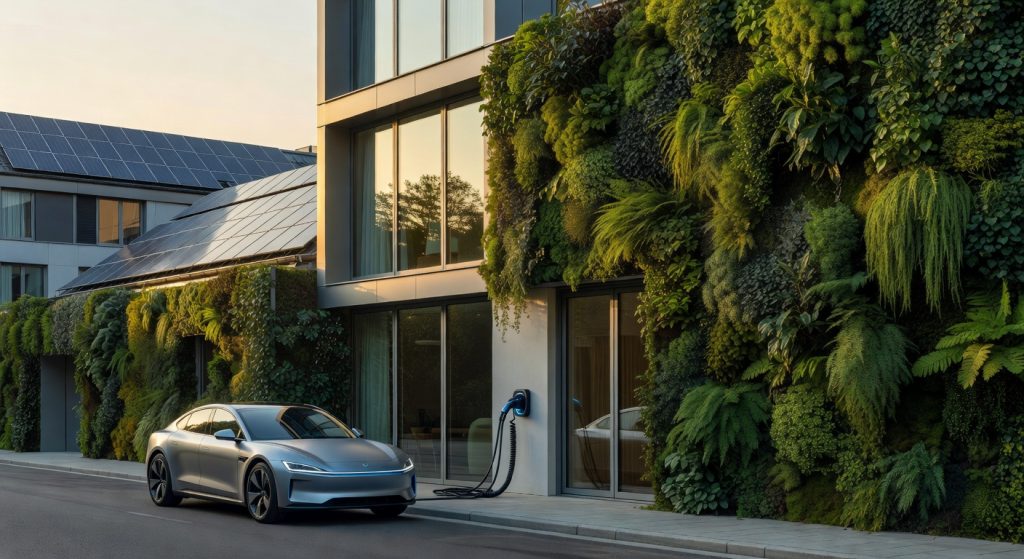
A quiet but significant revolution is unfolding across laboratories, garages, and ocean platforms: green technology is no longer just about reducing harm — it is actively turning waste into value. From European research centres converting carbon dioxide into household cleaning products, to electric vehicles doubling as home power stations, the frontiers of green innovation are expanding rapidly. This week’s developments paint a vivid picture of where the energy transition is heading — and what it means for citizens, businesses, and policymakers alike.
Turning Urban Waste Into Everyday Products: Europe Leads on CO₂ Conversion
In one of the most compelling cleantech breakthroughs of recent months, EU-funded researchers have demonstrated a process capable of capturing carbon dioxide emissions from urban waste streams and converting them into usable consumer goods — including cleaning liquids and synthetic leather. Published via TechXplore, the initiative represents a tangible step forward for the circular economy, one of the European Union’s flagship policy frameworks under the Green Deal.
The significance here goes beyond the laboratory. If scaled commercially, this technology could simultaneously address two pressing challenges: reducing industrial carbon emissions and cutting dependence on petrochemical feedstocks for everyday manufacturing. For smart cities looking to close the loop on urban waste, this offers a genuinely viable model.
- CO₂ captured from municipal waste incineration or landfill gas is chemically processed into organic compounds
- End products include biodegradable cleaning agents and bio-based leather alternatives
- The approach aligns with EU targets to cut net greenhouse gas emissions by at least 55% by 2030
For manufacturers and investors, the business case is becoming clearer: carbon is no longer just a liability to be offset — it is increasingly a raw material to be exploited responsibly.
Electric Vehicles as Home Energy Hubs — and the Battery Storage Rethink
The role of electric mobility in the broader energy system is evolving faster than many anticipated. A new Australian study has found that electric vehicles equipped with vehicle-to-home (V2H) technology can meaningfully cut household electricity bills while reducing the need for costly standalone home battery systems. The findings carry clear relevance for European consumers, where EV adoption is accelerating and grid stress during peak hours remains a growing concern.
V2H technology allows an EV’s onboard battery — typically ranging from 40 to 100 kWh — to feed electricity back into the home during evening peaks or grid outages, effectively making the car a mobile energy storage unit. For a continent investing heavily in both EV infrastructure and residential solar, this integration could prove transformative for household energy economics.
Meanwhile, a separate but related story is challenging assumptions about battery technology itself. A whistleblower has filed a criminal complaint against Donut Lab, a cleantech startup, for allegedly misrepresenting the maturity of its solid-state battery technology to investors. The case is a timely reminder that cleantech investment enthusiasm must be matched by rigorous due diligence — and that credibility is the sector’s most fragile asset.
On a more optimistic note, flywheel kinetic energy storage systems are attracting renewed serious attention, with approximately $200 million in fresh investment flowing into the sector. Unlike chemical batteries, flywheels store energy mechanically, offering near-unlimited charge cycles, rapid response times, and no degradation over time — qualities that make them attractive for stabilising grids fed by intermittent renewables.
Ocean Energy and the AI Data Centre Problem
Perhaps the most speculative — but genuinely intriguing — development comes from Panthalassa, a company proposing to deploy data centres on floating ocean platforms powered by wave energy. The context is critical: artificial intelligence infrastructure is driving an explosive surge in global data centre energy demand, with some estimates suggesting AI-related electricity consumption could rival that of entire countries within this decade.
Wave energy remains one of the least commercially developed renewable sources, but its theoretical potential is enormous — particularly for energy-intensive, location-flexible applications like data processing. For Europe, with its extensive Atlantic and North Sea coastlines, this represents both a technological opportunity and a strategic one.
What These Trends Mean for Europe’s Green Future
Taken together, this week’s developments reflect a maturing green technology ecosystem — one moving from proof-of-concept to commercial ambition, from single-sector solutions to integrated systems thinking. The EU’s regulatory environment, from the Green Deal to the Net Zero Industry Act, continues to provide a framework that — when matched with credible innovation — can accelerate deployment at scale.
For citizens, the message is increasingly practical: cleaner products, smarter homes, and lower energy bills are not distant promises. For policymakers, the challenge is ensuring that investment flows toward technologies with genuine substance, not just compelling narratives.
Key takeaway: Europe’s green innovation pipeline is producing real, scalable solutions — from CO₂-derived consumer goods to EV-powered homes and ocean-based clean computing. The energy transition is no longer a future project. It is being built, tested, and invested in right now.