Africa’s Forests Now Emit More Carbon Than They Absorb — What It Means for ESG and Global Climate Goals
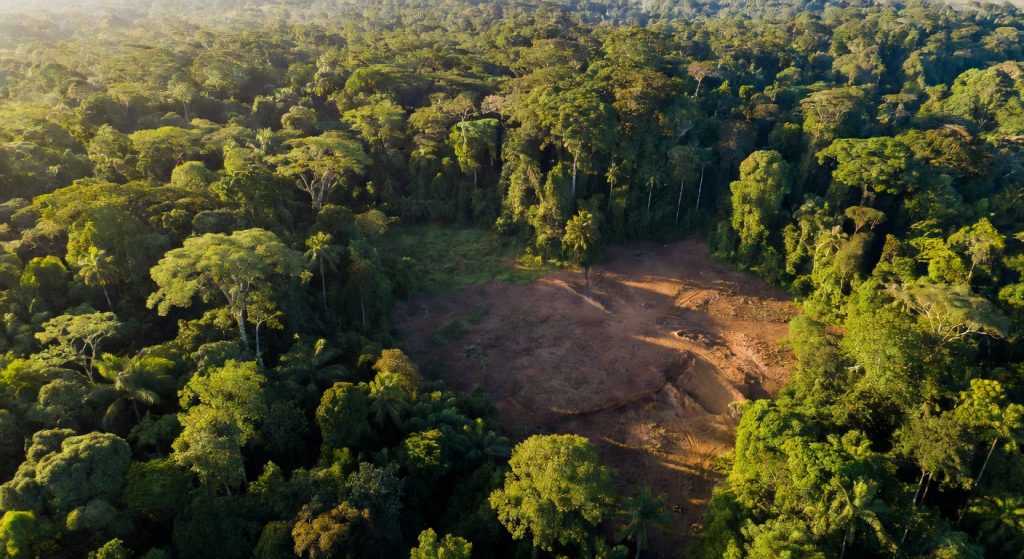
For decades, Africa’s vast tropical forests were counted among the planet’s most reliable allies in the fight against climate change — quietly absorbing billions of tonnes of carbon dioxide each year. That era is now over. According to research reported by ScienceDaily, Africa’s forests have reversed from a net carbon sink to a net carbon source since 2010, driven by relentless deforestation and biomass loss that now outpaces any natural regrowth. The implications ripple far beyond the continent, striking at the heart of global sustainability commitments, ESG frameworks, and the credibility of corporate carbon accounting.
From Carbon Sink to Carbon Source: What the Science Tells Us
The shift is not subtle. Heavy tropical deforestation across Central and West Africa has triggered massive biomass losses — trees felled for agriculture, logging, and infrastructure — releasing stored carbon back into the atmosphere at a rate that regrowth simply cannot compensate for. Scientists warn this tipping point undermines one of the foundational assumptions baked into global climate models and national carbon budgets.
For the European Union, which has anchored much of its climate strategy — including the European Green Deal — on the continued functioning of global forest carbon sinks, this is a serious wake-up call. The EU Deforestation Regulation (EUDR), which requires companies to ensure products sold in Europe are not linked to deforestation, becomes even more urgent in this context. But regulation alone is insufficient if the underlying forest systems are already in structural decline.
This development also exposes a fragility in circular economy thinking applied to tropical regions: the assumption that forests can indefinitely absorb the carbon costs of industrial activity elsewhere is no longer tenable. The carbon cycle, once treated as a reliable buffer, is now a source of additional risk.
ESG and Corporate Carbon Accounting Under Pressure
The reversal of Africa’s forests has direct consequences for ESG reporting and corporate responsibility. Many multinational companies — including European firms with supply chains stretching into African agricultural and forestry sectors — have relied on forest carbon offsets to meet net-zero pledges. If those forests are now emitting rather than absorbing carbon, the validity of offset-based strategies collapses.
This is not a hypothetical concern. Voluntary carbon markets have already faced intense scrutiny over the quality and permanence of forest-based credits. Africa’s carbon reversal adds empirical weight to calls for stricter standards, greater transparency, and a fundamental rethinking of how green business accounts for nature-based solutions in its sustainability strategies.
Investors and asset managers operating under EU sustainable finance frameworks — including the Sustainable Finance Disclosure Regulation (SFDR) and the EU Taxonomy — should take note. Exposure to deforestation-linked supply chains or overreliance on forest offsets now represents a measurable and growing financial risk, not just a reputational one.
Bright Spots: Sustainable Finance and Renewable Energy Show the Way Forward
Against this sobering backdrop, other developments this week offer a more constructive signal. Uzbekistan has secured a $6 billion deal to build a 160,000-tonne sustainable aviation fuel (SAF) hub — a significant milestone in decarbonising one of the hardest-to-abate sectors. SAF investments represent exactly the kind of sustainable finance innovation needed to redirect capital away from fossil-dependent systems.
Meanwhile, in the United States, renewable energy reached 26% of electricity generation in 2025 despite political headwinds from the Trump administration’s fossil fuel agenda — a testament to the resilience of green business models driven by market economics and long-term investment cycles. In Europe, Germany’s approval of a $1.9 billion fuel relief package reflects the ongoing tension between short-term affordability and long-term energy transition, a balancing act that every EU government is navigating.
Implications for Decision-Makers and Citizens
The convergence of these stories points to a clear set of priorities for European policymakers, businesses, and citizens:
- Tighten ESG standards around nature-based carbon offsets and require companies to disclose deforestation exposure in supply chains.
- Accelerate sustainable finance mechanisms that fund genuine emissions reductions — in aviation, energy, and land use — rather than offsetting strategies built on fragile assumptions.
- Support the EUDR’s full implementation and push for international cooperation to halt tropical deforestation at its source.
- Invest in circular economy models that reduce demand for land-intensive commodities driving forest loss in Africa and beyond.
Key takeaway: Africa’s forests flipping from carbon sink to carbon source is not a distant ecological problem — it is a direct challenge to the integrity of global climate commitments and ESG frameworks. For European businesses and policymakers, the message is clear: nature-based accounting must be grounded in nature’s actual condition, not its assumed one. The time for more rigorous, honest, and ambitious sustainability action is now.