Africa’s Forests Are Now Emitting Carbon: What It Means for ESG and Climate Finance
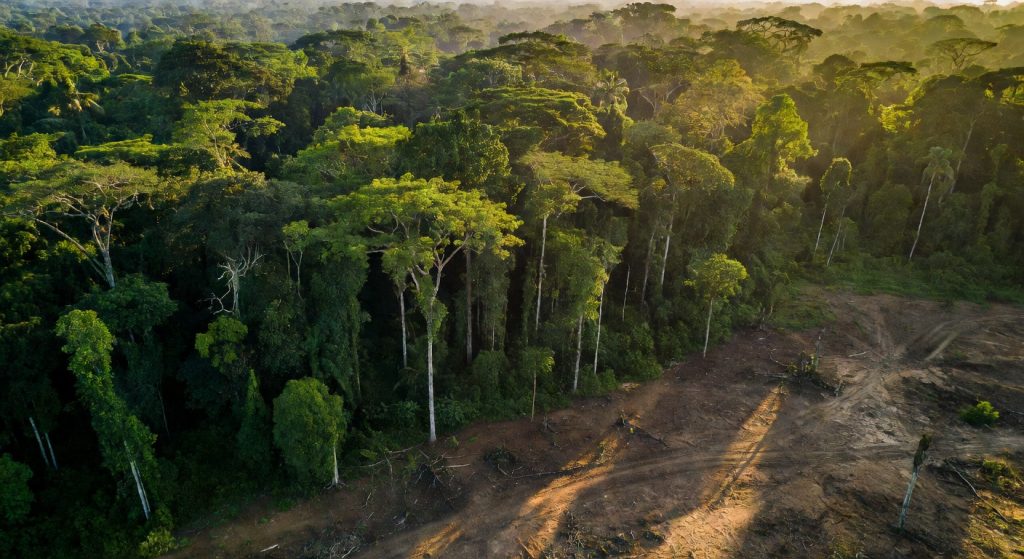
For decades, Africa’s vast tropical forests were considered one of the planet’s most reliable climate allies — quietly absorbing billions of tonnes of carbon dioxide each year. That assumption no longer holds. According to research published on April 13, 2026, and reported by ScienceDaily, Africa’s forests have crossed a critical threshold: they are now net carbon emitters, not absorbers. The reversal, driven by accelerating deforestation across tropical regions, carries profound consequences for global sustainability strategies, carbon credit markets, and the ESG commitments of thousands of companies worldwide.
From Carbon Sink to Carbon Source: What the Science Tells Us
The shift occurred gradually after 2010, as biomass losses from deforestation, land-use change, and forest degradation began outpacing the carbon sequestration capacity of remaining forest cover. Africa’s tropical belt — spanning the Congo Basin, West Africa, and parts of East Africa — had long been second only to the Amazon in terms of carbon storage. But sustained pressure from agricultural expansion, illegal logging, and infrastructure development has eroded that buffer.
The numbers are stark. Tropical forests globally store an estimated 250 billion tonnes of carbon, and Africa holds a substantial share of that reserve. When forests are cleared or degraded, that stored carbon is released back into the atmosphere, accelerating warming rather than mitigating it. The net flip in Africa’s forest carbon balance means the continent’s ecosystems are now contributing to the very crisis they were once helping to contain.
This is not an isolated phenomenon. Similar dynamics have been observed in parts of the Amazon and Southeast Asia, suggesting a systemic weakening of the world’s forest-based carbon buffers — a trend with direct implications for international climate targets under the Paris Agreement.
The Carbon Market Problem: Offsets Under Scrutiny
The reversal strikes at the heart of a multi-billion-euro industry: forest-based carbon offsets. Voluntary carbon markets have grown rapidly in recent years, with corporations across Europe and beyond purchasing credits tied to forest conservation projects — particularly in Africa — to offset their own emissions and meet net-zero pledges.
If the forests underpinning those credits are themselves becoming emission sources, the credibility of the entire offset mechanism is called into question. European regulators have already been tightening scrutiny of carbon markets. The EU’s Corporate Sustainability Reporting Directive (CSRD) and the incoming Green Claims Directive both push companies toward greater transparency and evidence-based sustainability claims. In this context, relying on African forest offsets to meet ESG targets may expose businesses to significant reputational and regulatory risk.
Sustainable finance professionals and ESG analysts will need to reassess the quality and permanence of forest-based carbon assets in their portfolios. The shift reinforces growing calls for a move away from offsetting emissions toward genuine, measurable reduction at source — a principle increasingly embedded in European green business standards.
Implications for Corporate Responsibility and Global Climate Goals
For companies that have built net-zero roadmaps around nature-based solutions, this news demands an urgent review. The integrity of corporate sustainability commitments depends on the robustness of the underlying science — and the science is now signalling a major gap in current strategies.
Key implications include:
- ESG portfolio risk: Investment funds with exposure to forest carbon projects in Africa face potential write-downs in credit value and reputational challenges.
- Net-zero credibility: Companies citing African forest offsets in sustainability reports may face challenges under incoming EU due diligence and green claims legislation.
- Policy pressure: Governments and multilateral bodies may need to redirect climate finance toward active forest restoration and anti-deforestation enforcement, rather than passive conservation credits.
- Circular economy alignment: Businesses committed to circular economy principles should prioritise supply chain deforestation-free commitments, reducing demand-side pressure on vulnerable forests.
The Takeaway: Nature Cannot Be a Loophole
Africa’s forest carbon reversal is a warning signal the sustainability community cannot afford to ignore. It exposes the fragility of climate strategies that treat nature as a convenient accounting tool rather than a living system requiring active protection. For European businesses and policymakers leading the global green transition, the message is clear: sustainable finance and corporate responsibility must be grounded in real-world ecological outcomes, not optimistic projections. Forests can be part of the climate solution — but only if we stop destroying them first.