Solar Powers 22% of EU Electricity in June: A Turning Point for Europe’s Energy Future
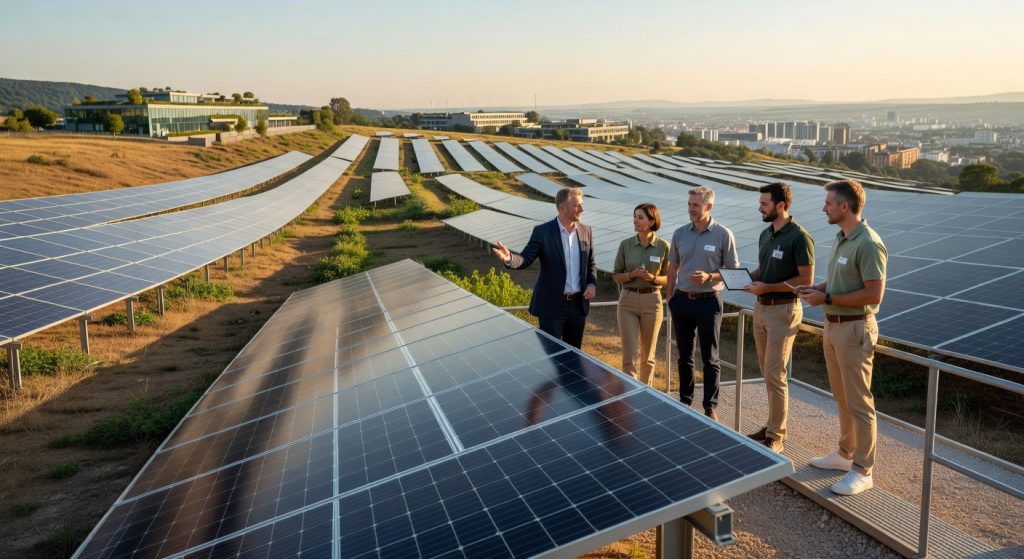
For the first time in history, solar energy topped the European Union’s electricity mix, generating 22% of all power produced in June 2025. According to data reported by Canary Media, solar surpassed gas and coal combined — a milestone that would have seemed improbable just a decade ago. As the US retreats from clean energy commitments under the Trump administration, Europe is quietly cementing its position as the world’s most advanced large-scale renewable energy market.
Europe’s Solar Surge: More Than a Seasonal Peak
June’s figures are partly driven by long summer days, but the structural shift behind them is permanent. Years of policy consistency — from the EU’s Fit for 55 package to national feed-in tariffs and auction schemes — have turned solar from a niche technology into the continent’s leading power source during peak months. Installed solar capacity across the EU has more than doubled since 2019, and grid operators are increasingly designing their systems around solar’s predictable midday generation curves.
This matters for ordinary citizens and businesses alike. A higher share of renewable energy in the mix directly reduces exposure to volatile fossil fuel prices, a lesson Europeans learned painfully during the 2022 energy crisis triggered by Russia’s invasion of Ukraine. Energy security and affordability are now inseparable from the renewable transition — and solar is delivering on both fronts simultaneously.
The US Contrast: Policy Reversals and Their Global Ripple Effects
While Europe accelerates, the United States is experiencing a sharp policy reversal that offers a cautionary tale for any government tempted to abandon long-term clean energy frameworks. The Trump administration has cancelled a $4.9 billion loan for the Grain Belt Express, a critical transmission line that would have delivered cheap wind and solar power from the Great Plains to the East Coast. Separately, New Hampshire has redirected $15 million from its clean energy fund, effectively ending a municipal solar expansion programme.
Perhaps most damaging is the termination of a key federal tax credit for rooftop solar, included in the administration’s sweeping budget legislation. Industry analysts warn this could trigger mass layoffs among small solar installers and create significant uncertainty for third-party ownership models that have made residential solar accessible to millions of American households. Innovators are proposing virtual power plants — networks of distributed home batteries and solar panels — as a resilience pathway, but without policy support, scaling such solutions remains an uphill battle.
For European policymakers and businesses, the message is clear: regulatory stability is as valuable as any subsidy. The EU’s ability to attract sustained investment in renewables rests heavily on the predictability of its legislative environment.
Hydrogen and Fuel Cells: The Next Efficiency Frontier
Beyond solar, a quieter but equally significant development is unfolding in clean energy technology. Researchers have announced a new catalyst design that extends hydrogen fuel cell lifespans to 200,000 hours — a breakthrough that could dramatically reduce the cost of deploying fuel cells in transport, industrial, and grid-storage applications. Longer-lasting fuel cells mean better resource management, less material waste, and stronger economic viability for green hydrogen as a complement to variable renewable sources like solar and wind.
The EU has already committed billions through its Hydrogen Strategy and the European Clean Hydrogen Alliance. Innovations like this catalyst design are precisely the kind of progress needed to make green hydrogen competitive with fossil-based alternatives by 2030. Combined with advances in CO₂ conversion catalysts, these technologies point toward a future where energy efficiency and circular resource management converge at the molecular level.
What This Means for Citizens, Businesses, and Policymakers
The June solar milestone is not just a statistic — it is a signal with practical implications:
- Citizens can expect more hours of near-zero marginal cost electricity, putting downward pressure on bills when markets function well and storage is available.
- Businesses investing in European operations gain a more credible path to meeting scope 2 emissions targets through genuinely green power purchase agreements.
- Policymakers must now focus on the next bottleneck: grid infrastructure, long-duration storage, and the integration of hydrogen to manage seasonal imbalances.
Key takeaway: Europe’s solar achievement is real and historic, but sustaining it requires continued investment in transmission, storage, and emerging technologies like hydrogen fuel cells. The contrast with US policy rollbacks underscores that the green transition is not inevitable — it is a choice that must be actively defended, budget cycle after budget cycle.