Carbon Removal Deals and ESG Reform: How Corporate Giants Are Reshaping Sustainable Finance in 2025
The world of sustainable finance is moving fast. In the span of just a few weeks, two of the world’s most powerful financial and tech corporations have committed to removing hundreds of thousands of tonnes of CO₂ from the atmosphere — while European regulators are quietly rewriting the rules that will define corporate responsibility for a generation. Together, these developments signal that ESG is no longer a footnote in annual reports: it is becoming the architecture of modern business strategy.
Big Money Enters the Carbon Removal Market
JPMorgan Chase has signed a deal with Graphyte for 60,000 tonnes of durable carbon dioxide removal (CDR), one of the largest single purchases of this type of carbon credit to date. Graphyte specialises in biochar-based carbon storage — a method considered highly durable because it locks carbon into solid form for centuries rather than relying on living ecosystems that can burn or decay.
Not to be outdone, Microsoft has committed to a 626,000-tonne carbon removal agreement with Canada’s first majority Indigenous-owned BECCS (Bioenergy with Carbon Capture and Storage) project. Beyond the sheer scale, this deal carries significant social weight: it channels sustainable finance directly into Indigenous economic development, demonstrating that green business can also be an engine of equity.
Both deals are driven by corporate net-zero commitments aligned with Science Based Targets initiative (SBTi) frameworks, which require companies to go beyond offsetting emissions and actively invest in carbon removal. As more corporations face pressure from investors, regulators, and consumers to demonstrate credible climate action, the CDR market is expected to scale dramatically through the late 2020s.
Europe Tightens the ESG Reporting Framework
While corporations race to decarbonise, European institutions are building the regulatory scaffolding to ensure these commitments are transparent and comparable. Two key developments stand out:
- EFRAG (European Financial Reporting Advisory Group) has published exposure drafts for Amended European Sustainability Reporting Standards (ESRS), streamlining disclosure requirements and aligning them more closely with global frameworks such as the ISSB standards. The goal is to reduce compliance complexity for European firms without weakening the substance of reporting.
- Switzerland has proposed a Sustainable Corporate Management Act modelled closely on EU ESG rules, covering both sustainability reporting and supply chain due diligence. If adopted, it would bring Swiss companies — including major financial institutions and multinationals — into alignment with the broader European regulatory ecosystem.
These moves reflect a broader push for policy coherence across Europe. Fragmented national rules have long frustrated businesses operating across borders; a harmonised approach to ESG disclosure reduces costs and increases the reliability of sustainability data for investors and policymakers alike.
Renewable Energy Infrastructure: Private Capital Steps Up
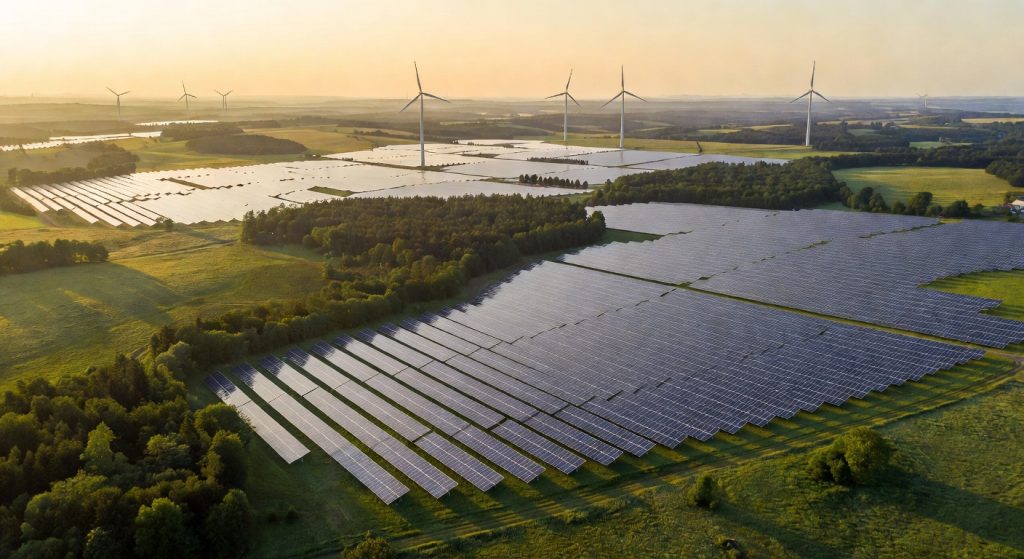
The sustainability story is not only about carbon credits and compliance. Ingka Group — the parent company of IKEA — is expanding its already substantial $8.1 billion renewable energy commitment with a new 110 MW solar buildout in Germany. The project supports both grid electrification and energy security at a moment when Europe is still navigating the aftermath of the energy crisis triggered by Russia’s invasion of Ukraine.
Private capital continues to flow into renewables at scale, with players like Blackstone, Sunotec, and Iberdrola all expanding their European solar and wind portfolios. This infrastructure investment is essential not just for meeting climate targets, but for building the energy resilience that European citizens and businesses increasingly demand.
What This Means for Businesses and Citizens
For decision-makers, the message is clear: the ESG landscape is consolidating around higher standards, greater transparency, and real financial commitments. Companies that treat sustainability as a box-ticking exercise will find themselves increasingly exposed — both to regulatory risk and to reputational pressure from investors and consumers.
For citizens, these developments represent a shift in where large-scale capital is flowing. Carbon removal, renewable infrastructure, and Indigenous-led green projects are attracting billions — a sign that the circular economy and low-carbon transition are becoming mainstream investment categories, not niche causes.
Key takeaway: The convergence of ambitious corporate carbon removal deals, tightening European ESG regulation, and surging renewable investment marks a structural shift in how sustainability is financed and governed. The question for 2025 is no longer whether business will engage with the green transition — but how rigorously, and under whose rules.