Five Years of the EU Green Deal: What’s Working, What’s Lagging, and What Comes Next
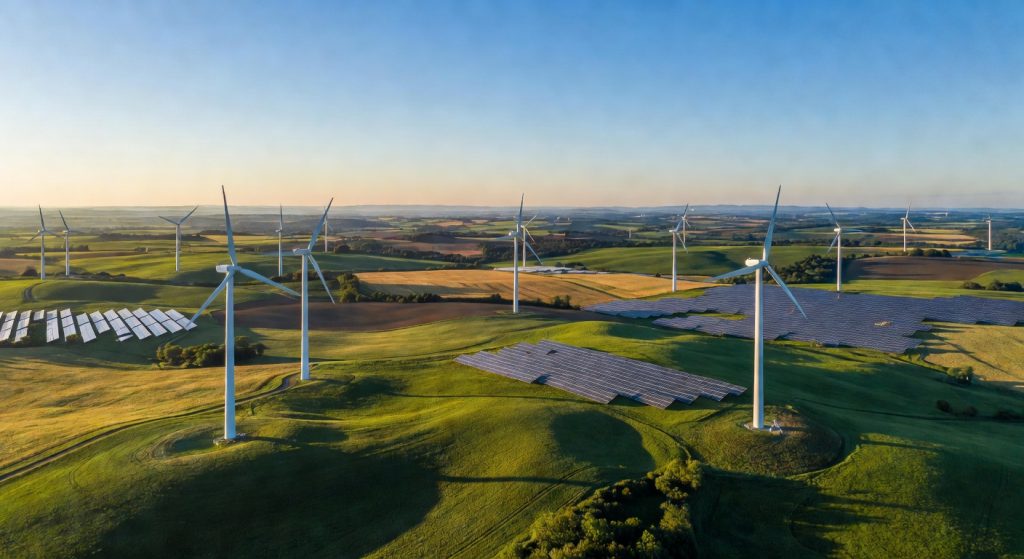
When the European Commission launched the EU Green Deal in December 2019, it was the most ambitious climate policy framework any major economy had ever attempted. Five years on, a February 2026 review paints a picture that is neither a triumph nor a failure — but something more complex, and arguably more instructive: a policy architecture that has delivered real change while revealing deep fault lines that will define the next chapter of European climate policy.
What the Green Deal Has Actually Achieved
The progress is real and should not be understated. EU greenhouse gas emissions have continued their downward trajectory, clean technology investment has scaled significantly, and sustainability reporting frameworks — from the Corporate Sustainability Reporting Directive (CSRD) to the EU Taxonomy — have matured into globally influential standards.
The expanded EU Emissions Trading System (ETS), now covering buildings and road transport in addition to heavy industry, has become a cornerstone of the transition. It has generated over €200 billion for green funds, channelling capital toward renewable energy, energy efficiency, and just transition programmes across member states. Meanwhile, the Carbon Border Adjustment Mechanism (CBAM) — set for full operation by 2026 — is already reshaping global supply chains, pushing non-EU producers to account for the carbon cost of goods exported to Europe. This is environmental regulation with genuine geopolitical reach.
The Gaps: Where the Deal Is Falling Short
Yet the 2026 review is candid about the shortcomings. The most pressing concern is the 2030 emissions target. Current National Energy and Climate Plans (NECPs) submitted by member states project a collective emissions reduction of only 51% by 2030 — four percentage points short of the legally binding 55% target under the ‘Fit for 55’ package. That gap is not a rounding error; it represents hundreds of millions of tonnes of CO₂ and a credibility risk for the entire framework.
A key bottleneck is the stalled revision of the Energy Taxation Directive (ETD), which would align fossil fuel taxation with climate objectives and create stronger incentives for renewables. Progress has been slow, hampered by the unanimity requirement in EU tax policy and resistance from member states facing economic pressures. Inflation, sluggish growth, and the political turbulence following the 2024 European Parliament elections have all created headwinds for enforcement.
Commission President Ursula von der Leyen has reaffirmed a commitment to a 90% GHG reduction by 2040, aligned with the 1.5°C Paris Agreement goal — but ambition at the top means little without implementation on the ground.
Simplification, Competitiveness, and the Investment Imperative
The political response to these pressures has been a push for regulatory simplification — a double-edged sword. On one hand, streamlining overlapping sustainability laws can genuinely reduce compliance burdens for businesses and attract the long-term investment the green transition requires. On the other hand, simplification risks becoming a euphemism for rollback if not managed carefully.
The good news is that the industrial policy scaffolding is taking shape. The Net-Zero Industry Act and the Critical Raw Materials Act are designed to build European clean tech manufacturing capacity and reduce strategic dependencies — lessons drawn partly from watching the US Inflation Reduction Act attract green investment away from Europe. The challenge is execution speed.
Key priorities for the next phase include:
- Closing the NECP gap through stronger enforcement mechanisms and updated national plans
- Finalising the ETD revision to send consistent price signals across the energy system
- Stabilising the regulatory environment to give businesses and investors the predictability they need for long-term capital allocation
- Scaling green investment through the carbon market revenues and targeted industrial policy
What This Means for Citizens, Businesses, and Policymakers
For European citizens, the Green Deal’s success or failure is not abstract — it shapes energy bills, air quality, job markets, and the long-term habitability of the continent. For businesses, the message is that the direction of travel is fixed, but the speed and shape of regulation will continue to evolve; building adaptive capacity now is essential. For policymakers, the five-year review is a stress test: the framework is sound, but political will and administrative capacity must match legislative ambition.
The key takeaway is this: the EU Green Deal has proven it can move markets, shift investment, and set global standards for carbon markets and sustainability governance. What it has not yet proven is that it can close the gap between stated targets and actual outcomes. The next five years will be decisive — not for the architecture of the deal, but for its delivery.