Lithium-Air Batteries, Perovskite Solar, and Smart Fabrics: The Green Tech Breakthroughs Reshaping the Energy Transition
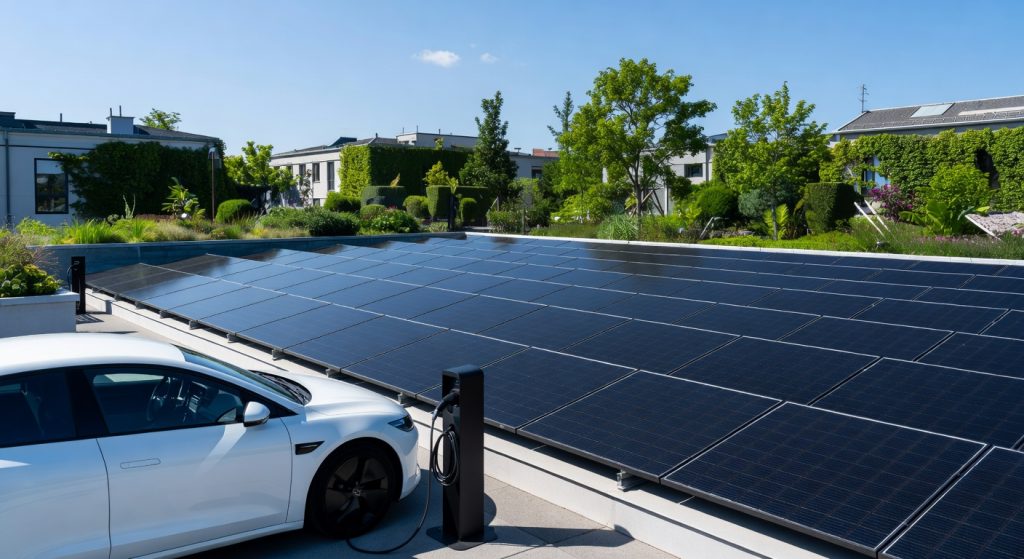
The pace of green technology innovation is accelerating faster than most policy frameworks can keep up with. In the span of just a few months, researchers and companies across the globe have announced a series of breakthroughs — in battery chemistry, solar cell efficiency, and even building materials — that could fundamentally reshape how we power our homes, cities, and vehicles. For Europe, where the energy transition is both an industrial opportunity and a political imperative, these developments deserve close attention.
A New Era for Electric Mobility: Lithium-Air Batteries Cross a Critical Threshold
The headline grabbing the most attention in cleantech circles comes from materials science: researchers have successfully developed lithium-air batteries that surpass the energy density limits of conventional lithium-ion technology, thanks to a newly engineered two-dimensional (2D) catalyst. Published in April 2026, the findings represent a significant leap forward for electric mobility — one of the central pillars of Europe’s Green Deal strategy.
Why does this matter? Energy density is the key constraint limiting electric vehicle range. Today’s best lithium-ion cells store roughly 250–300 Wh/kg. Lithium-air chemistry, in theory, can reach up to ten times that figure. While commercial deployment remains years away, the 2D catalyst breakthrough addresses one of the technology’s most stubborn obstacles: the instability of the air electrode during charge-discharge cycles.
For European automakers already navigating the 2035 combustion engine phase-out, and for smart cities planning large-scale grid storage, this is precisely the kind of upstream innovation that shapes long-term industrial strategy. Pair this with parallel advances in proton and sodium-ion batteries — both trending strongly in research pipelines — and the storage landscape looks increasingly competitive and diverse.
Solar Efficiency Hits New Highs: Perovskite-Silicon Tandem Panels Lead the Way
On the solar front, two distinct but complementary developments are pushing the boundaries of what photovoltaic technology can deliver. First, a molecular additive has been shown to boost the efficiency of silicon-perovskite tandem solar cells to 32.76% — a record-approaching figure that underscores the commercial potential of this hybrid architecture. Standard silicon panels typically achieve 20–22% efficiency, making this a substantial leap with real implications for rooftop and utility-scale deployment.
Second, California-based Tandem PV has received a $4 million grant from the California Energy Commission to accelerate the commercialization of ultra-efficient perovskite-silicon tandem panels. While the funding is American, the technology is globally relevant — and European manufacturers, particularly in Germany, the Netherlands, and Italy, are watching closely as perovskite moves from laboratory to production line.
These solar innovations align directly with the EU’s Solar Energy Strategy, which targets over 600 GW of solar capacity by 2030. Higher-efficiency panels mean fewer modules needed per installation, lower land use, and reduced balance-of-system costs — all critical factors for scaling green innovation affordably across both urban and rural European landscapes.
Buildings, Finance, and the Broader Cleantech Ecosystem
Beyond batteries and solar, two additional developments illustrate how the energy transition is becoming systemic rather than siloed. Researchers have developed photothermal fabric panels capable of cutting residential heating energy consumption by up to 23%. In a continent where building heating accounts for roughly 40% of total energy use, passive thermal solutions like this could play a meaningful role in reducing fossil fuel dependency — particularly for citizens who cannot afford deep renovations.
On the financial side, SAHAM BANK in Morocco has secured €55 million from the European Bank for Reconstruction and Development (EBRD) to expand green lending for businesses and households. This cross-border green finance initiative reflects a growing recognition that Europe’s climate goals are inseparable from those of its neighbouring regions. A stable, decarbonising North Africa is both a strategic partner and a future green hydrogen supplier for the EU.
What These Breakthroughs Mean for Citizens and Decision-Makers
Taken together, these advances point to a cleantech ecosystem that is maturing rapidly across multiple fronts simultaneously. For decision-makers, the implications are clear:
- Industrial policy must anticipate next-generation battery and solar technologies now, before supply chains crystallise around yesterday’s solutions.
- Building renovation programmes should incorporate emerging passive technologies like photothermal fabrics alongside traditional insulation incentives.
- Green finance must scale beyond Europe’s borders to support a just and effective global transition.
For citizens, the takeaway is equally tangible: lower energy bills, longer-range electric vehicles, and cleaner cities are no longer distant promises. They are engineering milestones being crossed right now.
Key takeaway: The energy transition is no longer waiting for a single silver bullet. It is being built, layer by layer, through converging breakthroughs in storage, solar, materials, and finance — and Europe has both the policy framework and the industrial base to turn these innovations into everyday reality.