Solar Breakthroughs and Battery Leaps: The Green Tech Innovations Reshaping the Energy Transition
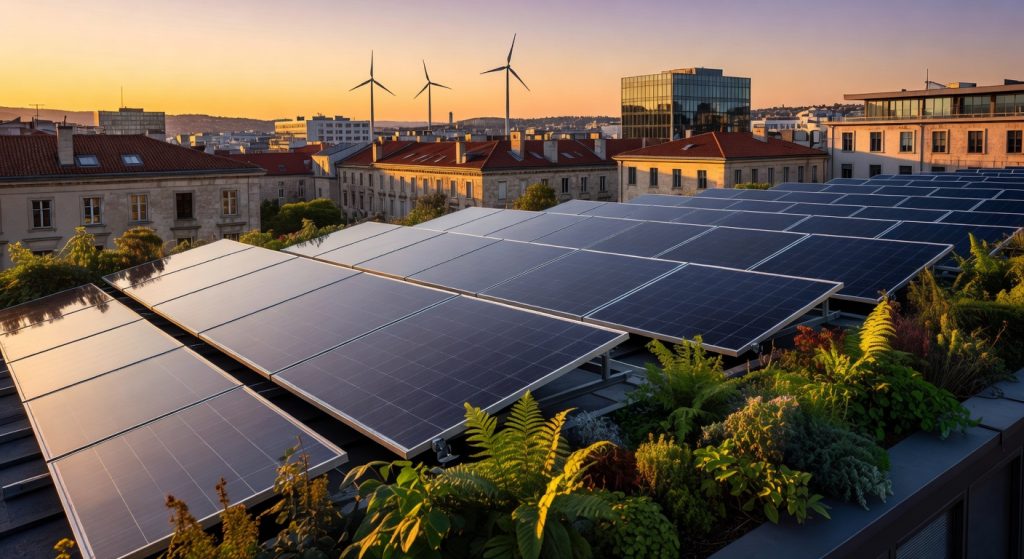
The pace of green innovation is accelerating. In the space of a few weeks, researchers and companies have announced a series of breakthroughs — in solar efficiency, battery performance, and building materials — that together paint a compelling picture of where the energy transition is heading. From a $4 million U.S. grant for next-generation solar panels to a European-backed green finance push in Morocco, the cleantech ecosystem is firing on multiple fronts.
Next-Generation Solar: Efficiency Records and Commercial Momentum
The solar sector is experiencing a quiet revolution. California-based Tandem PV has secured a $4 million grant from the California Energy Commission to accelerate the commercial readiness of perovskite-silicon tandem solar panels — a technology that stacks two light-absorbing layers to capture a broader spectrum of sunlight than conventional panels. The goal is not just laboratory performance, but scalable manufacturing that can serve businesses and utilities at competitive costs.
This announcement comes alongside a separate scientific milestone: a molecular additive has pushed silicon-perovskite tandem solar cell efficiency to a record 32.76%, compared to the roughly 22–24% ceiling of standard commercial silicon panels. For context, every percentage point of efficiency gain translates directly into lower installation costs per kilowatt-hour — a critical factor for making solar accessible across both wealthy and emerging markets.
For Europe, where the REPowerEU plan has set ambitious solar deployment targets, these advances are particularly relevant. Higher-efficiency panels mean less rooftop or land area needed to generate the same power — a significant advantage in densely populated urban environments and for smart cities aiming to integrate distributed energy generation.
Beyond Solar: Batteries, Fabrics, and the Full Cleantech Stack
Solar is only one piece of the puzzle. Two other innovations deserve attention from anyone tracking the energy transition.
- Lithium-air batteries have achieved a significant performance breakthrough thanks to a new two-dimensional catalyst material. Unlike conventional lithium-ion batteries, lithium-air technology theoretically offers dramatically higher energy density — meaning longer range for electric mobility without heavier battery packs. While commercialisation remains some years away, the progress signals that the next generation of EV batteries could overcome one of the key psychological barriers to adoption: range anxiety.
- Photothermal fabric panels — a less-discussed but highly practical innovation — have demonstrated the ability to reduce a building’s heating energy consumption by up to 23%. By converting sunlight into heat directly within building materials, these panels offer a passive, low-maintenance route to cutting fossil fuel dependency in homes and offices. In a European context, where building renovation is central to the EU’s climate strategy, this kind of material innovation could prove transformative at scale.
Together, these developments illustrate a broader truth about green technology: the energy transition is not a single lever but a stack of complementary innovations, each addressing a different part of the decarbonisation challenge.
Green Finance Flows: Europe’s Reach into Emerging Markets
Technology alone is not enough. Deployment at scale requires capital — and here too there is encouraging news. SAHAM BANK in Morocco has secured a €55 million facility from the European Bank for Reconstruction and Development (EBRD) to expand green finance across the country. Morocco, which already hosts one of the world’s largest concentrated solar power plants, is a strategically important market sitting at the intersection of European energy policy and African development.
This financing will enable Moroccan businesses and citizens to access sustainable investment products, from energy efficiency loans to renewable energy project funding. For Europe, supporting cleantech deployment in neighbouring markets is not purely altruistic — it contributes to regional energy security, reduces migration pressures linked to climate vulnerability, and builds export markets for European green technology firms.
What This Means for Citizens, Businesses, and Policymakers
The convergence of these developments — record solar efficiency, next-generation batteries, smart building materials, and expanding green finance — suggests that the cleantech sector is entering a phase of compounding progress. Each breakthrough lowers costs, expands markets, and creates conditions for the next innovation cycle.
For decision-makers, the implication is clear: the window to position Europe as a leader in green innovation manufacturing and deployment is open, but not indefinitely. Public funding mechanisms, from EU grants to EBRD facilities, play a decisive role in bridging the gap between laboratory breakthroughs and commercial reality.
Key takeaway: From 32.76%-efficient solar cells to lithium-air battery advances and photothermal building materials, 2025 is shaping up as a landmark year for green technology. The challenge now is ensuring that European policy, finance, and industrial strategy move fast enough to turn these innovations into deployed infrastructure — at home and in the markets that neighbour us.