EU Carbon Market Reform and the New ESG Landscape: What Businesses Need to Know
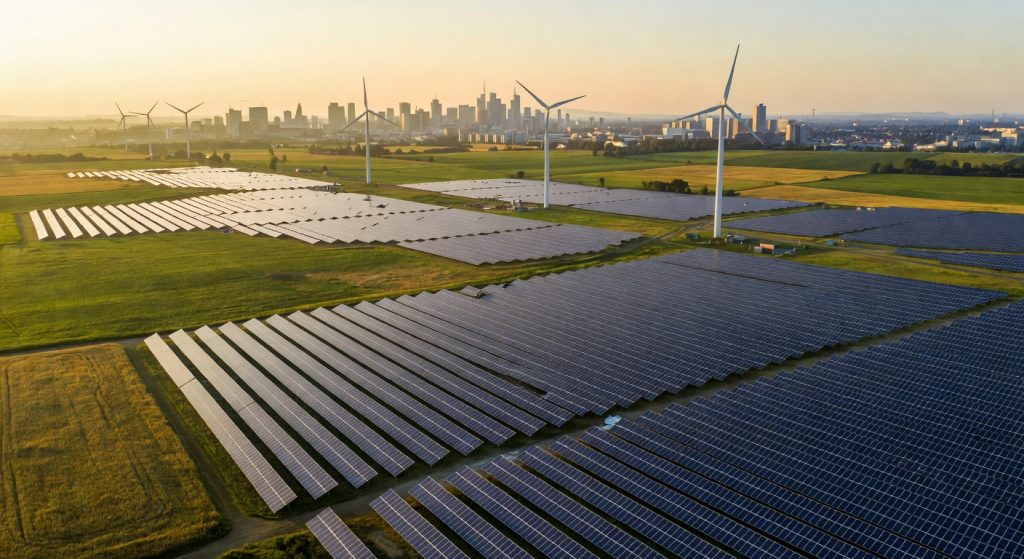
Europe’s sustainability agenda is accelerating on multiple fronts. The European Commission has launched the first wave of reforms to the EU Emissions Trading System (ETS), while new global standards for sustainability reporting are taking shape and billions in clean energy investment continue to flow. For businesses, investors, and policymakers, the message is clear: the rules of the green economy are being rewritten — and the window to adapt is narrowing.
EU ETS Reform: Stabilising the Carbon Market for the Long Term
The European Commission’s decision to initiate reforms to the EU Emissions Trading System marks a pivotal moment for sustainable finance and corporate responsibility across the continent. The ETS, which covers around 40% of the EU’s total greenhouse gas emissions, has long been the cornerstone of Europe’s climate policy. Yet volatile carbon prices have made long-term planning difficult for energy-intensive industries.
The proposed reforms aim to reinforce carbon market stability, providing businesses in the energy and manufacturing sectors with more predictable pricing signals. This matters enormously for investment decisions: companies planning major capital expenditure in low-carbon technologies need confidence that carbon prices will remain high enough to justify the transition costs.
The move also reflects growing industry pressure to balance ambition with economic competitiveness — a tension that sits at the heart of the EU’s green industrial strategy. A more stable ETS is expected to unlock greater flows of sustainable finance, making it easier for banks and investors to price climate risk and direct capital toward green business models.
Renewables Investment Surges: From France to Asia
Beyond carbon pricing, the clean energy investment landscape is shifting rapidly. France has launched tenders for 12 gigawatts of renewable energy capacity, a significant push designed to boost domestic energy security and reduce dependence on fossil fuel imports. The tenders represent a major opportunity for the renewables industry and could help lower energy costs for French citizens over time — a key concern as energy affordability remains a political priority across Europe.
On the global stage, TotalEnergies and Masdar have announced a $2.2 billion joint venture targeting 9 GW of renewable energy development across Asia. The deal underscores how European energy majors are repositioning themselves as global clean energy players, exporting both capital and expertise to high-growth markets. It also signals that green business is increasingly a cross-border, cross-sector endeavour — one where European companies are competing for leadership.
Meanwhile, innovations in energy storage are gaining momentum. EnerVenue’s $300 million funding round for lithium-free storage solutions highlights a growing investor appetite for technologies that can complement intermittent renewables — a critical piece of the circular economy puzzle, reducing reliance on scarce critical minerals.
Sustainability Reporting: Raising the Bar on ESG Transparency
Alongside market and investment developments, the IFRS Foundation has proposed updates to its sustainability reporting standards, with a focus on the agriculture and power sectors. These updates are designed to enhance ESG transparency for global investors and regulators, making it easier to compare corporate sustainability performance across borders.
For European companies already navigating the Corporate Sustainability Reporting Directive (CSRD), these global standard updates add another layer of complexity — but also opportunity. Businesses that invest in robust ESG reporting infrastructure now will be better positioned as disclosure requirements tighten worldwide. Supply chain sustainability is also under the spotlight: Nestlé’s human rights initiative in its coffee supply chain is an example of how large corporations are beginning to operationalise corporate responsibility beyond their own operations.
Implications for European Businesses and Decision-Makers
Taken together, these developments paint a picture of a sustainability ecosystem in rapid evolution. Key implications include:
- Carbon pricing clarity: ETS reforms should reduce uncertainty, encouraging longer-term green investment strategies.
- Renewable energy opportunities: National tenders and international joint ventures are creating new markets for clean energy developers and suppliers.
- Reporting readiness: Companies should begin aligning with evolving IFRS sustainability standards alongside existing EU requirements.
- Supply chain scrutiny: ESG expectations are extending deeper into value chains, requiring proactive due diligence.
Key takeaway: The EU’s carbon market reform, combined with surging renewables investment and tightening sustainability reporting standards, signals that the transition to a green economy is no longer a distant goal — it is the operating reality. Businesses that treat sustainability not as a compliance burden but as a strategic opportunity will be best placed to thrive in this new landscape.