Agroecology in Europe: Why Rethinking Food Systems Is No Longer Optional
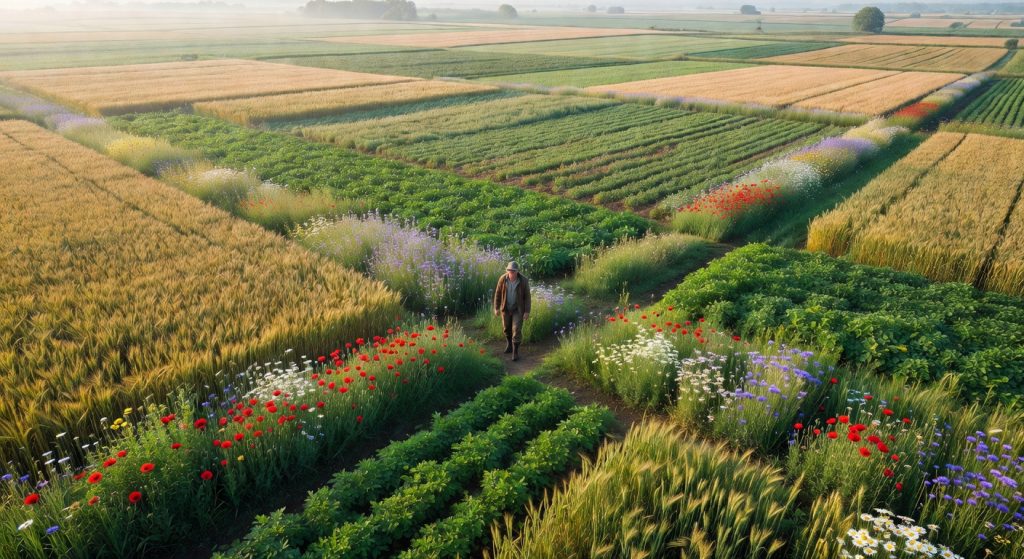
The way Europe grows, processes, and distributes food is under pressure from every direction — climate volatility, geopolitical shocks, biodiversity loss, and a growing consumer demand for transparency. Against this backdrop, the conversation around sustainable agriculture and agroecology has moved well beyond academic circles. It now sits at the heart of some of the most consequential policy and business decisions of our decade.
Yet progress remains uneven. While the European Union’s Farm to Fork Strategy set ambitious targets — including converting 25% of agricultural land to organic farming by 2030 and reducing pesticide use by 50% — implementation has been slow, contested, and complicated by the war in Ukraine, which temporarily pushed food security concerns back to the top of the agenda. Understanding where things stand, and what the evidence actually tells us, is essential for anyone trying to navigate this landscape.
Agroecology: More Than a Buzzword
Agroecology is often misunderstood as simply a synonym for organic farming. In reality, it is a broader science-based approach that applies ecological principles to the design and management of food systems. It encompasses crop diversity, soil health, water management, reduced external inputs, and the integration of local knowledge — all aimed at building resilience into the food chain from the ground up.
The evidence base is growing. A 2022 meta-analysis published in Nature Food found that agroecological practices can maintain yields comparable to conventional farming in many contexts, while significantly reducing environmental impact. In Europe, countries like France and Denmark have invested heavily in agroecological transition programmes, with France’s PNAE (National Plan for Agroecology) supporting thousands of farms in shifting practices over the past decade.
Critically, agroecology is not anti-technology. Precision agriculture tools, satellite monitoring, and AI-driven soil analysis are increasingly being used within agroecological frameworks — not against them. This integration is redefining what sustainable agriculture looks like in practice across European landscapes.
Plant-Based and Supply Chain Sustainability: Connecting the Dots
The rapid rise of plant-based food products has added a new dimension to the sustainability debate. European consumers are shifting dietary patterns — plant-based food sales in Europe grew by over 20% between 2020 and 2023, according to the Good Food Institute Europe. But the sustainability credentials of plant-based products are not automatic. They depend heavily on supply chain sustainability: where ingredients are sourced, how they are processed, and what the full lifecycle footprint looks like.
Soy, for example, is a key ingredient in many plant-based products — but European soy imports have historically been linked to deforestation in South America. The EU Deforestation Regulation (EUDR), which entered into force in 2023 and is being phased in through 2025, is designed to close this gap by requiring companies to prove that commodities like soy, palm oil, and cocoa are not linked to deforestation. This is a significant step, but enforcement and traceability remain complex challenges.
- Traceability tools — including blockchain and digital product passports — are being piloted by major European food companies to map supply chains in real time.
- Shorter supply chains and regional sourcing are gaining traction as both a resilience strategy and a sustainability lever.
- Regenerative sourcing standards are emerging as the next frontier beyond organic certification, focusing on measurable ecological outcomes.
What This Means for Policy, Business, and Citizens
For decision-makers, the message is clear: voluntary commitments are no longer sufficient. Regulation is catching up — from the EUDR to the Corporate Sustainability Reporting Directive (CSRD) — and companies that have not yet mapped their agricultural supply chains for environmental risk are running out of time.
For citizens, the choices are real but require better information. Eco-labelling schemes in Europe remain fragmented, making it difficult to compare the sustainability credentials of food products at the point of purchase. A harmonised EU framework for food sustainability labelling — long discussed, not yet delivered — would be a meaningful step forward.
For farmers, the transition to more sustainable practices requires investment, knowledge, and stable policy support. The current reform of the Common Agricultural Policy (CAP) has been criticised for not going far enough in rewarding ecological outcomes over production volume.
Key takeaway: Europe has the frameworks, the science, and increasingly the market demand to lead a genuine transition in its food systems. The gap between ambition and action is narrowing — but it will require consistent political will, honest supply chain accountability, and a public that understands what is at stake. Agroecology, plant-based innovation, and supply chain sustainability are not separate trends. They are interconnected pillars of the same necessary transformation.