EU Green Deal Industrial Plan, Solar Breakthroughs, and the ESG Wave Reshaping Business in 2024
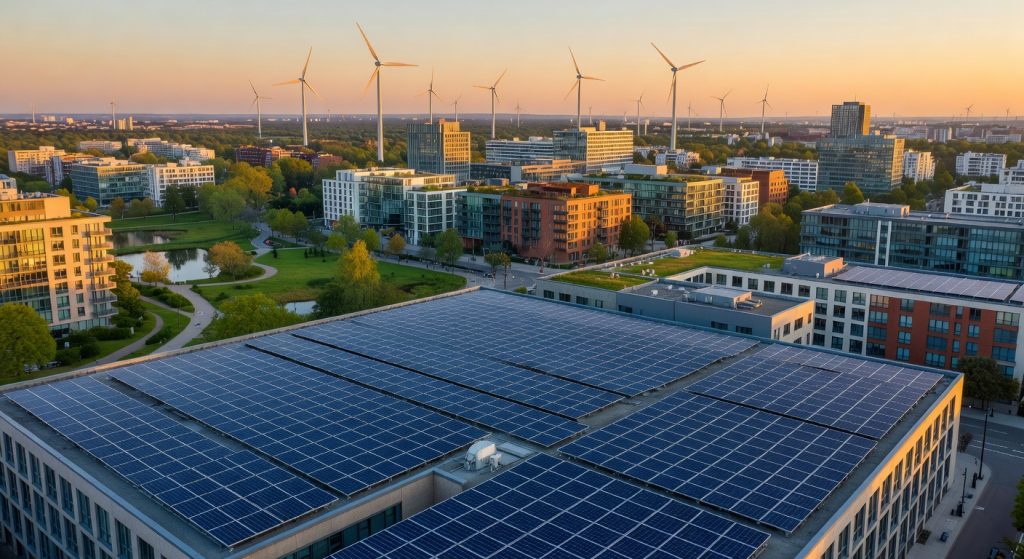
Europe is doubling down on its green ambitions. With the European Union’s new Green Deal Industrial Plan now firmly on the table, the continent is signalling a clear shift: clean technologies are no longer a niche concern but the central pillar of its industrial future. Combined with global breakthroughs in renewable energy and a surge in corporate ESG commitments, the momentum toward a net-zero economy is accelerating — and the implications for businesses, investors, and citizens are profound.
The EU’s Industrial Plan: A Strategic Bet on Clean Technology
The EU’s Green Deal Industrial Plan is designed to keep Europe competitive in the global race for clean technology manufacturing, while supporting businesses in transitioning away from fossil fuels. The plan includes streamlined permitting for renewable energy projects, targeted incentives for electric vehicle adoption, and expanded state aid frameworks to encourage investment in sectors like solar, wind, and green hydrogen.
This isn’t just environmental policy — it’s industrial strategy. As the United States pushes its Inflation Reduction Act and China dominates clean tech supply chains, Europe is responding with a framework that ties corporate responsibility directly to economic opportunity. For European businesses, the message is clear: aligning with sustainability goals is no longer optional; it is a prerequisite for accessing public support and remaining competitive in global markets.
The plan also reinforces the EU’s broader commitment to the circular economy, pushing for resource efficiency and reduced dependency on imported raw materials — a lesson painfully learned during recent energy and supply chain crises.
Renewable Energy Breakthroughs Are Changing the Investment Calculus
On the technology front, the news is equally encouraging. Researchers at the University of California, Berkeley have achieved a 20% increase in solar panel efficiency, a development that could significantly lower the cost of solar energy and unlock new investment opportunities for businesses of all sizes. More efficient panels mean faster returns on investment and broader deployment potential — from industrial rooftops to rural communities across Europe.
Meanwhile, a newly developed wind turbine capable of generating energy in low-wind conditions is opening up urban markets that were previously considered unsuitable for wind power. Cities, which account for roughly 75% of global CO₂ emissions according to the UN, could become active participants in renewable energy generation rather than passive consumers.
These innovations are not happening in isolation. They are feeding directly into sustainable finance flows, with impact investors and ESG-focused funds increasingly directing capital toward companies and projects that demonstrate measurable environmental benefits. Renewable energy breakthroughs reduce technology risk, making green investments more attractive to mainstream institutional investors.
Corporate ESG: From Pledges to Practice
Perhaps the most significant shift is happening inside boardrooms. Companies across sectors are moving beyond headline net-zero pledges toward concrete action on sustainable supply chains, ethical sourcing, and emissions reduction. Amazon, for example, is leveraging artificial intelligence to optimise logistics and reduce its carbon footprint as part of its commitment to net-zero by 2040. Coty has been recognised by the CDP — the global non-profit that runs the world’s leading environmental disclosure platform — for its supply chain climate engagement.
ESG investments are rising sharply, driven by both regulatory pressure and genuine market demand. Certifications such as Rainforest Alliance are gaining traction as consumers and procurement teams seek verifiable proof of green business practices. The trend reflects a broader understanding: sustainability is not a cost centre but a driver of long-term value and resilience.
What This Means for Europe’s Green Transition
Taken together, these developments paint a picture of a green transition that is gaining irreversible momentum. For European decision-makers, the priorities are clear:
- Accelerate permitting and infrastructure to capitalise on renewable energy innovations before competitors do.
- Support SMEs in meeting ESG reporting requirements under frameworks like the EU’s Corporate Sustainability Reporting Directive (CSRD).
- Channel sustainable finance toward projects with measurable climate impact, ensuring that capital flows match stated policy ambitions.
For businesses, the window to get ahead of the curve is narrowing. Those that embed corporate responsibility and circular economy principles into their core strategy now will be better positioned to attract talent, capital, and customers in the years ahead.
Key takeaway: The convergence of EU industrial policy, renewable energy innovation, and rising ESG standards is creating a new baseline for doing business in Europe. Sustainability is no longer a differentiator — it is the new normal, and the transition is moving faster than many anticipated.