France’s 12 GW Renewable Tender, EU Packaging Rules, and $960M Climate Finance: Sustainability’s Big Week Explained
The first week of April 2026 delivered a dense cluster of sustainability and ESG milestones that, taken together, paint a clear picture of where Europe — and the world — is heading. From France’s ambitious renewable energy push to a landmark Green Climate Fund approval, the signals for businesses, policymakers, and citizens are hard to ignore. Here is what happened, why it matters, and what comes next.
France Bets Big on Renewables — and on Its Own Industry
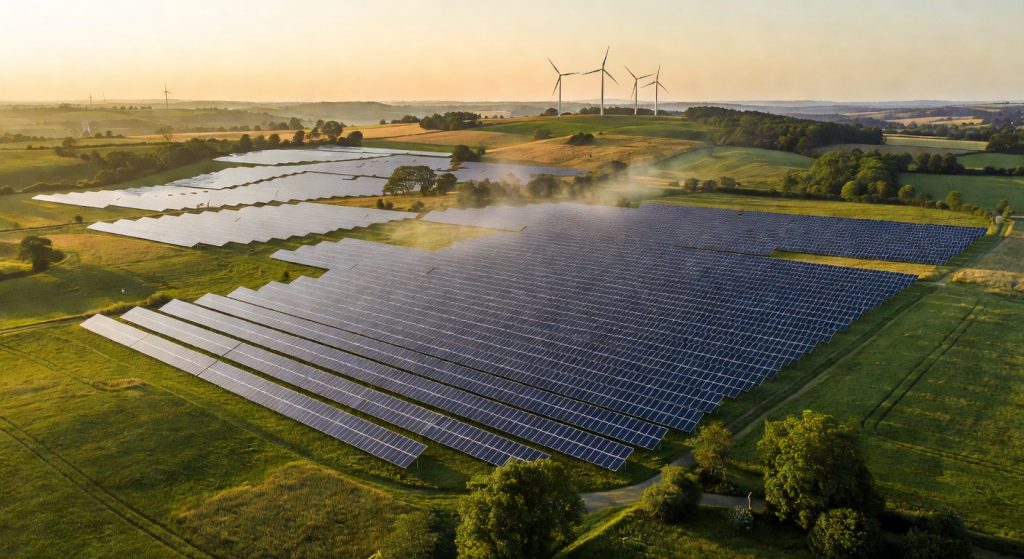
On April 2, 2026, France announced tenders for 12 gigawatts of new renewable energy capacity, one of the largest single procurement rounds the country has ever launched. The move is explicitly tied to two goals: strengthening national energy security in a post-Ukraine-war European landscape, and stimulating domestic clean-energy manufacturing.
The strategic logic is straightforward. By anchoring tenders to local industrial content requirements, Paris is following a playbook already tested by the United States under the Inflation Reduction Act — using public procurement as an industrial policy lever. For European green business, the message is equally clear: the continent is not prepared to offshore its clean-energy supply chain.
For citizens, the downstream benefit is potentially significant. Greater domestic renewable capacity means reduced exposure to volatile fossil-fuel import prices, and — over time — lower electricity bills. For companies with ESG commitments and scope 2 emissions targets, a deeper French renewable market also means more credible, traceable green power purchase agreements (PPAs).
The EU Tightens the Circular Economy Grip — on Packaging and Beyond
Simultaneously, the European Commission issued new guidance on packaging rules designed to cut waste and harmonise standards across the single market. The regulation pushes companies toward reusable and recyclable formats, directly operationalising the EU’s circular economy agenda.
For businesses, compliance is no longer optional or distant. Brands selling physical goods across EU member states must now align packaging design with enforceable standards — a shift that affects procurement, product development, and supplier relationships. Companies that treat this as a corporate responsibility opportunity rather than a compliance burden will find competitive advantage: consumers increasingly reward visible sustainability commitments.
The citizen benefit is tangible: less single-use plastic in supermarkets, cleaner urban environments, and reduced microplastic contamination in food and water systems. Paired with the UK’s separate progress — national emissions fell 2% to 367 million tonnes in 2025 — the regulatory picture across Europe is one of accelerating, institutionalised decarbonisation.
Climate Finance Crosses $20 Billion — and Biodiversity Gets a $2.7B Boost
At the global level, two financial commitments reinforced the structural shift toward sustainable finance. The Green Climate Fund (GCF) approved $960 million in new climate finance, pushing its total portfolio past the $20 billion threshold. The fund targets scalable, high-impact solutions in the most vulnerable economies — precisely the investments that private capital alone tends to underprice.
Meanwhile, Canada committed $2.7 billion to expand its protected lands and oceans toward the global 30×30 target: protecting 30% of the planet’s land and sea by 2030. This is not merely an environmental headline. For companies navigating the Task Force on Nature-related Financial Disclosures (TNFD) framework, growing protected-area networks directly affect biodiversity risk assessments and supply chain due diligence obligations.
Implications for Businesses and Decision-Makers
Taken together, this week’s developments reinforce several strategic imperatives:
- Energy procurement strategy must account for a rapidly expanding European renewable market, with France’s 12 GW tender creating new PPA opportunities for corporate buyers.
- Packaging and product design teams need to treat EU circular economy rules as a baseline, not a ceiling — early movers gain market and reputational advantage.
- ESG reporting and sustainable finance teams should monitor GCF-backed project pipelines: they often signal where blended finance instruments and impact investment opportunities will emerge.
- Biodiversity and nature risk is moving from voluntary disclosure to mainstream financial analysis — Canada’s commitment adds momentum to a global regulatory trend.
Key Takeaway
The sustainability agenda is no longer advancing in isolated policy announcements. It is converging — across energy, packaging, finance, and biodiversity — into an interlocking regulatory and market architecture. For European businesses and citizens alike, the cost of inaction is rising faster than the cost of adaptation. The week of April 2, 2026 was not a turning point. It was confirmation that the turn has already been made.