EU Green Deal at Five: Climate Ambition Holds, But Simplification Is Now the Priority
Five years after the European Green Deal was launched as Europe’s defining policy framework, the European Parliament, the Council, and the European Commission have sent a clear message: the bloc’s climate commitments are not up for negotiation. Yet the tone of the joint reaffirmation for 2026 is notably pragmatic. Alongside pledges on climate neutrality and energy security, there is a growing chorus calling for regulatory simplification, investor predictability, and a broader social vision — signals that the Green Deal is entering a more complex, mature phase.
What the Five-Year Review Actually Shows
The five-year assessment of the European Green Deal paints a picture of real but uneven progress. On the positive side, EU greenhouse gas emissions have continued to fall, sustainability reporting frameworks have matured significantly, and carbon markets are generating substantial public revenue. Reforms to the EU Emissions Trading System (ETS) and the phased introduction of the Carbon Border Adjustment Mechanism (CBAM) have together channelled over €200 billion into green funds — a figure that underscores the financial scale of the bloc’s climate policy architecture.
At the same time, the review is candid about fault lines. Economic headwinds — including sluggish industrial growth and rising energy costs — have intensified political pressure on environmental regulation. Businesses, particularly SMEs, have raised concerns about the cumulative compliance burden of overlapping sustainability laws. The response from EU institutions is a push toward regulatory stabilisation: fewer new rules, clearer timelines, and greater coherence across existing frameworks like the Corporate Sustainability Reporting Directive (CSRD) and the EU Taxonomy.
Energy Union, Clean Tech, and the Road to 2030
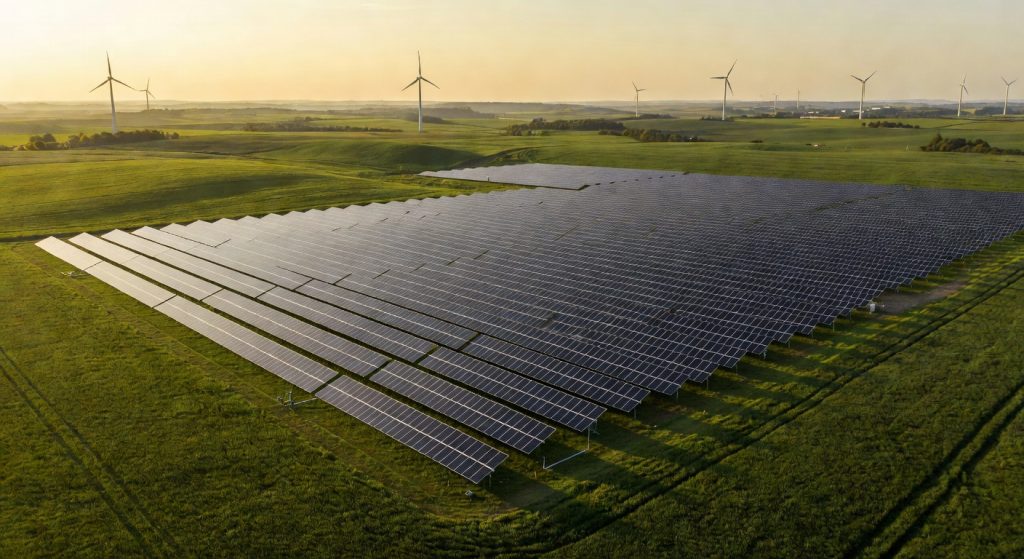
One of the most concrete commitments emerging from the 2026 policy cycle is the pledge to build a genuine Energy Union before 2030. This means accelerating the rollout of renewables, modernising electricity grids, and scaling up green hydrogen — all themes set to dominate the upcoming EU Clean Energy Transition Conference on 5 March 2026. The conference will focus specifically on reducing fossil fuel dependence while boosting the competitiveness of European industry in global clean technology markets.
This industrial dimension is increasingly central to EU climate policy. The Draghi report’s warnings about European competitiveness have left a mark: policymakers are now framing decarbonisation not just as an environmental imperative but as an economic opportunity. Clean tech manufacturing, battery supply chains, and offshore wind are positioned as pillars of a reindustrialisation strategy — one that must compete with the scale of the US Inflation Reduction Act and China’s state-backed green industries.
The Risk of Narrowing the Vision
Perhaps the most thought-provoking element of the five-year review is its warning that the Green Deal risks being reduced to a decarbonisation agenda alone. Analysts and civil society groups urge EU institutions to maintain alignment with the broader UN Sustainable Development Goals (SDGs), including poverty reduction, social equity, and biodiversity. Without this wider lens, the review cautions, public support for climate measures may erode — particularly in regions and communities most exposed to economic disruption from the green transition.
- Regulatory simplification is being pursued to restore investor confidence and reduce business uncertainty.
- Carbon markets and CBAM revenues are funding the transition, but governance of those funds remains under scrutiny.
- Social goals must be embedded in climate policy to maintain democratic legitimacy across member states.
Implications for Citizens, Business, and Policymakers
For businesses operating in Europe, the immediate implication is a period of regulatory consolidation rather than expansion. Companies that have invested in sustainability reporting infrastructure should expect refinements to existing rules rather than wholesale new obligations — at least in the near term. For investors, the reaffirmation of long-term climate goals provides the policy certainty that green infrastructure projects require.
For citizens, the stakes are both environmental and social. A Green Deal that delivers on clean energy and fair transition support has the potential to reduce energy bills, create quality jobs, and improve air quality. But this requires that the social dimension — too often treated as secondary — is placed at the heart of implementation, not left as an afterthought.
Key takeaway: The EU Green Deal is not retreating — it is recalibrating. The next phase will be defined less by new legislation and more by effective delivery, smarter regulation, and a renewed commitment to ensuring that the green transition works for everyone, not just the sectors and countries best positioned to benefit.